

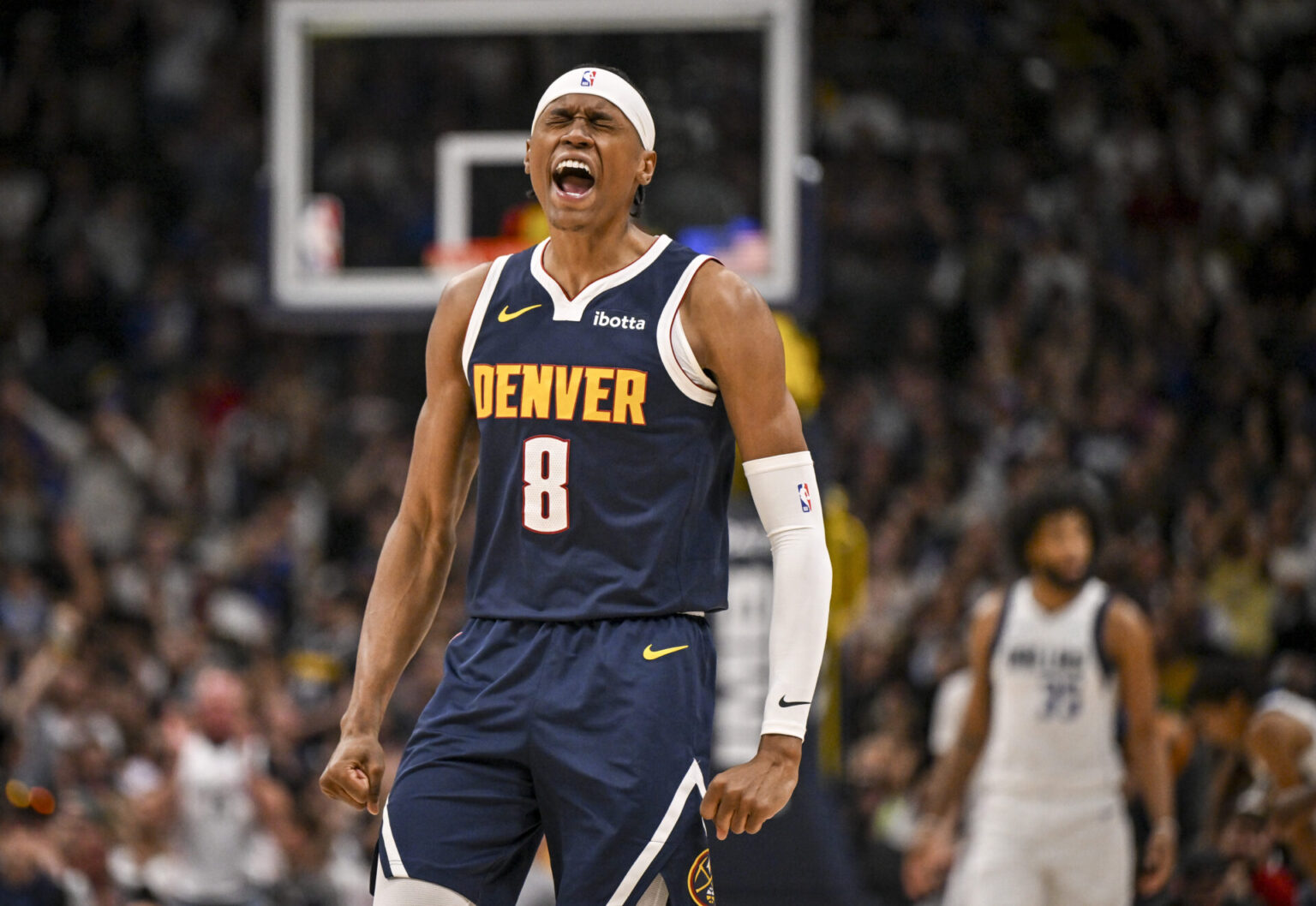
The Cleveland Cavaliers have secured former Denver Nuggets forward Peyton Watson through a sign-and-trade deal involving the LA Clippers. In this transaction, the Cavaliers sent Max Strus to the Clippers and two draft picks (one first-round and one second-round pick) to the Nuggets, finally concluding Watson’s nearly two-month free agency.
Watson, a 24-year-old forward, has signed a four-year contract worth $88 million, offering tremendous long-term value for the salary-cap-conscious Cavaliers as they lock in their starting small forward through the decade. This move came after Cleveland’s attempt to bring back LeBron James fell through, but acquiring Watson could prove to be a smarter choice than reuniting with the 41-year-old superstar.
Why are the Cavaliers better off with Watson instead of LeBron? First, the team needed a role-playing forward rather than a star. Last season, Watson averaged 14.6 points, 4.9 rebounds, and 1.1 blocks with a 20.5 usage rate, whereas LeBron posted 20.9 points, 7.2 assists, and 6.1 rebounds with a 27.2 usage rate. Though LeBron remains an offensive centerpiece thanks to his playmaking and scoring, Watson demonstrated that he can step up to a 20-point-per-game role efficiently, particularly during periods when the Nuggets suffered injuries. Known for his defensive versatility and multi-position capability, Watson brings the defensive intensity the Cavaliers need—something LeBron’s age likely limits. Meanwhile, the team’s offense is anchored by Donovan Mitchell and facilitated by James Harden’s playmaking, making Watson’s complementary skill set a better fit.
Additionally, Watson’s contract reflects good financial value influenced by the NBA’s second apron rules, suggesting the Cavaliers have acquired a talented, undervalued player for the long haul rather than a short-term veteran option.
Integrating LeBron into the current Cavaliers roster would pose significant challenges due to team chemistry. Since acquiring him in 2022, Cleveland has built the team around Donovan Mitchell, who recently signed a massive four-year, $272.8 million extension and is firmly the franchise’s centerpiece. LeBron’s return could disrupt this balance and overshadow Mitchell’s leadership and contributions. Incorporating Harden, who now plays primarily as a pass-first guard, alongside a high-usage LeBron could also complicate on-court dynamics. LeBron’s return might have created locker room tensions, which the Cavaliers likely avoid by adding the younger, more adaptable Watson to complement Mitchell and Harden.
Most importantly, the Cavaliers have extended their championship window with Watson. Mitchell’s deal runs through 2031, Watson and Mobley’s contracts until 2030, and Allen’s through 2029, with Harden expected to sign a two-to-three-year extension. Meanwhile, LeBron would have been a short-term presence at best, delaying inevitable roster challenges down the road. The current core has consistently pushed deep into the Eastern Conference playoffs with Mitchell at the helm, and Watson’s addition sustains this momentum, giving Cleveland flexibility and continuity. Instead of overhauling their roster for a short stint with LeBron, the Cavs have found a strategic, chemistry-friendly solution that aligns with their long-term vision.
Fan Take: This move signals a fresh and forward-thinking strategy from the Cavaliers, prioritizing sustainable growth over nostalgia. Basketball fans should watch how Watson’s role shapes the Cavaliers’ fate, as it highlights a shift toward team balance and long-term contender-building in today’s NBA landscape.
Source: nbaanalysis.net