
Jeff Kassouf
Multiple Authors
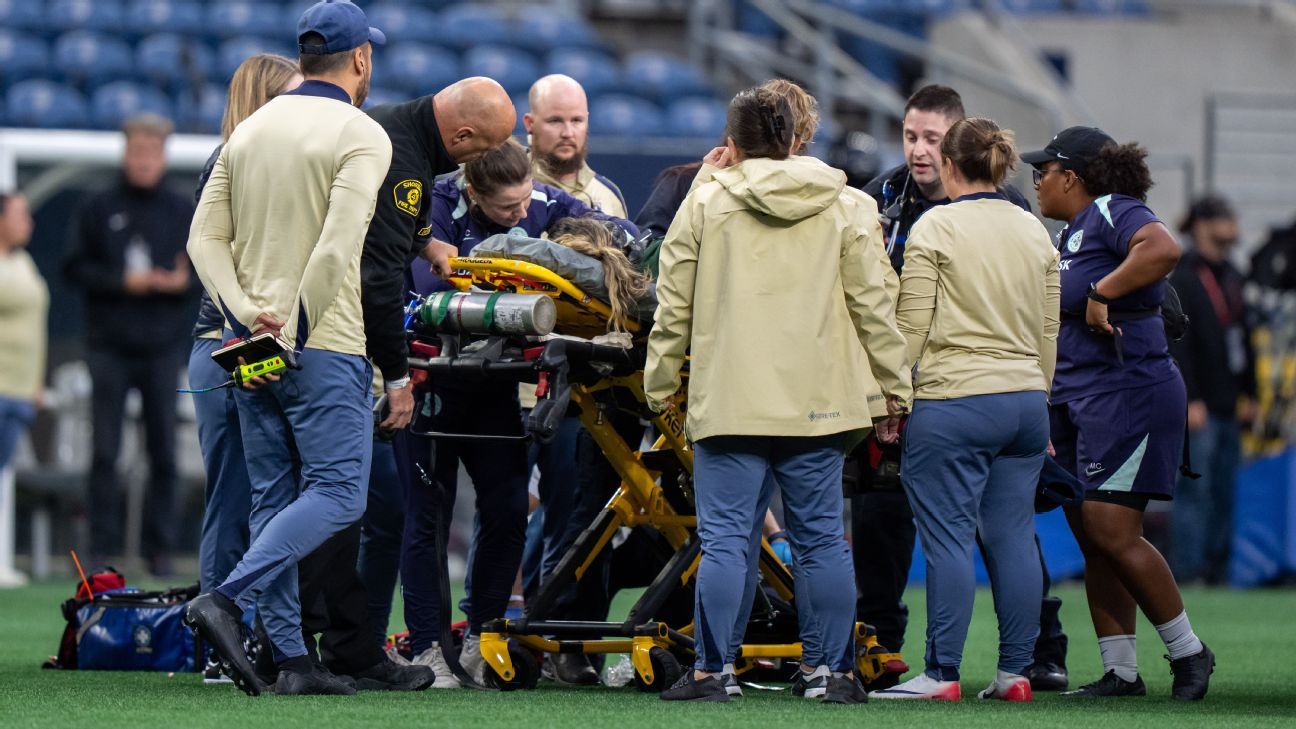
Midfielder Savannah DeMelo of Racing Louisville FC has filed a lawsuit against University of Louisville Health and two physicians, claiming they failed to identify a heart condition that caused her cardiac arrest during a match in September 2025.
On Monday, DeMelo shared, for the first time, details about her collapse on the anniversary of the incident through an Instagram post. She stated that her collapse was due to an undiagnosed cardiac arrhythmia, which led her to have a cardiac arrest.
Documents from the lawsuit, as reported by Joe Sonka of Kentucky Public Media and reviewed by ESPN, allege that the medical professionals from University of Louisville Health did not appropriately diagnose her conditions before the incident on Sept. 14, 2025, in Seattle.
The match was interrupted late in the first half following DeMelo’s sudden collapse, and she was taken to a local hospital for evaluation. Since that event, she has not played in any matches. On Monday, she first disclosed that she had experienced cardiac arrest that night, expressing gratitude to the medical teams at the University of Washington and the Mayo Clinic.
“I value the privacy everyone has respected during this challenging year,” DeMelo wrote. “It’s difficult to articulate just how emotionally taxing this year has been. So much uncertainty and a range of emotions have been part of the journey.”
DeMelo’s health scare is the second reported cardiac incident on the field during the 2025 NWSL season.
Earlier in May 2025, Savy King, a defender for Angel City FC, collapsed on the pitch and later underwent surgery for an undiagnosed heart issue after being taken to the hospital.
That match was also criticized for continuing after such a serious incident, leading the NWSL to commit to stopping games for similar events in the future, which occurred when DeMelo was taken off the field.
DeMelo’s lawsuit claims negligence on the part of Dr. Jennifer Daily and Dr. Sarabjeet Suri, as well as University of Louisville Health for not providing adequate diagnoses and treatment for her heart condition.
University of Louisville Health has refrained from commenting on the ongoing litigation, according to statements made to ESPN.
Racing Louisville has previously collaborated with University of Louisville Health for positions within its medical staff. Daily currently serves as the chief medical officer for Racing Louisville while also being part of University of Louisville. Sources have indicated that this partnership will not continue beyond this year.
The lawsuit asserts that DeMelo’s misdiagnosis resulted in ongoing healthcare costs, lost wages, and a “permanent impairment” affecting her ability to work and earn income.
Drafted as the number four pick in the 2022 NWSL Draft, DeMelo had a standout 2023 season that led to her inclusion on the U.S. roster for the 2023 World Cup, despite having not yet played for the national team. She started the first two matches for the U.S. in the tournament.
In March 2025, DeMelo sought medical attention after feeling lightheaded during a match, and was diagnosed with hyperthyroidism while figuring out appropriate medication. She described the experience to ESPN in May 2025, explaining that playing for the full 90 minutes felt overwhelming and left her breathless.
As of now, DeMelo has not participated in any matches this season, but reports suggest she could make her return to the pitch as early as this month. Additionally, she and Racing Louisville are reportedly working on a contract extension.
Racing Louisville is facing its own challenges as a franchise, lacking investment compared to other NWSL teams, especially concerning its medical staff, while actively seeking new ownership.
The future of the team in Louisville remains uncertain, with potential ownership interested in relocating it about 100 miles to Cincinnati, as reported by ESPN last week.
This story underscores the critical importance of player health and safety in professional sports. As soccer fans, we should advocate for better medical practices and accountability within leagues to ensure the well-being of athletes on and off the field.
Source: www.espn.com