In “Making Claims,” Joe Nevills, the bloodstock editor at Paulick Report, offers his perspective on the Thoroughbred industry, covering everything from breeding and sales to racing and beyond.
Nevills first reported on the Keeneland September Yearling Sale in 2011 soon after joining Thoroughbred Times. That year’s auction was unforgettable, largely due to the historic dispersal of Edward P. Evans’ Spring Hill Farm’s bloodstock, following Evans’ passing in late 2010. The market reacted with enthusiasm, purchasing 221 horses for a record-breaking total of over $62.3 million—the highest ever for a North American Thoroughbred dispersal at public auction.
Since then, Nevills has tracked the sales graduates from the Evans dispersal, watching them make an impact across prestigious races, major sales, and leading Central Kentucky breeding operations. Although Nevills never met Evans and had only heard that he could be a difficult personality, he respects Evans immensely for the remarkable legacy left behind—one that continues to shape the industry years after the dispersal.
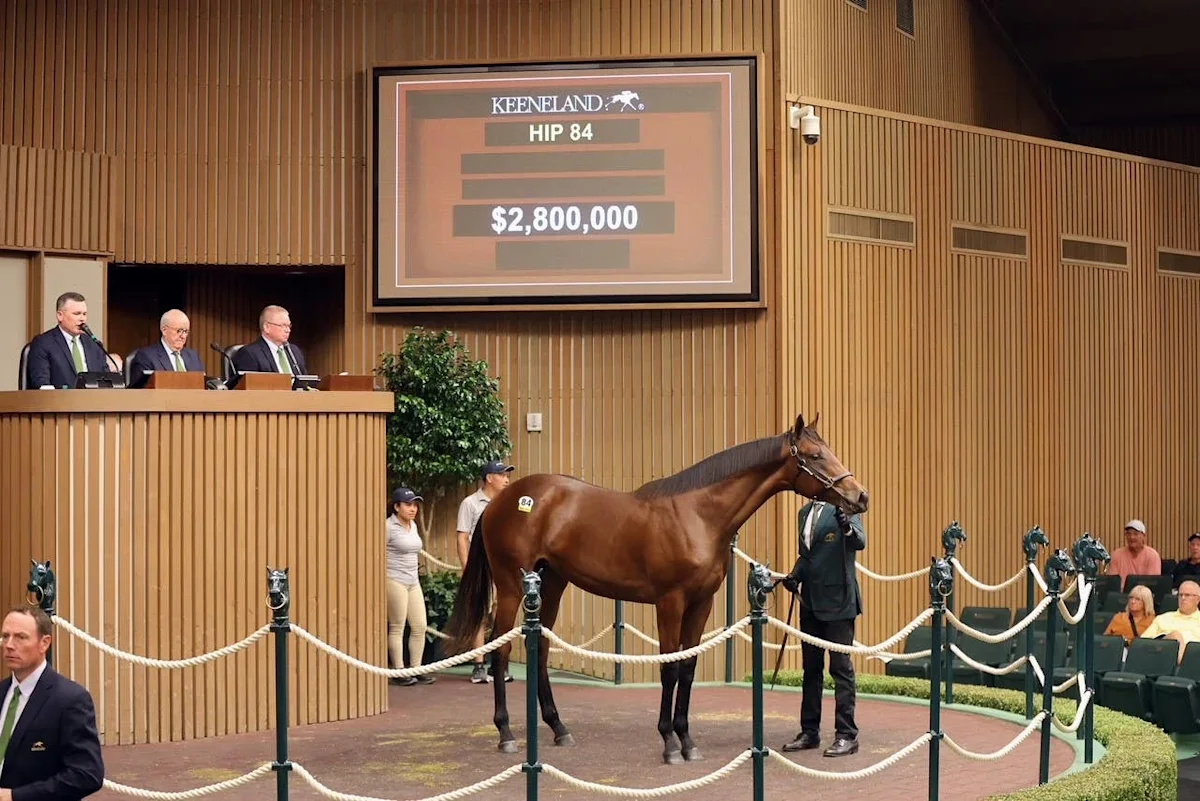
Fifteen years on, the influence of the Evans dispersal remains visible at this year’s Keeneland September sale, impacting the catalog and reflecting in some of the industry’s top names. A prime example is Gun Runner—out of Quiet Giant, purchased by Besilu Stables for $3 million—who went on to become the 2017 Horse of the Year, Hall of Famer, and a leading sire in North America. Gun Runner dominates this year’s sale for sires, with 12 yearlings sold in the select Book 1, including a standout $2.8-million colt.
The catalogue features 10 yearlings out of mares from the Evans dispersal, both retirees and younger broodmare prospects. One remarkable story is that of Street Mate, initially bought for $25,000 during the dispersal by Jerry Jamgotchian and later purchased by Bret Jones for $35,000. Street Mate has since produced more than $3.4 million in gross yearling sales, including a $425,000 colt by Life Is Good, and has yielded multiple graded stakes winners.
Besilu Stables, led by Ben Leon—the top buyer at the dispersal—also made significant purchases like Malibu Prayer for $2 million, who has a Gun Runner colt cataloged this year aiming to match the success of his winning half-brother Igniter. Other notable Evans dispersal mares and their progeny in the sale include Dance Quietly, who sold for $2 million and produced stakes winners, and More Hennessy, purchased for $360,000 carrying Breeders’ Cup Juvenile Turf winner Hootenanny in utero and now having a Flightline colt offered.
While multimillion-dollar broodmare purchases garnered attention, more modest buys like Street Mate and Malibu Mudslide have also contributed valuable broodmare strength, showing the breadth of impact from the Evans dispersal. The sale also includes horses descending from these mares, such as yearlings by Essential Quality, Collected, Life Is Good, and Oscar Performance.
Even foals born after the dispersal continue this legacy, like Lemon Dancer, who was in utero at the time and now has a Dialed In colt in the catalog. The human connections endure as well, with Chris Baker—Spring Hill Farm’s former manager and major figure during the dispersal—remaining an influential bloodstock agent.
A cornerstone of Evans’ legacy is Quality Road, a top-class homebred retired to stud before the dispersal, now part of an elite group of sires commanding six-figure fees. Quality Road keeps Evans’ name prominent not only through his racing and breeding success but also via a unique stallion deal that channels millions into the Edward P. Evans Foundation. This year, he has 21 yearlings in the September sale, including a $700,000 colt who sold early on.
Nevills reflects on how the dispersal dramatically shaped the Thoroughbred market and breeding landscape. If Evans had lived longer or passed his operation to a like-minded heir, many mares and horses might have stayed off the public market, altering racing and breeding outcomes for millions of dollars over the past 15 years. Gun Runner could have remained a homebred with a different career, and Quality Road’s stud career may have taken an alternate path.
Though these “what if” scenarios remain unanswered, the Evans dispersal story provides a rich narrative of top-level Thoroughbred racing and breeding over the last decade and a half—one horse at a time. This saga will continue to unfold as more offspring and connections appear in future sales and races.
Fan Take: This enduring influence of the Evans dispersal is a fascinating reminder of how one breeding operation can ripple through the sport for decades, shaping pedigrees, sales, and champions. For horse racing fans, understanding this legacy highlights the intricate connections behind the stars on the track and offers insight into how future champions may emerge from these bloodlines.
Source: sports.yahoo.com