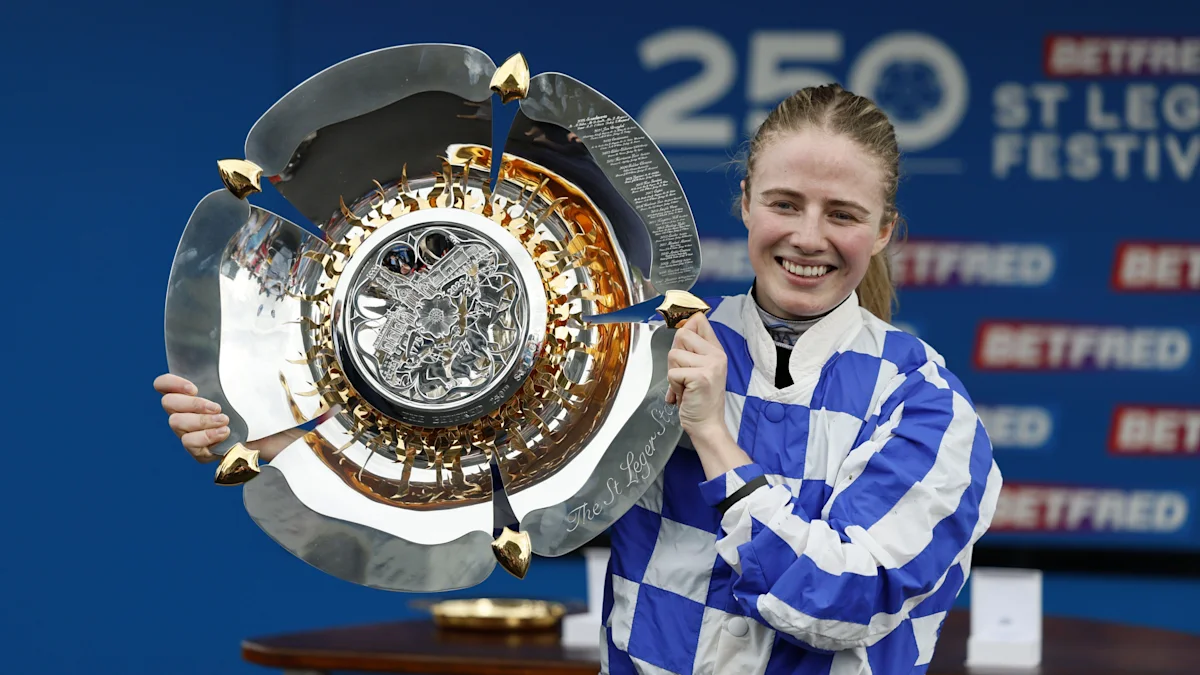
Saffie Osborne, the first woman to win a British Classic race, says the “fear of failure” has lifted following her historic victory in the St Leger at Doncaster. At 24, Osborne revealed that while she still aspires to achieve much more in her career, this milestone ensures she can look back and feel that her journey has been truly worthwhile.
Osborne described the sport of horse racing as often “very lonely,” noting that she drives around 65,000 miles annually, usually by herself. She has also endured several serious injuries, including multiple broken bones. Yet, winning one of British Flat racing’s five prestigious Classics has been a lifelong dream since she was five years old—a dream she’s now realized.
Although men and women compete alongside each other in horse racing, opportunities for female jockeys have historically been limited. Over the past 250 years, only six women have ridden in British Classic races, with a combined total of just 12 rides, according to the National Horseracing Museum. These pioneering women include Gay Kelleway, Alex Greaves, Hayley Turner, Josephine Gordon, Hollie Doyle, and now Saffie Osborne.
Reflecting on the male-dominated nature of the sport, Osborne said it is encouraging that gender is becoming less of a topic in racing conversations. She finds it meaningful to hold her unique place as the first woman to win a British Classic, especially at a time when there are few “firsts” left for women in the sport to claim.
After her trailblazing win on Highwayman—her first ride for trainer Joseph O’Brien, which came about due to the injury of regular jockey Dylan Browne McMonagle—Osborne shared that the pressure to succeed has eased. Although she has lofty goals for the future, she now has the reassurance that she accomplished one of her greatest dreams.
Osborne emphasized that her gender does not affect how she is perceived or treated within the sport. She stated that it takes years to earn respect and opportunities as a jockey regardless of gender, and she believes that at this stage, she is judged on merit alone. She hopes that her recent success will open more doors but insists she is not currently viewed any differently as a female jockey.
In the weighing room, Osborne says she is regarded as “one of the lads” and has not faced the sexism or misogyny that some other female jockeys, like Bryony Frost, have encountered. (Frost was previously bullied by jockey Robbie Dunne, who faced an 18-month ban, later reduced on appeal.)
Currently sitting eighth in the Flat Jockeys Championship with 60 winners since May, Osborne dreams of someday becoming champion jockey—the first woman ever to hold the title. She credits her agent, Tony Hind, who represents some of racing’s top jockeys, for helping her progress. She hopes to join the ranks of champion jockeys that Hind has supported throughout his career.
Fan Take: Saffie Osborne’s breakthrough victory is a landmark moment for horse racing, symbolizing growing gender equality in a traditionally male-dominated sport. Her success not only inspires aspiring female jockeys but also signals a more inclusive and competitive future for racing enthusiasts worldwide.
Source: sports.yahoo.com