Week 1 always invites overreactions, and this season gave plenty of fuel for that instinct.
After an active offseason and lofty Super Bowl expectations, the Rams opened 2026 by getting thumped 27-7 by the 49ers. The Packers looked comfortable against the Vikings before a 39-22 defeat. The Chargers, heavy home favorites, fell 26-14 to Arizona. And New England’s 13-10 loss to Seattle — plus three interceptions from Drake Maye — renewed doubts about a quarterback already under postseason scrutiny.
But which of those results should genuinely worry us?
To answer that, we examined every Week 1 loss since 2015 by teams that started the year among the top 12 in preseason Super Bowl odds — 53 historical losses in total — and tracked how those teams fared the rest of the season.
The most reassuring finding: for preseason contenders, getting blown out was hardly worse than losing a close game. Preseason contenders who won their openers from 2015–2025 reached the playoffs 72.6% of the time; those that lost dropped to 41.5%. Yet among losers the margin didn’t matter much — one-score losses produced a 41% playoff rate and defeats by nine or more points produced about a 43% playoff rate. In other words, a big Week 1 loss didn’t doom a team any more than a narrow one did. To put it another way, a contender beaten badly still made the playoffs roughly as often as a non-contender that won its opener (42.9% vs. 43.2%).
So what did matter? The clearest warning signs weren’t the final score but underlying performance: success-rate differential (how often an offense stayed “on schedule”), sack rate allowed, offensive third-down conversion rate and opponent third-down conversion rate. Using historical medians to split stronger and weaker Week 1 showings, teams that were on the wrong side of success-rate differential made the playoffs just 30% of the time versus 54% for teams that were better in that metric. One of those red flags could be overcome; multiple made recovery much less likely.
Other stats were far less predictive. Turnover margin, explosive-play differential and yards per play were noisy indicators that explained single-game quirks more than season outcomes.
Looking at combinations of red flags: among the 53 teams, those with no red flags after Week 1 (15 teams) made the playoffs 73.3% of the time, finished below .500 just 13.3% of the time, and averaged 10.3 wins. Teams with two red flags (17 teams) made the playoffs 35.3% of the time, finished under .500 41.2% of the time, and averaged 8.4 wins. Teams with three or four red flags (21 teams) saw only a 23.8% playoff rate, finished below .500 61.9% of the time, and averaged eight wins.
This isn’t a predictive model but a historical snapshot that helps separate Week 1 flukes from more fundamental problems.
How that applies to the four clubs that opened with losses:
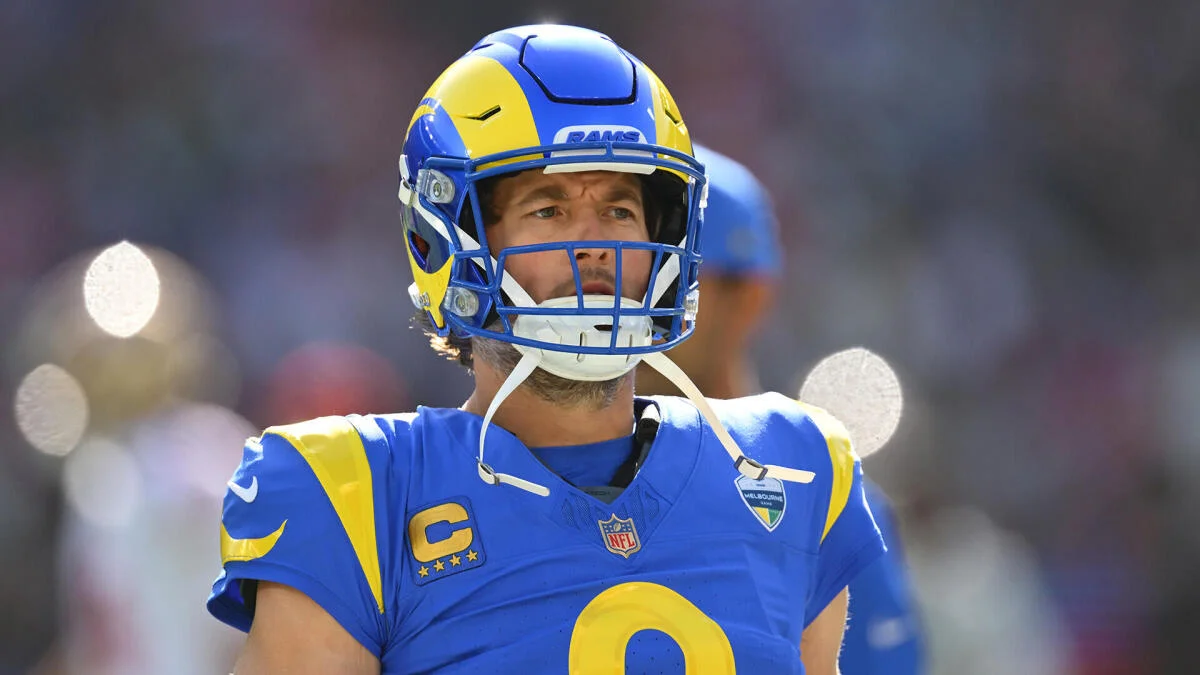
– Rams: The 27-7 defeat looks worse under the surface. Los Angeles posted a -5.4-point success-rate differential, converted only 22% on third down and allowed San Francisco to convert 58% — three of the key red flags. Historically, contenders that lost while being worse in success rate and permitting a high opponent third-down rate made the playoffs only 3 of 16 times; if you add poor offensive third-down work, the track record is even worse. This wasn’t a game driven by turnovers or one-or-two huge plays — the 49ers consistently won early downs and third-down snaps. That said, there are precedents for recovery (the 2021 Packers lost 38-3 to New Orleans and still finished 13-4), and matchup factors matter too: Kyle Shanahan has long given Sean McVay trouble. Still, the Rams need to show improved early-down play and third-down conversions quickly.
– Packers: Green Bay’s 39-22 loss looks ugly on the scoreboard but the underlying numbers tell a different story. The Packers were +12.3 in success-rate differential, averaged more yards per play, and won the explosive-play battle 7–2; they actually led for more than 50 minutes. Their problems were situational: four sacks allowed, just 25% on third down, and they gave up a 53% third-down conversion rate while Minnesota was perfect in the red zone. That’s three red flags concentrated in protection and “money downs,” which history suggests can be serious even when overall play is solid. Comparable cases include the 2021 Titans (who recovered to go 12-5) and the 2022 Packers (who struggled to 8-9), so Green Bay’s path forward hinges on fixing protection and third-down execution.
– Chargers: Los Angeles had concerns but they were narrower than the Rams’. Despite being an 8.5-point favorite, the Chargers fell 26-14, showing a 10% sack rate and converting 25% on third down. They still posted an +8.7 success-rate differential, were even in yards per play and in explosive plays, and held Arizona to a defensive third-down rate that kept them below the bad cutoff. Turnovers were a -2, but historical data shows turnover margin wasn’t a strong separator for recovery. Nonetheless, the specific combination of poor sack protection and weak offensive third-down play has not aged well historically: only one of four comparable teams made the playoffs. There are encouraging precedents (2018 Texans) and cautionary ones (2022 Packers), so the Chargers’ situation is concerning but not catastrophic.
– Patriots: New England’s 13-10 loss is the easiest to rationalize. The main issues were an 8% sack rate and a 31% offensive third-down conversion rate, but the Patriots were +10.2 in success-rate differential, held Seattle to 18% on third down, and controlled most of the clock. What hurt them were three turnovers and getting beaten on explosive plays by three. That pattern mirrors other teams — the 2023 Bills and the 2020 Buccaneers both lost openers despite strong success-rate numbers and then still had very good seasons. If turnovers, especially by the QB, persist, that’s a real problem; if Week 1 was mostly a few costly mistakes, New England’s underlying performance suggests the loss is more forgivable.
Bottom line: one Game 1 result doesn’t settle a contender’s fate, and the score itself is often the least informative metric. Historically, blowouts and close losses have yielded similar recovery rates; what matters is why a team lost. After Week 1 we should be watching down-to-down efficiency and situational football: the Rams need to stop losing early downs and third downs, Green Bay must improve protection and performance on “money downs,” the Chargers must sustain drives and protect their QB better, and the Patriots must stop gifting possessions and allowing explosive plays. Of the four, the Rams’ defeat is the most worrying on its underlying metrics, while New England’s loss is the most easily explained away. Week 1 didn’t decide any seasons, but it did point to the specific fixes each team must make — which is far more useful than fixating on the final score.
Fan Take: This analysis matters because it shows NFL fans that a final score rarely tells the whole story — underlying metrics reveal whether a team’s issues are structural or just bad luck. Paying attention to those details will make watching the next few weeks far more informative about which contenders will actually contend.
Source: www.cbssports.com