
Colin Udoh
Multiple Authors
WASHINGTON DC — Melissa Bethi made her inaugural NWSL start last night, playing for over 90 minutes and showcasing why the Washington Spirit’s significant investment in African talent is proving fruitful. The Algeria midfielder netted the decisive goal at 80 minutes, helping the Spirit secure a comeback victory against the Portland Thorns with a sharp shot from just outside the box.
This win marked Washington’s first-ever away victory against Portland and occurred just weeks after the 21-year-old joined her team, having previously played for Montpellier and competed in the Women’s AFCON.
Bethi nearly scored on her debut against Bay FC on August 30, the same day her teammate Monique Ngock, also a newcomer, impressed in her first NWSL match after arriving from France following her successful stint at WAFCON.
Washington’s African Talent Core
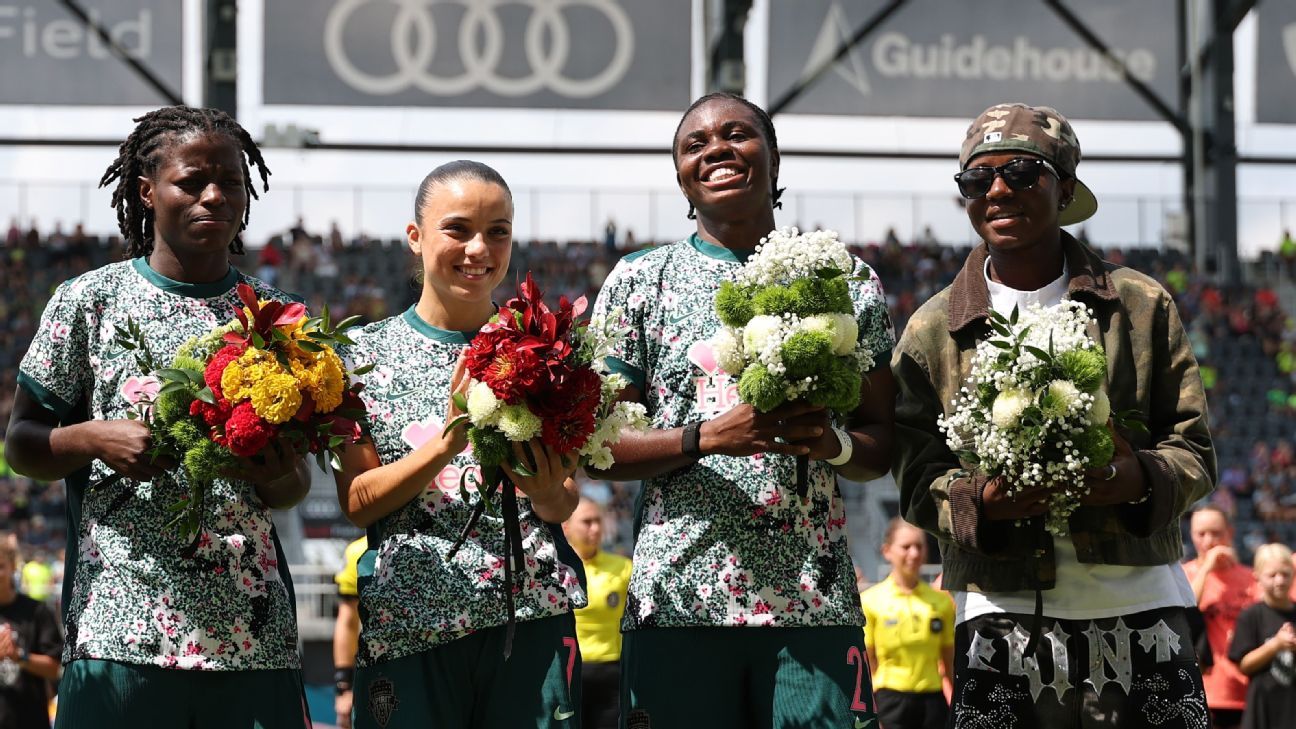
This swift adaptation is becoming a trend for the Washington Spirit, who boast the largest concentration of African players in the NWSL. key players include Ivory Coast’s Rosemonde Kouassi, Nigerians Gift Monday and Deborah Abiodun, as well as recent signings Ngock, Bethi, and Burkina Faso defender Alimata Bélem.
In addition, Tanzanian forward Clara Luvanga’s recent signing brings the total number of African internationals at the club to seven. Bélem, who inked a four-year deal in July, is currently on loan at Spanish side SD Eibar and will join the Spirit for preseason in 2027.
Canadian defender Elizabeth Tse, with family roots in Ivory Coast, has made a name for herself as a solid presence on defense after initially considering representing the Ivory Coast before pledging her allegiance to Canada.
Like Bethi, Monday scored in her debut starting match for the Spirit, netting the only goal to halt Orlando Pride’s impressive 22-match unbeaten streak at home. Abiodun also made her mark as a midfielder, contributing significantly during her initial appearance, while Ngock left a positive impression in her first match at Audi Field on the same day as Bethi.
The Spirit have also benefited from Kouassi’s contributions. The Ivorian, who is the longest-tenured African player on the squad, has become integral to the Spirit’s offense since joining from Fleury in 2024. She recorded two goals and three assists before departing for WAFCON and was the leading scorer in the 2025-26 Concacaf W Champions Cup, racking up 10 goals and 12 assists in 50 games for the Spirit through July.
Monday, joining from Tenerife in March 2025, has added depth to the attack, contributing 12 goals over 40 appearances for Washington by June. This season, she scored a late winner against Bay FC and assisted Trinity Rodman in a victory over Boston Legacy.
Abiodun began establishing herself in the midfield after her 2025 arrival but faced a season-ending injury, making 320 minutes over nine appearances, with four starts before being sidelined.
NWSL teams have rarely seen such consistent contributions from African players, and according to Ngock, this success is no accident. She noted that the support from the organization has allowed her to settle in smoothly, alleviating pressures associated with her transition.
“They tell me to take it one step at a time and not to stress,” she shared with ESPN. “Though everything is new, I feel comfortable in this environment.”
This consideration is particularly vital as Ngock arrives after an intense WAFCON, where she played 480 minutes over six matches, helping Cameroon secure its first African championship. Instead of rushing her integration into a well-established team, she appreciated the Spirit’s encouragement to take her time and felt welcomed by both teammates and fans.
“I feel lucky to be on such an amazing team. Everyone brings positive energy, and I feel it all around,” she said. “While I had to catch up with the team, the atmosphere made it easier for me to find my footing.”
Although communication on the field comes naturally, Ngock acknowledged that adjusting to cultural differences and language barriers is more complex off the field.
Why Washington is a Welcoming Place for African Players
The metropolitan area of Washington is a significant hub for African immigrants, with nearby Prince George’s and Montgomery counties housing one of the largest populations of sub-Saharan African immigrants in the U.S. This proximity allows players from countries like Nigeria, Cameroon, Ivory Coast, Algeria, Burkina Faso, and Tanzania to access familiar resources, easing their acclimation to a new environment.
Monday, who has shared with ESPN, highlighted the availability of African foods in the area, with grocery stores and restaurants offering a taste of home despite the distance.
Furthermore, players often arrive at training to find fellow African teammates already present. While this camaraderie is relatively new, Washington’s relationship with African talent is not. The Spirit were among the first in the league to recognize the potential of African players. Western New York Flash initially signed Estelle Johnson from Cameroon before the league’s launch in 2013, though she did not play for Cameroon until 2019. In 2014, Houston Dash was the first to sign a directly recruited African player, Osinachi Ohale from Nigeria.
Washington stepped up its commitment in 2015 by bringing in Nigerian internationals Francisca Ordega, Ngozi Okobi, and Josephine Chukwunonye. Ordega’s long tenure made her one of the first lasting African players in the league, and now, the Spirit’s African presence is stronger than ever.
Despite this growth, Spirit coach Adrian Gonzalez deflects any notion of an Africa-focused recruitment strategy, emphasizing that their priority is identifying talent. “We focus on skill, not nationality,” Gonzalez clarified, stating that they prioritize players who align with the team’s culture and playing style.
1:01
Melissa Bethi scores in the 80′
Gonzalez’s statement reflects the composition of the Spirit’s diverse roster, featuring players from 12 countries across North America, South America, Europe, and Africa. “Our team’s diversity is part of our identity, and we’re proud to welcome players from around the globe,” Gonzalez explained.
This variety is undoubtedly a factor in the success of the club and its players. Despite this, the increasing number of African players is hard to ignore.
At the recent WAFCON, six Spirit players participated, comprising more than half of the active NWSL representatives at the tournament. Other teams, including Kansas City Current and Orlando Pride, also fielded African players, but the Spirit’s numbers outshine the others significantly.
Furthermore, since the tournament, several new signings have expanded the league’s African representation. The Seattle Reign acquired Ivorian forward Ami Diallo, while Kansas City signed Cameroonian defender Maëva Nyadjou, already on a squad featuring Malawi’s Temwa Chawinga. Expansion club Denver Summit welcomed Naomi Eto, a standout at WAFCON.
This trend confirms the increasing appreciation of African talent within the NWSL, with Washington clearly leading the charge, focusing not merely on recruitment but also on maximizing player potential. Monday emphasized that success stems from a fun atmosphere at training: “Training is always enjoyable, and the connections formed during matches originate from that aspect.” Ngock reiterated the importance of a great environment: “It’s easier to adapt here, and I feel supported.” The shared linguistic connection on the field unites the team, as Ngock expressed: “When we have the ball, we speak the same language.”
Washington’s progress creates a supportive atmosphere for African players considering a transition to the NWSL. They arrive to find others who have endured similar journeys, in a community enriched with African influences that make settling in much easier.
When asked if the Spirit could be labeled the NWSL’s “FC Africa,” captain Andi Sullivan responded with laughter, saying, “I’m fine with that.”
As soccer fans, the emergence of African talents in the NWSL reveals the league’s expanding diversity and commitment to inclusivity. This trend not only enhances the quality of play but also paves the way for a richer, more vibrant soccer culture in North America.
Source: www.espn.com