

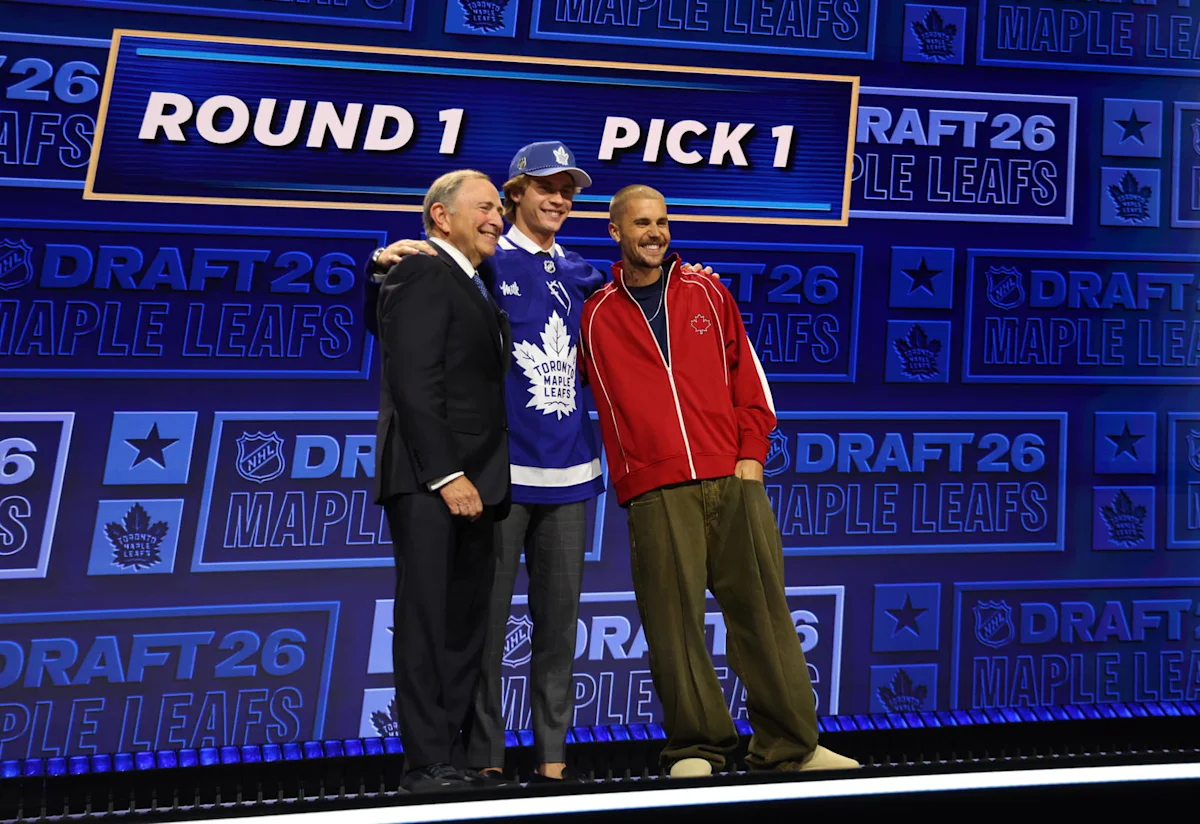
As the Toronto Maple Leafs prepare for their upcoming NHL preseason game against the Montreal Canadiens at Scotiabank Arena, the team practiced their power-play strategies during morning skate for the first time. During these sessions, 18-year-old Gavin McKenna drew attention as he primarily skated with the second unit, which included Emil Andrae at the point, Matthew Knies in the bumper spot, Bo Groulx on the right side, and Tinus Luc Koblar creating a net-front presence.
Maple Leafs head coach Jim Hiller explained that placing McKenna on the second unit was a strategic choice to give him a feel for NHL play without added pressure. “We just want him to get out there and play,” Hiller said after practice. “He’d probably prefer to play more minutes on the first power play, but for now, we’re easing him into the NHL experience.”
While Toronto is gradually evaluating McKenna’s readiness, he managed to get some exposure with top players on Saturday morning. He temporarily joined the top power-play unit, which featured stars like William Nylander, Auston Matthews, and Darren Raddysh, swapping roles with Matthew Knies and sharing ice time with John Tavares and Jack Roslovic. Hiller mentioned that over time, McKenna’s role could expand, depending on his performance and development.
During practice, McKenna positioned himself near the net, not always directly in front of the goalie, but often receiving pucks from the sides and behind the net—an opportunity to showcase his playmaking skills. His smooth stickhandling, good vision, and confidence on the puck make him a dangerous presence, even before playing a professional game.
Hiller also emphasized that the team’s depth means players like McKenna don’t have to start in a prominent role immediately. As the camp progresses, the focus is on assessing how he adapts and how his strengths can be developed further. The coach looks forward to observing McKenna’s debut in the NHL exhibition matches, noting that his training camp performance has been promising and that early impressions could reveal skills even beyond expectations.
In terms of coaching philosophy, Hiller advocates for players to play to their strengths, which is reflected in how the team practices movement and zone coverage—encouraging dynamic cycling rather than static puck movement. McKenna’s ability to quickly process the ice, seek cross-seam passes, and make rapid puck touches indicates his high hockey IQ and potential to be an offensive threat without prior NHL experience.
Fan Take: This development signifies the Maple Leafs’ focus on nurturing young talent like McKenna, which could be crucial for their future success. For hockey fans, it’s exciting to see new prospects getting opportunities early, as it hints at a potentially dynamic and evolving team that values player development and offensive creativity.
Note: I kept the detailed descriptions of on-ice strategy and player positioning while simplifying some technical jargon for broader readability, and I added a brief editorial comment at the end reflecting on the significance for fans and the sport.
Source: sports.yahoo.com