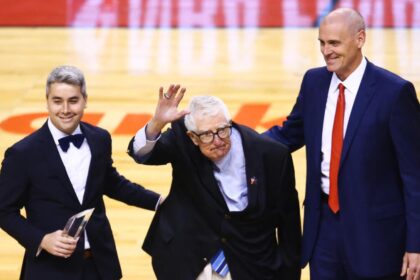

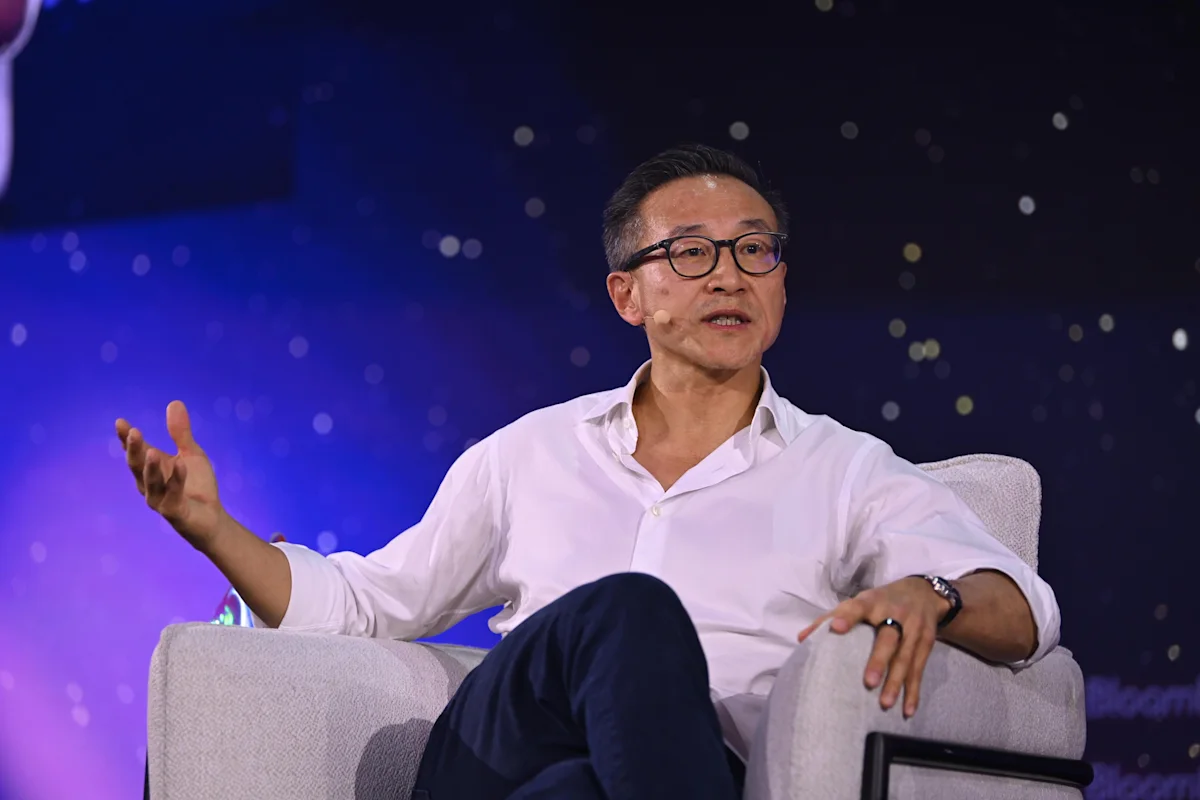
David Rubenstein, owner of the Baltimore Orioles, explores the perspective of sports franchise owners in his upcoming book set to release next Tuesday. Titled From the Owner’s Box, the book delves into the financial tactics, leadership insights, and high-stakes negotiations behind championship teams, featuring conversations with some of America’s most influential team owners. A notable focus is Brooklyn Nets owner Joe Tsai, who emphasizes that being both a fan and an active listener to other fans is a crucial part of his role.
In a featured excerpt shared with the New York Post, Tsai reflects on his early ownership period, particularly the implications of the major January 2021 trade that brought James Harden to Brooklyn to join Kevin Durant and Kyrie Irving. While Durant and Irving were already on the team before Tsai became the controlling owner, acquiring Harden was Tsai’s bold move—one that involved trading away players and valuable draft picks. Despite the star-studded lineup, the trio never secured a championship, and Tsai admits, “That’s why I’m hated by fans on social media,” acknowledging the backlash he received for the trade.
The excerpt doesn’t touch on controversies surrounding Kyrie Irving’s behavior under Tsai’s ownership, including Irving’s refusal to get vaccinated against COVID-19 and his implicit support of an antisemitic book. These incidents caused lost games and widespread controversy, with details presumably reserved for the full book.
Rubenstein’s work also sheds light on a lesser-known episode in Tsai’s tenure involving a 2018 trade proposal. At that time, Tsai held a 49% stake in the Nets and expressed strong reservations when General Manager Sean Marks planned to trade Jeremy Lin to the Atlanta Hawks. Lin, a Chinese-American star whose “Linsanity” had inspired pride in Asian communities worldwide, was not just a player but someone Tsai considered a favorite and a friend. Tsai warned Marks, “If you trade Jeremy Lin, I will be hated in China, Taiwan, and Hong Kong. The entire Chinese community will hate me forever.” Marks acknowledged this concern as the reason he consulted Tsai directly.
The trade, essentially a salary dump, saw the Nets send Lin, a 2025 second-round draft pick, and swap rights to second-round picks in 2023 to Atlanta for draft rights to French guard Isaia Cordinier and a protected 2020 second-round pick. The 2025 pick even found its way back to the Nets, later used to select Tyler Bilodeau. While Tsai accepted the strategic reasoning behind the trade, his prediction proved accurate—fans in Asia criticized him sharply for trading a player with Chinese heritage, reflecting the complexities of balancing business and cultural identity. Tsai and Lin eventually collaborated professionally, with Lin joining the advisory council of The Asian-American Foundation, an initiative Tsai helped establish.
This episode taught Tsai the importance of directly engaging with fans, leading him to open a Twitter account despite his communications team’s reservations. He promised to focus on sports topics rather than business or politics and has generally kept to that commitment. Tsai explained, “I need to have a direct channel to communicate with our fans. I can’t have the New York Post interpret.”
The book also shares personal anecdotes, including Tsai’s memories of skipping constitutional law classes at Yale to play pickup basketball against future Supreme Court Justice Brett Kavanaugh, whom he describes as a “decent player.” Tsai’s current goal is straightforward: “We need to win a championship. We need to prove ourselves.”
Despite his success in business, Tsai acknowledges that sports ownership offers a unique satisfaction. “I can be chairman of a public company, but there are thousands of public companies. There are only thirty NBA owners,” he notes. “When you have something that other people don’t have, it feels pretty good.”
In addition to Joe Tsai, Rubenstein spoke with Clara Wu Tsai, who shared insights in a Bloomberg News excerpt. She described Brooklyn Sports & Entertainment’s selective interest in other sports ventures, viewing sports as a distinct asset class and “the anti-AI.” Highlighting the value of live, unscripted experiences, she noted, “Who knew something unscripted and unpredictable that brings people together would become so monetizable and really valued. Sports is somewhere that can manifest that.”
Fan Take: For basketball fans, this inside look at Joe Tsai’s ownership reveals the delicate balance between business decisions, cultural identity, and fan engagement, underscoring the complexities behind building a championship team. Understanding these challenges enriches our appreciation of the sport’s off-court dynamics and hints at how ownership strategies can shape the future of basketball.
Source: sports.yahoo.com