Editor’s Note: We’re excited to welcome Leo Li as the newest contributor to the Canis-verse! This is Leo’s debut article for CH, and moving forward, he’ll be sharing valuable insights on player development. Let’s give him a warm welcome, Canis style!
Anthony Edwards’ growth since joining the NBA in 2020 has been closely watched over several seasons—and it’s easy to understand why. Coming out of Holy Spirit Prep in Georgia, he was a highly regarded 5-star recruit according to 247Sports, drawing comparisons to legends like Dominique Wilkins and Dwyane Wade.
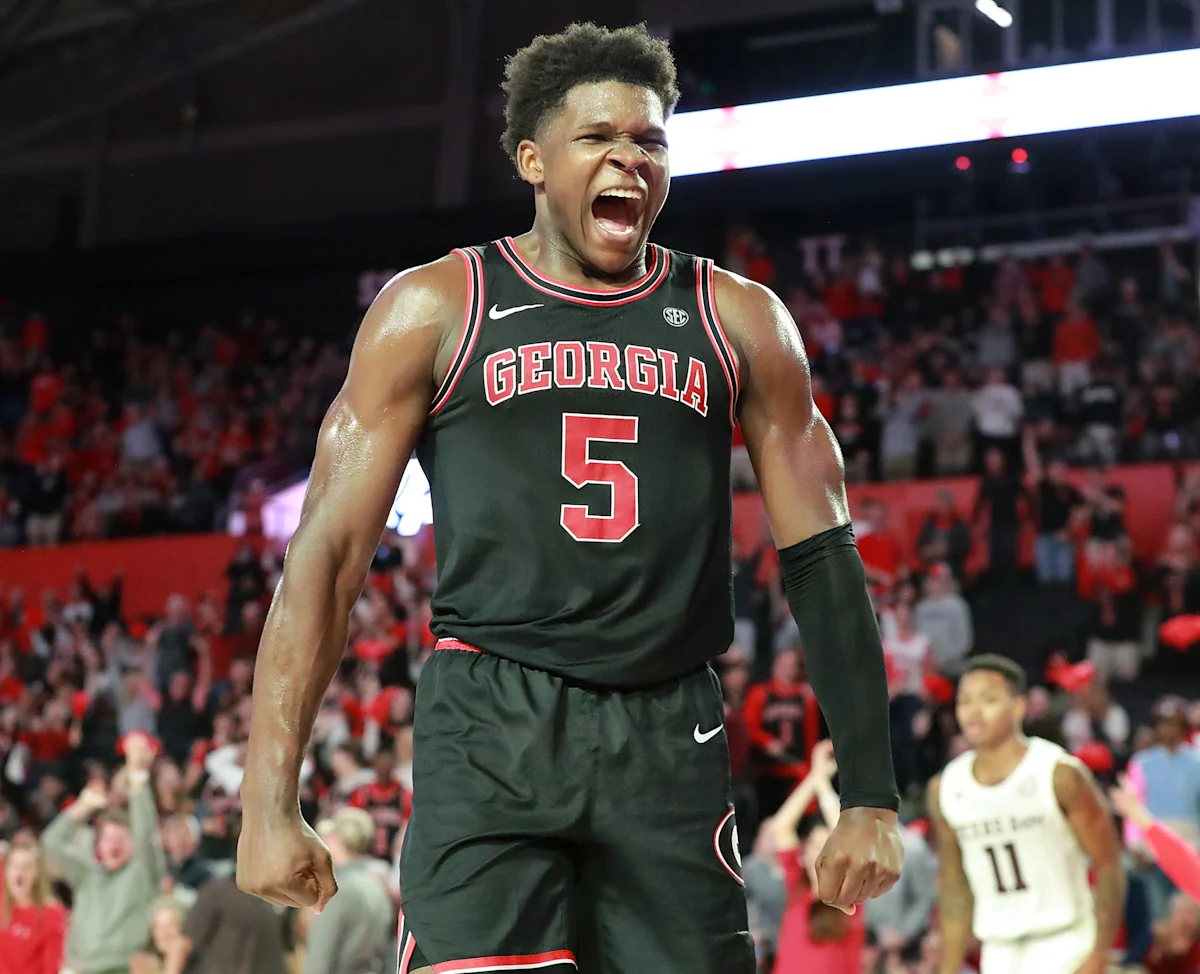
Following an electrifying yet inconsistent freshman year at Georgia marked by scoring outbursts and exposed flaws, concerns arose regarding his decision-making, shooting, defense, and even his passion for basketball. Before the 2020 draft, which was considered weak, Edwards was not a lock for stardom. Many mock drafts placed him behind future teammate LaMelo Ball, along with James Wiseman and Killian Hayes—a hindsight that now seems baffling.
Of course, Edwards was taken first overall by Minnesota and quickly emerged as a true superstar and one of the league’s top players. Many argue he has far outpaced expectations, even with the early hype, surpassing the “realistic” comparisons to players like Victor Oladipo, DeMar DeRozan, and Zach LaVine. But were the pre-draft assessments off the mark? While red flags existed, perhaps scouts and fans judged too hastily. Can we, with all the data available at the time, explain his rapid rise?
This article argues that Edwards was underrated as a prospect. Analyzing scouting and draft reports reveals missed nuances and offers a fresh perspective on the young star.
Edwards’ physical profile was extraordinary: standing 6’5” with a 6’9” wingspan, weighing 225 lbs, and boasting a 41.5-inch vertical, he was an athletic marvel. Few guards combine size, strength, and explosiveness as he does, enabling him to regularly finish with powerful dunks—he had 27 in his rookie season. Yet, much of the pre-draft praise focused on his vertical and speed traits, overlooking key aspects.
Though his athleticism was unquestioned, scouts doubted his scoring efficiency. At Georgia, his true shooting was only 51.7%—below average among his positional peers. How then to explain his dramatic improvement? A crucial, often-overlooked element is his elite eccentric force production, measuring in the 98th percentile in the P3 Peak Performance Project. This ability—essential for sharp deceleration and change-of-direction—parallels that of stars like James Harden and Luka Dončić, both renowned for their crafty scoring.
While Edwards was not initially as polished as a Luka, his athletic foundation already supported dynamic scoring through rapid stops and bursts. This skill set is a proven recipe for creating efficient offense, and Edwards had rare braking power behind an explosive engine.
His shooting also surprised many. Pre-draft, his three-point percentage was a disappointing 29%, and his mechanics, though neat, weren’t heralded as elite. Still, his free throw shooting (77%) and solid strike rate on non-dunk attempts showed promise. He attempted an exceptional volume of shots—over 13 three-pointers per 100 possessions, with more than half unassisted—as a true offensive focal point. This combination of high volume and athletic finishing was unusual for a freshman, and foreshadowed his unique NBA potential.
Critics saw his shot selection as poor and predicted he needed to adjust toward more rim attacks and off-ball play to succeed. However, this judgment ignored his youth, raw roster environment, and the value of his self-created jumper volume—an essential trait for superstars who consistently generate offense amid chaos.
Although not perfect, his aggressive scoring mentality paved the way for his game today, setting him apart from many peers. His ability to create shots at will is key to his impact, provided he balances scoring with team play. Encouragingly, even in college, Edwards demonstrated flashes as a playmaker, particularly with interior passes—a skill yet to fully blossom in the NBA.
Reflecting on all this, the Timberwolves saw a rare talent in 2020: a young, powerful, super-athlete who could both dunk over centers and shoot multiple threes per half, had a scoring foundation like all-time greats, displayed playmaking potential, and showed solid touch—much more than many outside observers realized.
Though not without flaws in defense and decision-making, Edwards’ pre-draft “hero ball” style was a misunderstood strength rather than a liability. Minnesota’s faith in his unique traits, film, and stats is clearly paying dividends.
Fan Take: This deep dive into Anthony Edwards’ rise reminds basketball fans why watching player development beyond surface stats matters. It also highlights how embracing a player’s raw strengths, even if unconventional, can reshape the future of the game by unlocking potential few predicted.
Source: sports.yahoo.com