

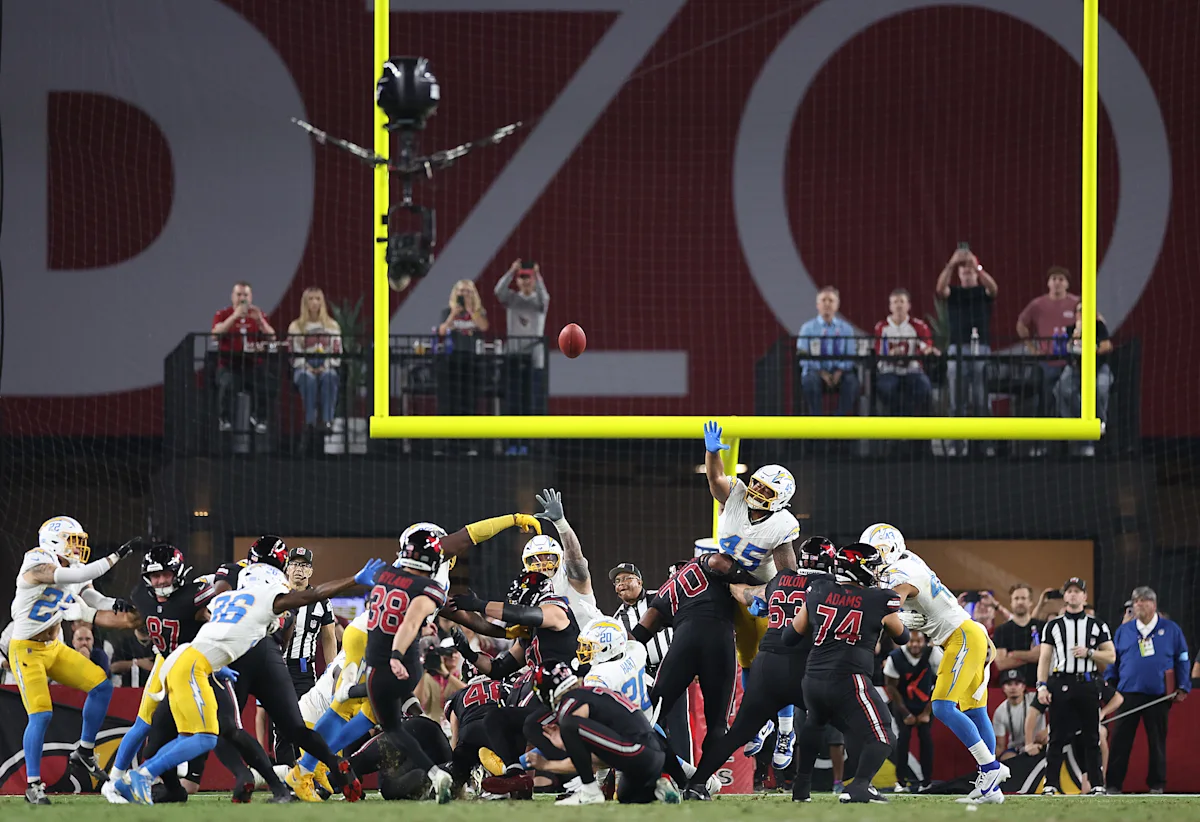
The NFL has tightened what can be shown on stadium video boards during field-goal and extra-point attempts, issuing a league-wide memo before the start of the 2026–27 season. Teams are now limited to either a static image or a standard wide-angle “All-22” view on the large screens behind the end zone while kicks are being attempted, the league told clubs, according to ESPN.
Previously, league rules already banned moving, flashing or blinking images and text on video boards during kicks, allowing only static content to avoid distracting or giving an advantage to the home team. The new directive narrows those allowances further by restricting certain static images as well.
The change was prompted by a social-media post from former NFL analytics coach Ryan Paganetti, who highlighted images shown on the New England Patriots’ Gillette Stadium board that could create an optical illusion for visiting kickers. Paganetti — who has worked for the Eagles, Jaguars and Raiders — posted screenshots from a decade of Patriots broadcasts showing an All-22 field view that included the goalposts behind the end zone; that overlay was offset from the real uprights and could potentially mislead kickers. He also noted that in 52 examples he reviewed, the same wide-field image with goalposts was not displayed when Patriots kickers were attempting kicks.
Under the earlier guidelines, the Patriots’ display did not violate the rules because it was static. The NFL said other clubs had experimented with different board content as well. Under the new policy, teams may only show a standardized All-22 angle (one that does not show the goalposts) or another approved static image, and the identical image must be presented for both teams during field-goal and extra-point attempts to eliminate any competitive advantage. The league warned teams that violations of the stricter rule would result in disciplinary action.
Fan take: This matters because seemingly small in-stadium visuals can affect the outcome of kicks, and fans should expect the league to clamp down to protect competitive fairness. Going forward, stadium production will likely be more tightly regulated, reducing opportunities for home-field tricks but also limiting creative in-game presentation.
Source: sports.yahoo.com