
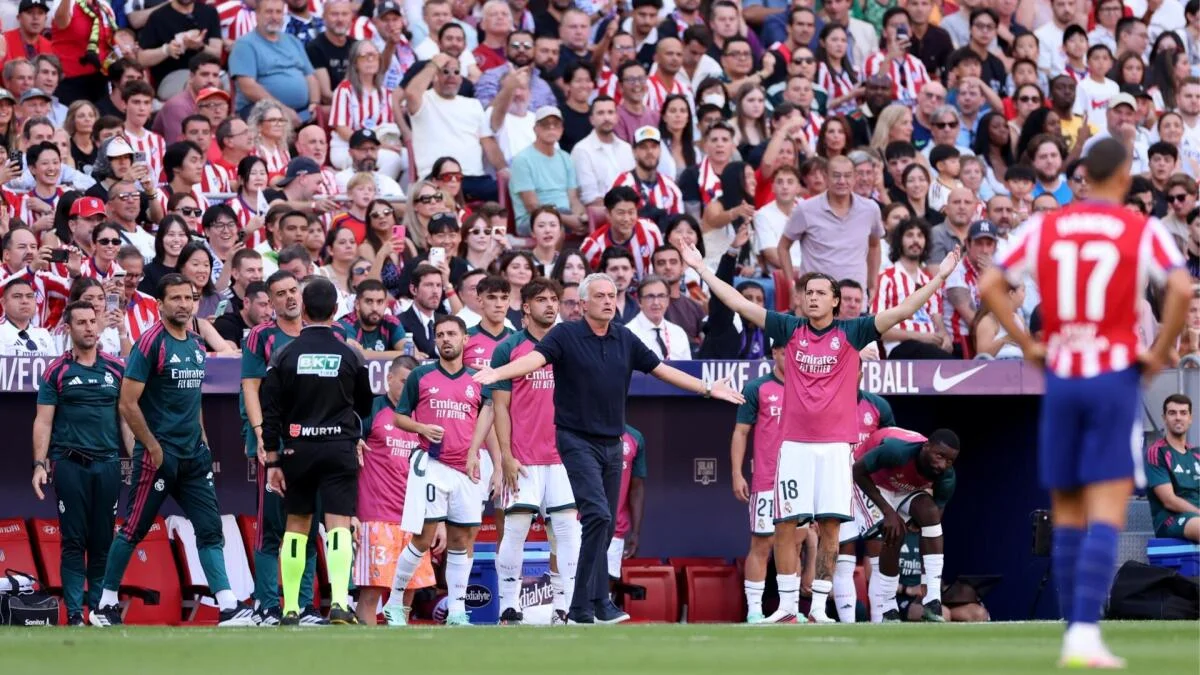
With just over a minute left in stoppage time, Real Madrid’s Bernardo Silva found himself near the penalty area, ready to attempt a last-gasp equalizer against Atletico Madrid. Given Silva’s talent and Real Madrid’s history of snatching points when they least deserve it, fans could easily visualize him succeeding. However, the free kick he took was disappointing—his shot was quickly intercepted, leading to Madrid’s 2-1 defeat. This loss leaves them six points behind LaLiga leaders Barcelona.
Despite a late goal from Antonio Rudiger that momentarily ignited hopes for a draw, Real Madrid’s performance was lackluster, especially after they spent 85 minutes underwhelming. Manager Jose Mourinho’s side, while currently sitting in third place, risks dropping to fourth if Real Betis secures at least a point against Deportivo La Coruna.
Real Madrid’s defeat raises necessary reflections on their recent performances and complaints about officiating. They could argue that losing Dean Huijsen to a red card in the 53rd minute shifted the game’s momentum against them, particularly after a penalty converted by Alejandro Grimaldo, but the truth is that their struggles were rooted in earlier tactical failures—problems they created for themselves long before that red card.
The highly anticipated Madrid derby turned out to be a dull affair, with both teams managing only ten shots combined, leading to a meager expected goals count of 0.22. At halftime, it was clear something needed to change, and Atletico’s manager, Diego Simeone, took decisive action by substituting midfielder Koke for center back Marc Pubill, reshuffling positions that allowed his team to take control and capitalize on Madrid’s disorganization.
With a staggering 65% possession after halftime, Atletico Madrid dominated, netting their second goal through Jonathan David and leaving Real Madrid bewildered about their strategy. Mourinho’s choices, featuring players like Silva, Rudiger, Eduardo Camavinga, and Yan Diomande, seemed limited to mere substitutions rather than a coherent game plan to regain control. This lack of resolve ultimately cost them, underscoring a broader trend of disorganization within the squad.
For those closely observing Real Madrid’s recent trajectory, this decline isn’t surprising. Their reliance on an expensive but unfocused strategy is becoming increasingly evident. The decision to bring in Xabi Alonso was an attempt to inject new life into the team, but his brief tenure highlighted a worrying trend of aimlessness. Mourinho’s hiring, while noteworthy, comes after a decade of underwhelming league performances and raises questions about his current effectiveness in instilling a strong identity in his teams.
In post-match comments, Mourinho addressed the officiating, prominently displaying notes in his press conference to argue that Atletico committed multiple fouls deserving of red cards. While his theatrics may draw attention, they distract from the more significant issues facing his squad, which struggles with leadership and cohesion. Under the stewardship of club president Florentino Perez, the team seemingly ignores persistent squad imbalances that undermine their potential year after year.
Despite having high-quality players, the absence of a collaborative strategy leaves them merely going through the motions. The ongoing trophy drought further complicates their situation, and confidence in their ability to challenge for titles appears diminishing.
Fan Take: This defeat underlines the struggles of a historically powerful team, hinting at deeper systemic issues within Real Madrid. For soccer fans, it raises concerns about the competitive landscape in LaLiga, as the gap widens between elite performance and recent standards displayed by Madrid.
Source: www.cbssports.com