

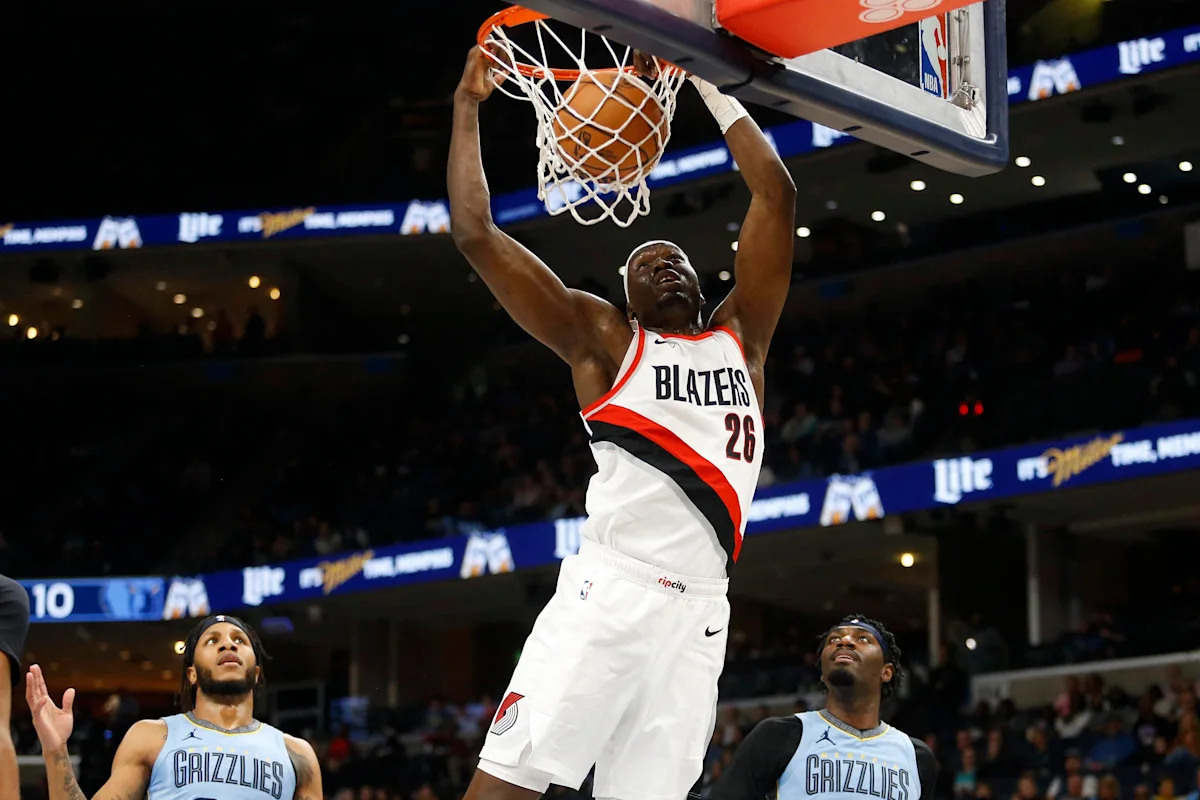
To start off today’s discussion, I want to express my approval of the Suns acquiring Duop Reath. It demonstrates that Brian Gregory is actively seeking ways to foster competition across the roster, which is a positive move. As the saying goes, iron sharpens iron.
I appreciate that Reath brings the skill set of a stretch five—a role the Suns currently lack—though I believe Khaman Maluach has the potential to develop into that type of player over time. There’s also a promising mentorship angle here since both players are Sudanese and have traveled unique paths to reach the NBA. With Mark Williams injured, Maluach’s development timeline has accelerated considerably, adding more responsibility to his role. Having a teammate nearby who can offer guidance, even if just starting out himself, is a smart way to use the roster while supporting a young player’s growth.
That said, it’s important to temper expectations around Duop Reath.
Remember who he is as a player: at 30 years old, his prime years likely lie behind him. Frankly, he has one standout skill that’s generating buzz: his shooting ability.
When I mention “everyone,” I mean the social media hype. Fans are sharing highlight reels breaking down the 23 three-pointers he made last season, and there’s excitement because he picked Phoenix over the Knicks.
We need to rein it in here. We can’t get carried away with players simply because they show some initial interest or choose our team. We saw this happen with Bradley Beal—how did that turn out? Just because someone goes with Phoenix doesn’t mean they instantly become a fan favorite or deserve unwavering loyalty. Reath picked Phoenix because it offers more opportunity than the Knicks, who have a higher ceiling but less room for him.
Ultimately, Reath’s role is to increase competition toward the bottom of the roster. In the best case, he earns a spot, which may mean the Suns waive Haywood Highsmith or Jamaree Bouyea—both of whom I prefer over Reath. A middle scenario could see him signing a two-way contract, likely replacing CJ Huntley or Koby Brea, though I favor keeping younger players with more upside. The worst-case is that Reath doesn’t make the team, becoming this year’s Jared Butler—a player the fans briefly latch onto only to fade away.
Again, I like what Reath could bring to Phoenix. But I don’t understand the hype over such a one-dimensional player. He’s undersized for a big, isn’t a strong rebounder, struggles defending on the perimeter, is merely average inside, and isn’t a playmaker. Yes, his three-point shooting adds value, but that shouldn’t blind us to the rest. We can respect why the Suns brought him in, appreciate the competition he introduces, and not fall for him just because he chose Phoenix.
Perhaps he’ll shoot his way into the roster and serve as a valuable floor spacer for the Suns. Maybe his presence benefits Maluach amid a fast-tracked development plan. Or maybe by Christmas, we’ll barely remember he was ever here. All these outcomes are possible. Let’s appreciate what Reath might offer but reserve true fandom until he proves himself.
Fan Take: This signing reminds basketball fans how roster-building is as much about fostering competition and potential as it is about instant impact. Watching how Phoenix integrates players like Reath could offer insights into developing talent and maximizing role players in a league that increasingly values versatility and shooting.
Source: sports.yahoo.com