

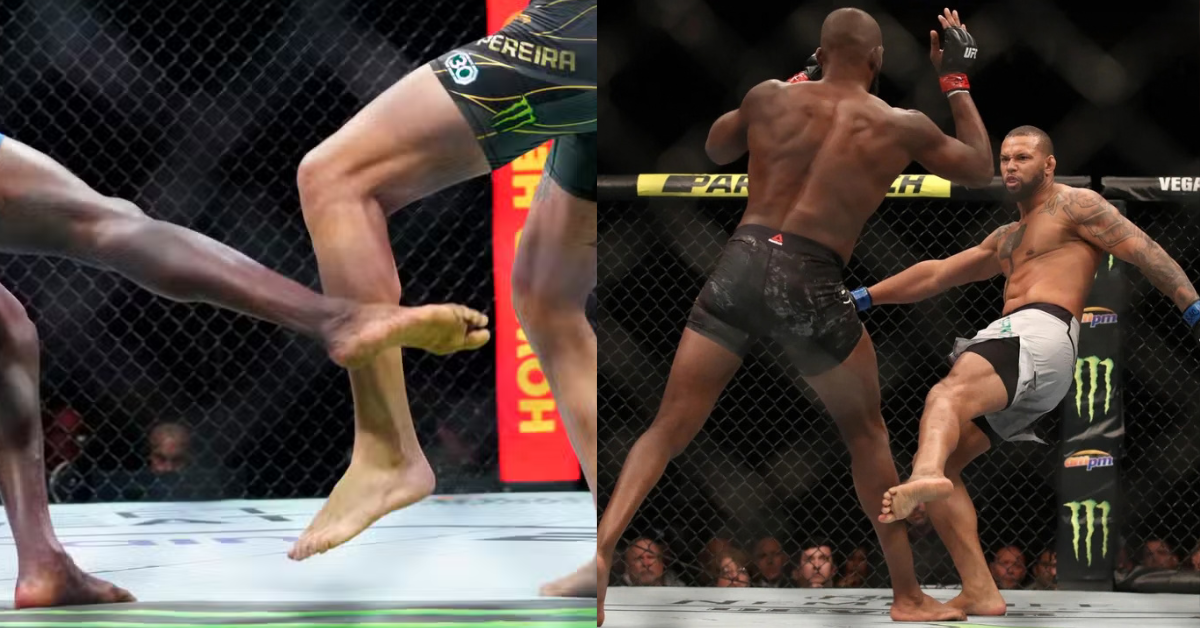
The calf kick might seem straightforward at first glance, but once the lead leg stops responding properly, its impact becomes clear. The strike targets just below the knee, where the common peroneal nerve wraps around the fibular neck. Damage to this area can impair ankle movement, reduce sensation, and cause foot drop, which explains how a series of precise kicks can severely disrupt a fighter’s balance and mobility.
Joseph “Bazooka Joe” Valtellini, a former GLORY world champ, recommends the safest way to counter a calf kick is by eliminating the target: pulling the lead leg straight back as the kick comes in, then immediately counterattacking. If the opponent combines punches to close the distance, Valtellini advises retreating quickly before stepping back in with a counter strike. The ideal response depends on distance and how much weight is on the front foot.
Another defensive maneuver Valtellini advocates is the “heel-to-butt” retreat. Instead of jumping away, bend the knee and flick the heel backward, letting the kick pass underneath while staying close enough to respond effectively. Raising the leg higher is better when it’s unclear if the strike is aimed at the calf, knee, or thigh. Following this, a toes-out check comes into play—lifting the foot slightly and rotating the toes and knee outward so the kick hits the harder shin blade instead of the soft outside calf. If there’s no time to lift the leg, a subtle planted pivot can still alter the impact point.
Valtellini also teaches additional defenses like a 45-degree shin check, an inside jam, and a straight rear punch for situations where backing up isn’t an option.
Muay Thai coach Nat McIntyre offers similar advice for handling calf kicks. As a former IKF and WKA US professional lightweight champ, he tells fighters to turn the leg outward and step slightly into the strike, reasoning that repeatedly kicking a hardened shin is not a smart tactic. McIntyre also notes that a side stance can give the attacker a better angle while keeping toes pointed directly at the opponent improves defensive readiness.

Elite MMA example comes from Jose Aldo—analyst Jack Slack highlighted how Aldo bends the knee and pulls his lead foot toward the opposite knee, causing calf kicks from Pedro Munhoz and Renato Moicano to slide underneath. Aldo maintains his position to counter by retracting only the lower leg, avoiding significant loss of ground. He also pivots on his back foot, shortens his stance, and angles his shin toward the incoming strike, combined with a slight backward movement. This differs from stepping into the kick prematurely, which risks absorbing a full blow while off balance.

When Munhoz attempted close-range kicks, Aldo closed the distance with body shots. In MMA, strikes like straight punches, teeps, or level changes exploit the vulnerability of an opponent balancing on one leg while kicking.
Muay Thai sometimes allows catching and sweeping the leg, depending on the rules, whereas kickboxing typically emphasizes pulls, checks, jams, and punch counters. Switching stances can protect a damaged lead leg, but only if the fighter is comfortable fighting from the opposite side. Catching a calf kick is risky due to the low, fast nature of the strike and the exposure of the head when reaching down.
There’s no single foolproof method to block a calf kick. It’s crucial to stay light on the feet to move the lead leg, simultaneously rotate the knee and toes, and always follow defenses with counters that curb the attacker’s confidence. Practicing these techniques slowly with an experienced coach before speeding up is key. Persistent numbness, weakness, or changes in walking after training should prompt medical attention rather than pushing through another tough session.
In essence, calf kick defense falls into three strategies: evade by moving the target, block using the shin, and punish the kicker. The general rule is to evade first, block second, and counter right away.
- Pull the leg back: Quickly retract the lead leg from range and then counter with a punch or kick—ideal when spotting the attack early.
- Gallop away: Step both feet backward if punches accompany the calf kick, then move back in to counter once the kick misses.
- Heel-to-butt withdrawal: Bend the knee and flick the heel backward, removing only the lower leg while staying close enough for a counterattack.
- Lift the leg: Raise the full lead leg so the kick passes underneath, useful if it’s unclear whether the strike targets the calf or thigh.
- Turn the toes outward: Rotate the knee and toes outward to use the shin’s blade against the kick; Nat McIntyre adds a slight step into the strike to reinforce this block.
- Planted shin check: If lifting isn’t possible due to weight distribution, keep the foot grounded and turn toes outward to deflect on the shin rather than the softer calf muscle.
- Aldo knee hinge: Bend the knee and pull the lead foot toward the opposite knee, allowing the kick to slide under while you stay ready to counter.
- Aldo rear-foot pivot: Pivot on the back foot, close the stance, and angle slightly away to protect the calf and present the shin to incoming kicks.
- Punch counter: Throw a straight punch as the opponent kicks, possibly absorbing some impact but discouraging repeated attempts.
- Jam the kick: Step inside before the kick gains full force, disrupting the strike and following with punches; timing is critical to avoid being off balance.
- MMA takedown counter: Time the kick and change levels to take advantage of the opponent balancing on one leg—applicable to MMA and similar sports allowing takedowns.
- Switch stance: Shift the wounded lead leg to the back if possible, protecting a damaged calf. This works only if the fighter is proficient fighting from both stances.

Jonathan Haggerty’s Calf Kick Defense ⬇️
by u/weareonechampionship in Kickboxing
Fan Take: Understanding how to defend against calf kicks is crucial as this technique grows increasingly popular in combat sports, capable of taking an opponent out without causing severe damage. Mastering these defenses not only elevates a fighter’s overall skill set but also forces the evolving sport to become more strategic and dynamic, making every exchange more exciting for fans.
Source: www.lowkickmma.com