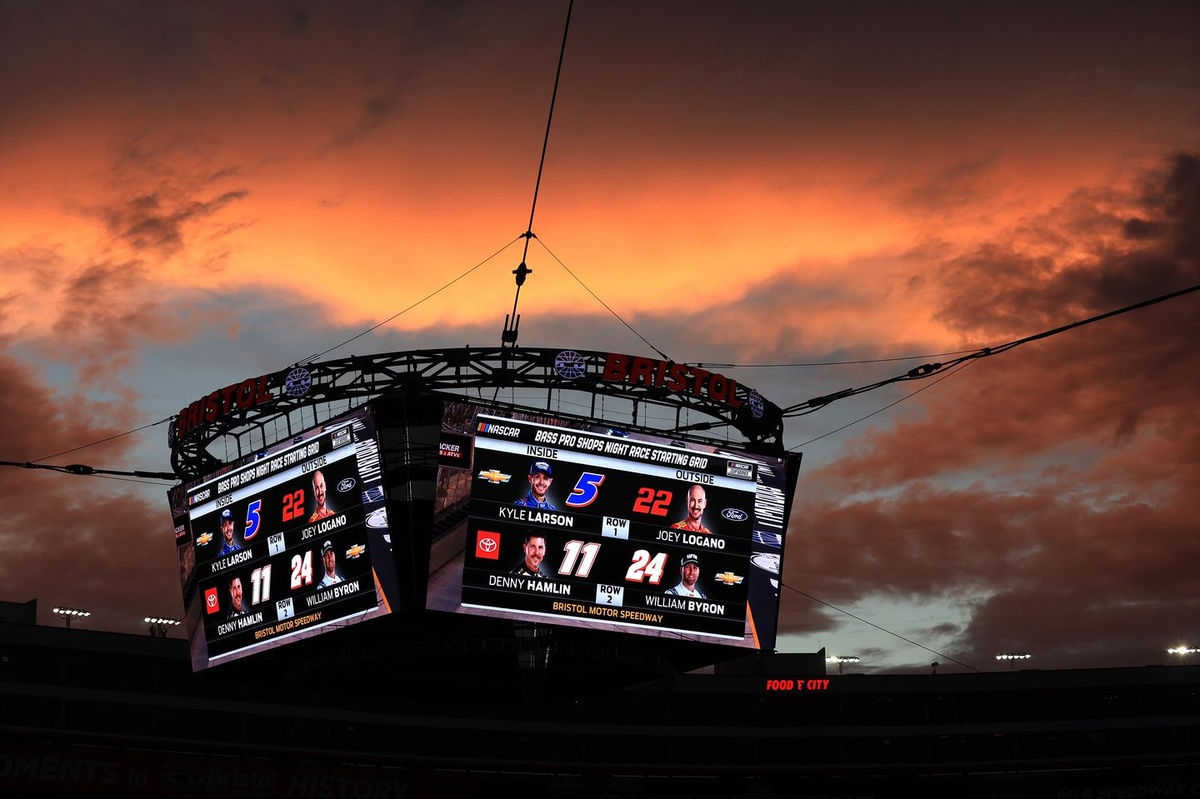
Amidst the excitement of the Bristol Night Race and a fiercely contested Chase for the Championship, two of the first three playoff events experienced canceled qualifying sessions due to weather, leading to starting grids determined by the “metric system.” This system has sparked debate as the season progresses from summer into autumn, primarily because stage points now play a critical role in crowning the champion.
To recap, the metric system combines 70% of a car’s finishing position from the previous race with 30% of its ranking in the owner points standings to set qualifying order throughout the season. Introduced during the 2020 season when COVID-19 eliminated regular qualifying sessions, the metric aimed to avoid always awarding pole position to the points leader, Kevin Harvick at the time. In playoff races, the metric changes so that the 16 championship contenders qualify last, but if qualifying is rained out—as happened at the Southern 500 and Bristol Night Race—the starting lineup is strictly based on the metric without grouping playoff drivers at the front.
This caused issues at Darlington, where 70% of the lineup determination came from the previous race at Daytona, affected by major crash incidents that sidelined several contenders. Consequently, many drivers were disadvantaged from competing effectively for Stage 1 wins and vital stage points. Kyle Larson and the No. 5 Hendrick Motorsports team were a prime example, suffering at Darlington but benefiting from the metric the following week at Bristol when Larson earned the pole after his Gateway victory.
Crew chief Cliff Daniels has candidly suggested that if qualifying is canceled, teams should start strictly according to owner points — a sentiment shared by Larson, who also feels the current system can put teams at a disadvantage during critical playoff moments. Larson expressed frustration about starting positions penalizing them at Darlington despite their strong race effort, which ultimately cost them valuable stage points. Despite acknowledging that better performance at Daytona could have improved their position, Larson advocates for defaulting to points-based lineups in rainouts.
Championship rival Denny Hamlin rejects the idea of random draws for qualifying, arguing that drivers must earn their starting spots through performance rather than luck. He acknowledges that superspeedway results, known for unpredictability, complicate using the metric after such races but suggests that relying more heavily on standings over the season could balance things out in the long run.
Other drivers, like Ryan Blaney, take a pragmatic stance, accepting the metric as generally fair and recognizing the unique challenges when rain causes lineup decisions at pivotal races. Ross Chastain prefers to focus on racing rather than the rules discussion, while Darrell Wallace appreciates the metric’s role in maintaining competition but finds the rainout adjustments confusing. Michael McDowell adds that rainouts happen infrequently during the Chase, and overall, the metric system performs well throughout the season.
Brad Keselowski offers a philosophical view, stating no method is perfectly fair when unavoidable circumstances like weather intervene. He empathizes with NASCAR’s position of making tough calls where consistency is prioritized over perfect fairness, noting that in any system, some winners and losers are inevitable.
Fan Take: The controversy over the metric system highlights just how crucial every point has become in NASCAR’s playoff format, where even qualifying procedures can make or break a championship bid. For fans, this debate underscores the tension between fairness and unpredictability — a balance that NASCAR must carefully manage to keep the competition thrilling yet equitable.
Source: www.motorsport.com