What makes sports truly captivating is the element of surprise—any team can topple another, regardless of expectations. However, in the WNBA this September, that unpredictability seems to have taken a backseat.
Before the season paused for the FIBA World Cup break, all eight playoff positions were locked in. Since play resumed, only one non-playoff team has managed to beat a playoff contender. Kahleah Copper was the lone hero on Monday night, scoring 31 points and delivering the decisive basket to lead the Phoenix Mercury to a narrow one-point victory over the Dallas Wings, marking the second straight matchup between these teams.
Prior to Copper’s standout performance, playoff teams had dominated with a perfect 13-0 record against non-playoff squads. The Wings’ five-point triumph over the Mercury on Saturday stood as the only single-digit margin game, with the next closest being Minnesota Lynx’s 12-point win over the Connecticut Sun and the Golden State Valkyries’ 13-point victory against the Seattle Storm.
This uneven competition has been further highlighted by just three head-to-head games featuring playoff teams clashing against each other. Tuesday’s lineup continues this trend, featuring one game between two non-playoff teams—the Toronto Tempo visiting the Chicago Sky (8 p.m. ET, WNBA League Pass)—and three contests pitting playoff teams against lower-ranked squads: Sun versus Washington Mystics (7:30 p.m. ET, WNBA League Pass), Los Angeles Sparks against Las Vegas Aces (10 p.m. ET, ESPN), and Valkyries facing Portland Fire (10 p.m. ET, WNBA League Pass).
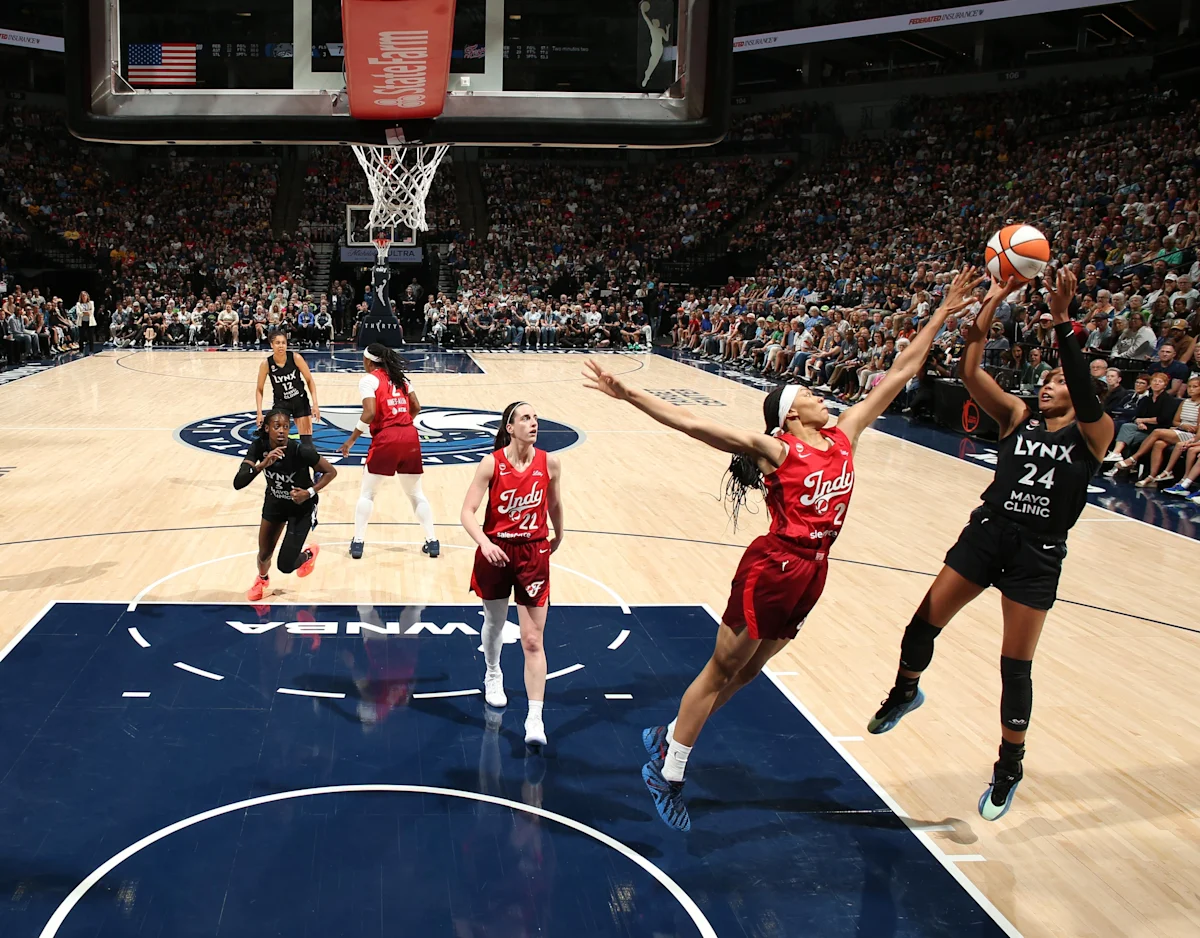
The biggest highlight for WNBA fans on Tuesday is the Minnesota Lynx taking on the Indiana Fever in Indianapolis—this is the sole matchup involving two playoff-bound teams and the first of a two-game home-and-home series (8 p.m. ET, ESPN).
This matchup is particularly intriguing because both the Lynx and Fever have appeared somewhat vulnerable since returning from the break. For Minnesota, their narrow 12-point victory over the Sun raises more concerns than their loss to the New York Liberty. Given the large margins typically seen between playoff and non-playoff teams, the close score suggests the Lynx aren’t as dominant as expected. For example, the Atlanta Dream lost to Connecticut by a franchise-worst 44 points. Despite leading 12-0 after the first quarter, the Lynx allowed 31 points in the second, revealing defensive issues that prompted head coach Cheryl Reeve to criticize the team’s defense as “unacceptable.”
Napheesa Collier, a Lynx player, agreed with her coach, pointing out the team’s struggles to maintain focus and uphold their standards throughout the game.
Similarly, the Indiana Fever hold a modest 1-1 record since the World Cup break. Their win over Toronto, although approaching a 20-point margin, was only secured late in the fourth quarter, with the depleted Tempo in contention for most of the game. On the other hand, Indiana suffered a harsh 16-point home defeat against Washington, being outplayed from the start as a 15-point first-quarter deficit ballooned to 26 points before settling.
After that game, Fever head coach Stephanie White was less frustrated than Reeve. She explained her tactical decision to expand the rotation searching for defensive support and emphasized that the team’s ideal rotation is still evolving.
Are these shaky showings from the Lynx and Fever proof that Zack Ward’s prediction was correct—that Minnesota and Indiana face the greatest pressure to win the championship this season? Does this pressure help explain their underwhelming performances ahead of the playoffs?
Tuesday provides an opportunity for either team to dispel these doubts with a strong, confidence-boosting win. Beyond just proving their championship credentials, both squads have much at stake. A win for the Lynx would secure the No. 1 seed in the playoffs, while the Fever, positioned between seeds No. 4 and No. 8, could jump closer to the top with two victories in Minnesota. Conversely, two losses might plunge them to the bottom seed, potentially setting up more post-season encounters between the two teams.
What do you think about Minnesota and Indiana? Are they struggling under the weight of expectations, or are their playoff ambitions still on track? Who will come out on top Tuesday? Share your thoughts and join the conversation.
Fan Take: This news matters because it highlights the WNBA’s evolving competitive dynamics heading into the playoffs, with top teams showing cracks under pressure. For fans, it signals an intense finish filled with high stakes and drama that could elevate the league’s excitement and visibility.
Source: sports.yahoo.com