

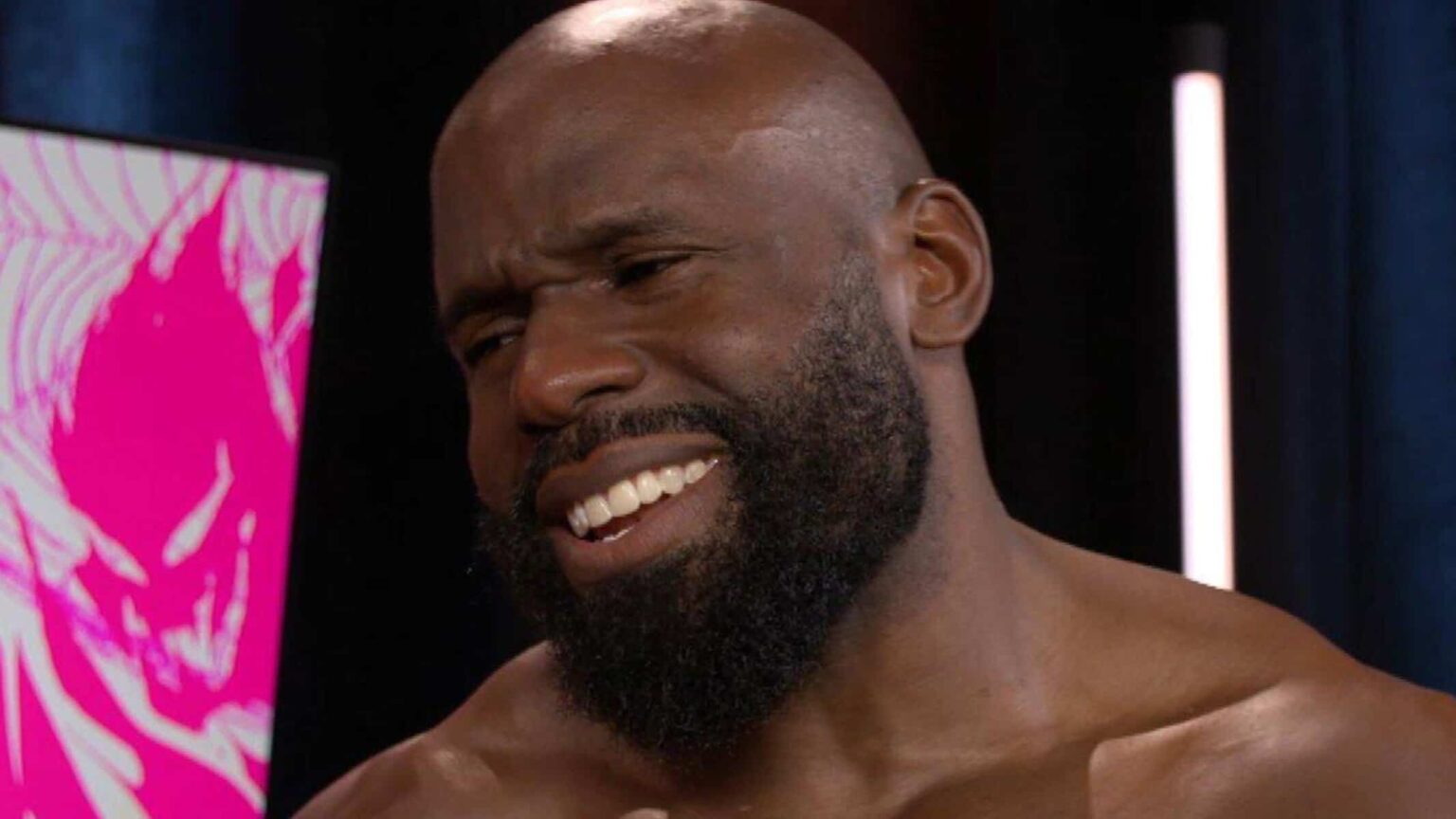
Apollo Crews advocated for the Nigerian persona before it was even introduced on television, which ultimately became the highlight of his WWE career. On the podcast Insight with Chris Van Vliet, Crews revealed that the concept originated from him. While working alongside Big E, he pitched the idea, noting that neither Raw nor SmackDown featured African representation at the time. The character debuted in late 2020, flourishing through 2021, as Crews turned heel, adopted a Nigerian accent, and teamed up with Commander Azeez. During this period, he captured the Intercontinental Championship by defeating Big E at WrestleMania 37 and held the title for 124 days.
Crews shared, “My family is Nigerian. Though I wasn’t born there, my bloodline is Nigerian.” Born in California, his parents hail from Nigeria, with his father immigrating to the U.S. in 1983. He connected with the character because it reflected a personal story: he spent part of his childhood in Uganda and Kenya, and his parents spoke English at home to help with school. Reflecting on this, Crews said his father later regretted not teaching them their native language, expressing a desire to understand Nigerian culture more deeply and bring that journey to the fans.
The inspiration also drew from the film Black Panther, particularly the character Killmonger. Crews admired Killmonger’s story of reclaiming his rightful legacy, seeing a parallel to reconnecting with his own roots. When pitching the idea, Vince McMahon’s initial question surprised Crews: “Is he going to have an accent?” Crews was initially opposed to the accent, feeling it didn’t make sense and recalling how Nigerian American kids often mimicked their parents’ accents as kids but never imagined performing it on a national stage.
Despite his hesitation, Crews eventually embraced the role fully once the decision was made. He modeled his accent partly on his father’s mannerisms and fully immersed himself in the character, which sparked mixed reactions but succeeded in getting people talking. The change came abruptly—Crews recalled rehearsing a promo in his normal voice, only to be told ten minutes before the show to perform it with an accent. This behind-the-scenes pressure highlighted an aspect of wrestling that fans rarely see.
Looking back, Crews considers this character phase the peak of his WWE career because it allowed him to lose himself in the role rather than simply being himself. He received praise from Big E, Terry Taylor, and Paul Heyman, all acknowledging his commitment. However, Crews regrets the sudden nature of the accent shift, believing that introducing it from the start would have made it more authentic and avoided confusion about its legitimacy.
He sympathized with others like Kofi Kingston who faced uncomfortable questions about their accents live on TV, underscoring the challenge of such portrayals. Crews also shared a memorable detail about his first night performing the character, standing with a nervous security guard who had only been at the Performance Center for two weeks—this was Trick Williams, who has since become a rising star.
The Nigerian accent wasn’t the first time WWE altered Crews’ presentation without explanation. In 2018, for about four months, he was billed simply as Apollo, dropping his last name due to sensitivity around the Parkland shooting, since the shooter’s surname was similar to his own. WWE never publicly explained this, and the surname returned later that year after fan support. Interestingly, Crews originally preferred just “Apollo” and felt the backlash was more about the unexpected removal of his full name than the name itself. He believes the one-name format works well, noting that fans often chant just “Apollo” anyway.
Crews was released from WWE on April 24 after an 11-year tenure and has since debuted in TNA wrestling under his old independent ring name, Uhaa Nation.
Fan Take:
Apollo Crews’ story sheds light on the complexities behind character development and representation in professional wrestling. His journey underscores the importance of authentic cultural portrayal, which not only enriches storytelling but also connects deeply with fans, potentially influencing WWE and other promotions to embrace more genuine diversity in the future.
Source: wrestlingnews.co