
The New York Knicks displayed near-flawless team chemistry on their way to capturing the 2026 championship. Every player made sacrifices and fulfilled the roles the squad required, creating an atmosphere that was both palpable and exceptional—a hallmark often seen en route to titles but much tougher to sustain afterward.
Concerns surfaced quickly in New York. Knicks owner James Dolan labeled the notion of surpassing the NBA’s second salary cap apron as “suicidal,” and not long after, key reserve and the only homegrown player in the championship rotation, Mitchell Robinson, was allowed to sign with the Boston Celtics. Although losing Robinson was a significant setback, it wasn’t necessarily fatal to the team’s prospects, especially since Andre Drummond was brought in as his replacement, with the potential to seek an upgrade later. Internal development and positional flexibility—like possibly having OG Anunoby cover center—offer the Knicks some breathing room despite this departure.
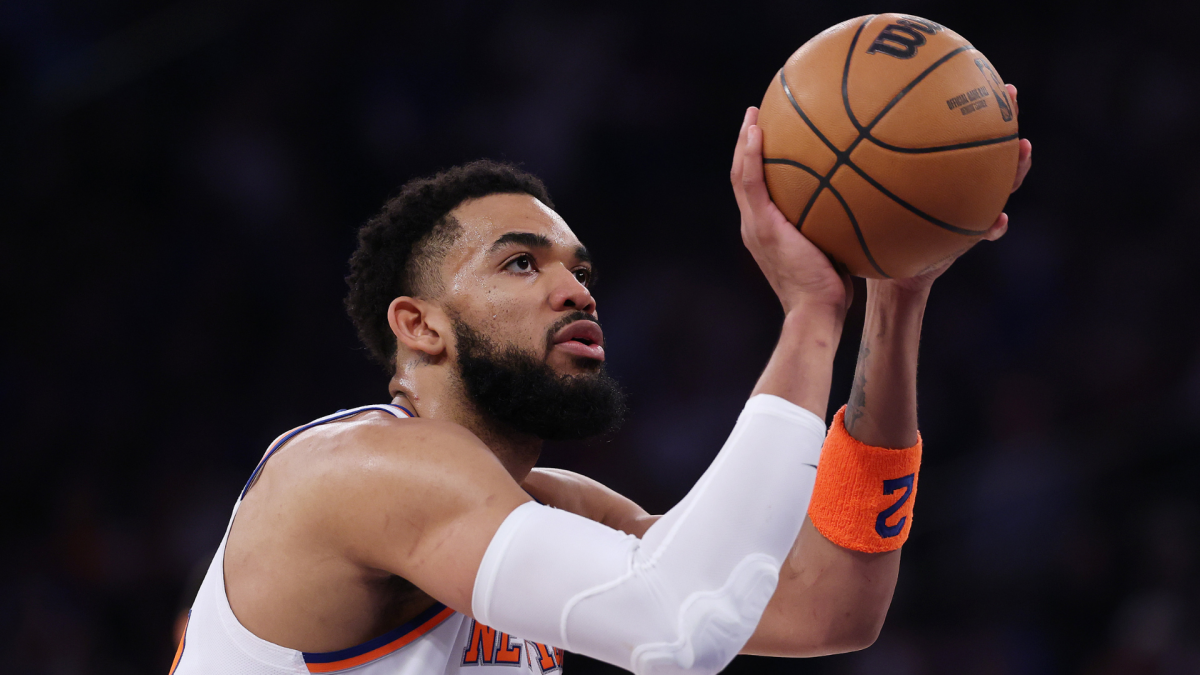
The real challenges lie with the starters, where contract negotiations are imminent. Four starters are approaching free agency, and talks with Karl-Anthony Towns, the first to start negotiations, have reportedly stalled. Although discussions remain friendly, a deal before training camp seems unlikely. Understanding the Knicks’ financial landscape helps explain why this standoff is so critical.
Towns, who is 30, has two years left on his current supermax extension signed with Minnesota, including a player option for the 2027-28 season. This could allow him to opt out and enter free agency when top teams are expected to have significant salary cap space. With the cap projected at $176 million, other teams could offer him a four-year deal nearing $265 million, an amount Towns could command if his performance remains consistent. Notably, Towns is considered perhaps the only center capable of matching up with the NBA’s rising star, Victor Wembanyama, which only enhances his market value.
The Knicks can extend Towns for up to four years at around $277 million before the June 30 deadline. According to SNY, the Knicks have proposed deals in the $45-$50 million annual range—effectively a discount compared to what Towns could get elsewhere. This figure aligns with what other elite big men around Towns’ age earn. Rudy Gobert, a relevant comparison and former teammate of Towns, took a deal that started him at about 22.6% of the cap after declining a player option worth roughly 30%. If Towns accepted a similar percentage decrease, his deal would begin near $48.4 million, consistent with current Knicks offers.
This discount is vital because it would give the Knicks financial flexibility to sign other key players without breaching the second apron. The team currently has about $93 million in second apron space with eight players under contract, but factoring in Towns and Josh Hart—who has a $22.4 million team option for 2027-28—tightens that budget considerably. If both exercise options, New York would have less than $10 million left to sign at least four more players, likely forcing tough decisions on retaining contributors like Miles McBride.
The Knicks hope Towns will accept a lower salary in exchange for long-term security, similar to Gobert’s arrangement with Minnesota, enabling them to better manage their roster. The same strategy may apply to Hart, whose extension will probably depend on Towns’ decision. This explains the slow progress on Hart’s contract talks as the team waits for clarity regarding Towns’ future compensation.
The stakes become even higher looking beyond 2027-28, especially during the 2028-29 season when Finals MVP Jalen Brunson and Finals hero OG Anunoby will have player options. Extending all five key players—Towns, Brunson, Anunoby, Hart, and Mikal Bridges—would cement a core of Knicks legends but poses immense salary cap challenges in the era of punitive luxury taxes. The team will likely need to ask these stars to accept some financial compromises, emphasizing the intangible benefits of playing in New York and their championship potential.
However, this request may be hard for players to swallow, particularly in light of ownership’s unwillingness to exceed the second apron to retain Robinson. Brunson has already taken a discount critical to winning the title and deserves fair compensation moving forward. Balancing fair pay while maintaining locker-room harmony is delicate, as players are human and sensitive to equity issues.
Going forward, it seems nearly certain the Knicks will reach an agreement with Towns, given his irreplaceability and the team’s limited assets and cap space to pursue alternatives. The bigger quandaries lie with other starters and how the organization manages aging veterans like Hart, who, at 32, might be the likeliest candidate to move on due to declining shooting ability and style of play.
The Knicks’ firm stance on avoiding the second apron remains in place, primarily due to severe penalties for repeated apron violations—including lost future first-round picks. With most of their draft capital allocated to Brooklyn, the Knicks must tread carefully. While trading future picks for earlier ones is an option to acquire cost-controlled talent, it carries risks and has had mixed results, as seen in Minnesota.
There is no reason for Knicks fans to panic yet. Although Towns isn’t currently willing to accept the desired pay cut, a deal will almost certainly be finalized in time. The starting five remains intact to defend their title, but the salary cap realities highlight the difficulty of sustaining a championship-caliber roster in today’s NBA without players accepting sacrifices. Those hoping the Knicks can indefinitely keep their star core intact without compromise may be disappointed.
Fan Take: This story is a crucial glimpse into the financial tightrope teams must walk to maintain championship rosters under the current NBA salary rules. For fans, it underscores the delicate balance between building dynasty-level continuity and navigating salary cap constraints that might force hard decisions on beloved players, shaping the league’s competitive landscape in years to come.
Source: www.cbssports.com