

Cass Meehan fondly remembers childhood trips to their Mohegan ancestral lands filled with family gatherings and basketball games. At age six, wearing an oversized red jersey, they cheered alongside excited crowds at some of the Connecticut Sun’s earliest WNBA matches.
Now, nearly 20 years later, the Mohegan Tribe has sold the Sun to the Houston Rockets organization, resulting in the team’s relocation.
“I can still recall the electrifying atmosphere inside the arena,” Meehan shared. “We knew we were supporting Mohegan’s own team.”
At 29, Meehan is part of a devoted group of Mohegan supporters preparing to bid farewell to a franchise that has served as a source of communal pride.
The Mohegan Tribe made history in 2003 by purchasing the WNBA franchise for $10 million, becoming the first Native American tribe to own a professional sports team. Over 24 seasons, the Connecticut Sun helped bridge generations of tribal members while providing a platform to showcase Mohegan language, culture, and values to a broadening fan base.
However, in May, the tribe’s business division finalized a $300 million sale to Tilman Fertitta, owner of the Houston Rockets, leading to the team’s move. The proceeds are designated to strengthen the tribe’s financial situation amid significant debt.
Beth Regan, chairwoman of the Mohegan Tribe’s Council of Elders and a lifelong Connecticut Sun supporter, anticipates an emotional farewell during the Sun’s final home game on Thursday. “Family and community are at the heart of who we are,” Regan reflected. “The Connecticut Sun have been an integral part of our cháhshayooô — our family.”
Though basketball wasn’t Meehan’s primary interest, their passion and commitment to the Sun has been unwavering. “Whether the team was winning or not didn’t matter,” they said. “The Sun and their fan base are truly special.”
Meehan recalls sport ing space buns like their idol Nykesha Sales and eagerly joining fellow tribal members to get player autographs. The players regularly attended Mohegan youth camps and the annual Wigwam Festival, and the mascot Blaze became a familiar figure at community social dances.
Heather Landry, whose family shares a deep connection to the Sun, purchased season tickets this year and cherished the moments her 10-year-old daughter Emersyn got to meet standout players and snap selfies with stars like Brittney Griner and Saniya Rivers. One unforgettable memory for Landry was when her family happened upon a Sun practice at the Mohegan government center and were invited to watch from the bleachers.
“It’s going to be hard not to cry when we leave the arena for the last time,” Landry said.
The Sun became a unique cultural ambassador in the WNBA. When guard Charlisse Leger-Walker, who is Māori and Samoan, was drafted by the Indigenous-owned team, she felt it was meant to be. Mohegan elders often visited practices to welcome players and offer blessings, reconnecting the team with tribal values.
From halftime shows featuring tribal singers and dancers to the team’s logo inspired by traditional Mohegan designs, the Sun showcased Indigenous culture to a national audience. Regan personally conducted sage smudging rituals during tough losing streaks and gave injured players sweetgrass braids. She fondly recalls moments such as 6’6” center Jonquel Jones squeezing into the tribal sweat lodge.
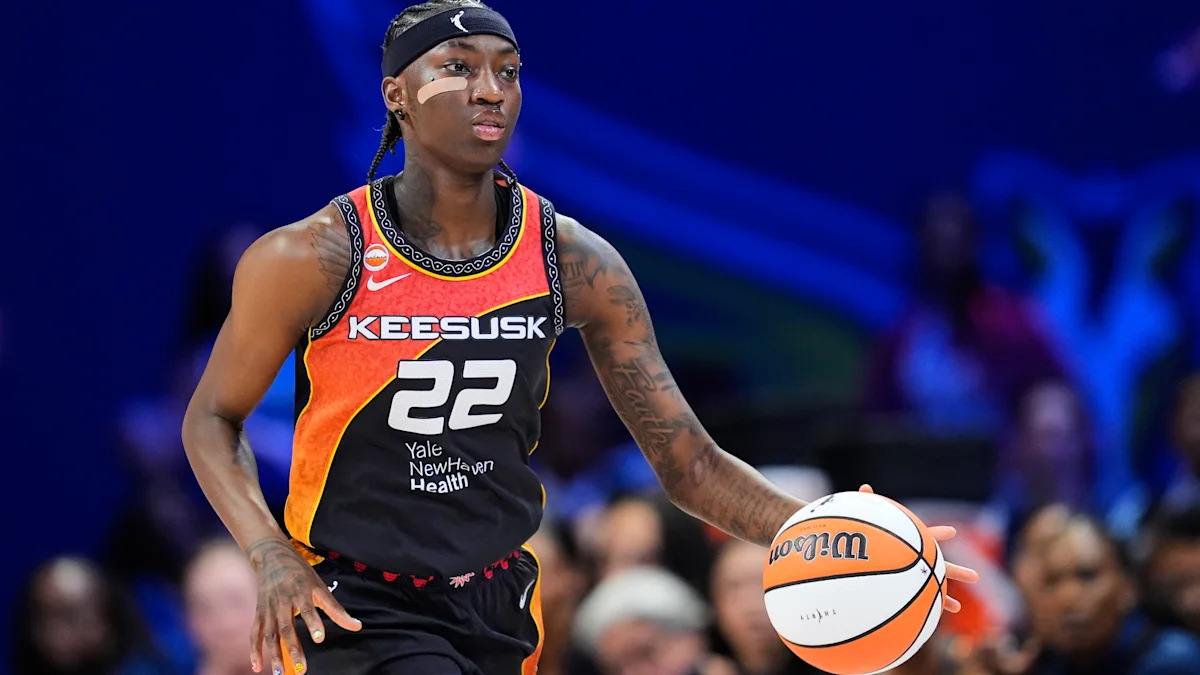
In 2021, the WNBA and Nike updated the team uniforms, presenting a chance to “Moheganize” the look. Designs incorporated the trail of life symbol from traditional baskets and purple-and-white trim reminiscent of a wampum collar. One alternate jersey even proudly displays “Keesusk,” the Mohegan word for “Sun.” Regan emphasized the significance, saying, “Our languages were stripped away through colonization. To see ‘Keesusk’ on the jerseys is a joyful and validating moment for our tribe.”
The Mohegan Tribe’s acquisition of the WNBA’s Orlando Miracle in 2003 came during a financially uncertain period for the league. After relocating to Uncasville, Connecticut, the team was rebranded as the Sun.
By 2010, the Sun were consistently playoff contenders, enjoyed high attendance, and became the first WNBA team to turn a profit despite being in the smallest market. This bold move inspired other Native American tribes to invest in professional sports, such as Wilton Rancheria’s majority ownership of MLS’s Sacramento Republic FC, the Seneca Nation’s purchase of the National Lacrosse League’s Rochester Knighthawks, and the Pechanga Band of Indians’ partnership in the LA Clippers’ Intuit Dome.
Regan explained that as the WNBA has grown rapidly and negotiated a new collective bargaining agreement requiring costly facility upgrades, maintaining the team became financially challenging for the tribe. The Mohegan Tribal Council did not respond to interview requests. Though Meehan respects the council’s business decision, they criticized the WNBA for blocking a potential sale to Boston—a closer venue—as a betrayal of the tribe that had saved the franchise.
Preparing for the final home game, Meehan is assembling 24 years of Connecticut Sun memorabilia—ticket stubs and their original 2003 jersey—to frame alongside autographs from the 2026 team players.
Regan, fighting back tears, reflected on what the relocation means for the Mohegan people and highlighted the tribe’s pivotal role in the WNBA’s early growth. “When the league needed backing before anyone else noticed, Mohegan stepped up.”
This article is published by the Global Indigenous Reporting Network via The Associated Press.
Fan Take: The departure of the Connecticut Sun marks the end of a meaningful era where Indigenous culture found a vibrant platform in professional women’s basketball. For WNBA fans, this move not only shifts the geographic landscape of the league but also raises questions about preserving cultural identity within the sport as it expands commercially.
Source: sports.yahoo.com