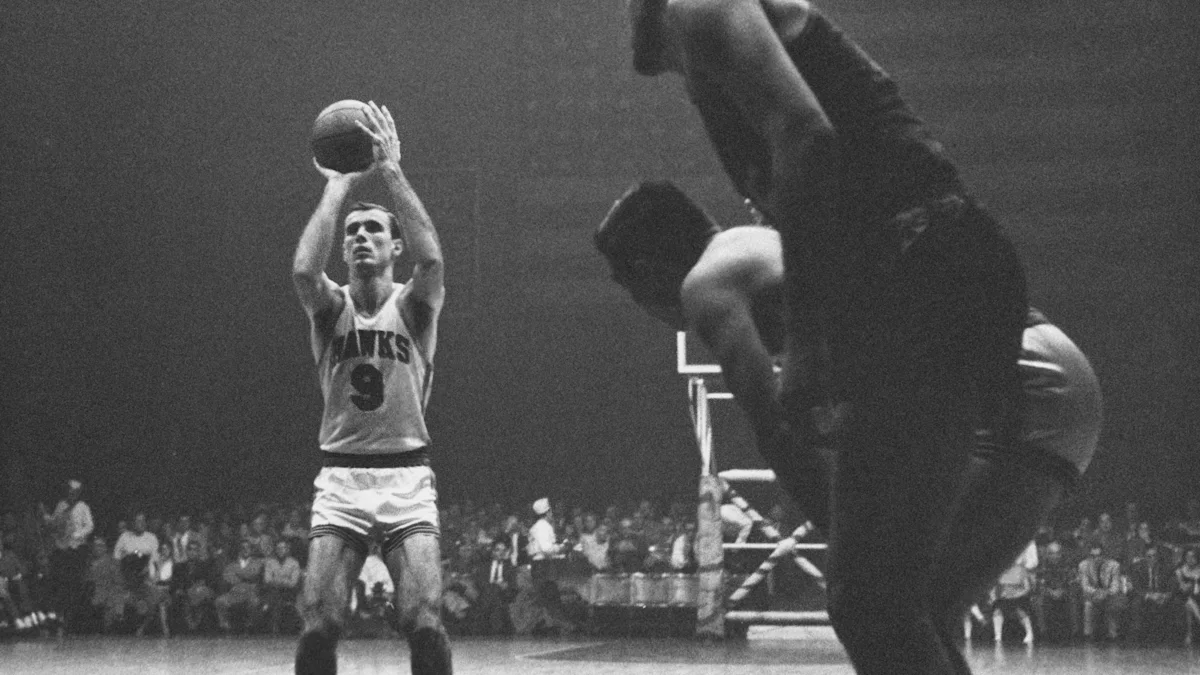
NBA icon Bob Pettit passed away on Wednesday at the age of 93.
Pettit was a remarkable figure shaped by various experiences. Growing up in Louisiana during the Great Depression, he went on to attend LSU and become one of the NBA’s earliest stars. Selected by the Milwaukee Hawks in 1954, Pettit averaged an impressive 20.4 points and 13.8 rebounds per game in his rookie year, earning Rookie of the Year honors. Notably, he transitioned from playing center to forward, a position he had never played before.
Despite this shift, Pettit thrived on the court.
In 1958, while the Boston Celtics were establishing a legendary dynasty led by Bill Russell, Pettit’s St. Louis Hawks narrowly defeated the Celtics 110-109 in Game 6 to claim the championship. Although Russell battled injuries throughout the series, Pettit dominated by scoring 50 points in the decisive game.
His playing style was ahead of its time—he was skilled enough to handle the ball and drive to the basket, yet also capable of shooting from long range. Combined with his outstanding rebounding, he would likely be classified as a “Stretch 4” in today’s game.
Pettit earned widespread respect throughout his career, including from Bill Russell, who credited Pettit with pioneering the idea of relentless second efforts and admired his tough, competitive nature.
In a touching and poignant story, Russell once invited his grandfather—born not long after slavery ended—to attend an NBA game. Pettit greeted him respectfully, calling him “Mr. Russell.” As they left, Russell’s grandfather shared that this was the first time a white man had ever addressed him so formally.
In an interesting historical twist, Boston acquired Russell through a trade sending Ed MacCauley to St. Louis, the team that originally drafted Russell second overall in 1956. Given the racial climate in St. Louis at the time, Russell might not have thrived there, but it’s intriguing to imagine what the Hawks’ team could have been with both Russell and Pettit on the same roster.
[Video embedded]
—
Fan Take: Bob Pettit’s passing marks the loss of one of basketball’s trailblazers whose versatility and competitive spirit helped shape the modern game. His story reminds fans how the sport reflects broader social progress and the unforgettable legacies of its early stars, inspiring future generations to push beyond limits on and off the court.
Source: sports.yahoo.com