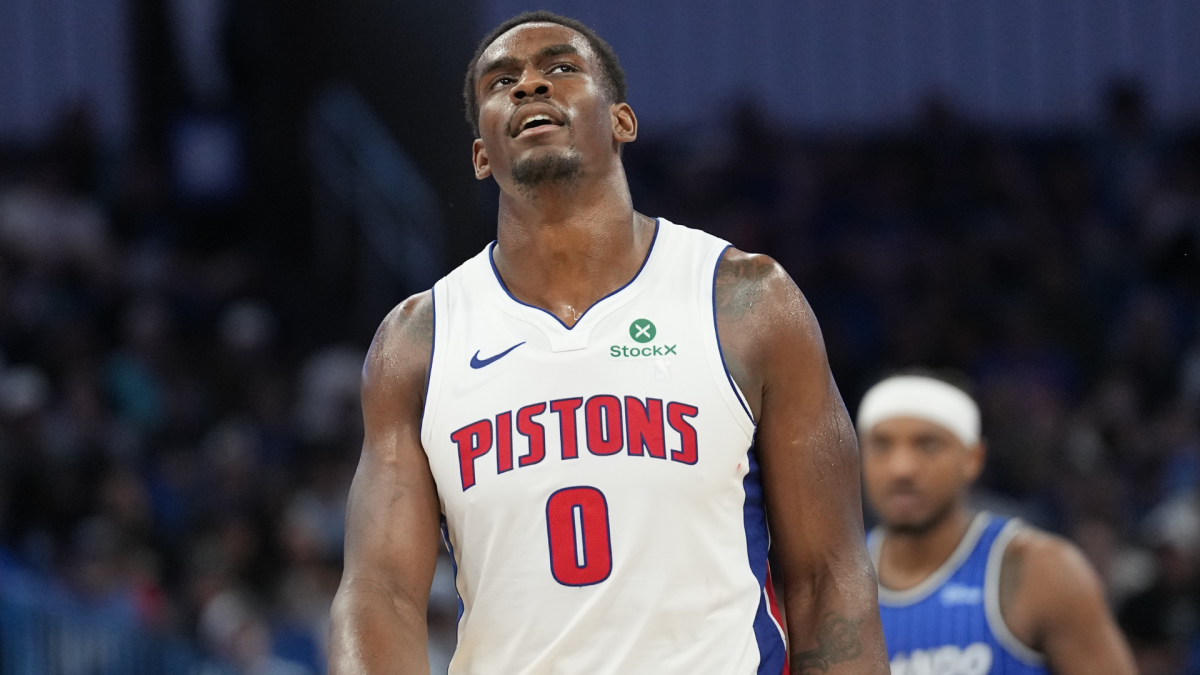
Jalen Duren did not attend media day on Monday as his restricted free agent contract negotiations with the Detroit Pistons remain at a standstill. He faces an October 1 deadline to accept the Pistons’ one-year, $9.6 million qualifying offer, which would allow him to become an unrestricted free agent next summer, unless Detroit extends this deadline.
Duren qualified for a Rose Rule contract—a five-year, $287 million deal with a 30% max salary—after earning All-NBA Team honors. However, his less impressive playoff run has dampened his market value. The Pistons initially proposed a five-year, $190 million contract but have recently increased their offer to $200 million, which includes conditions related to his weight. So far, Duren has rejected all proposals, with his representatives emphasizing that the dispute is not about money but about respect, especially after the Pistons gave Ausar Thompson a five-year, $155 million deal earlier this offseason. If Duren accepts the qualifying offer, he would become an unrestricted free agent next season, free to sign with any team.
Accepting Detroit’s current offer would not yield financial benefits since a max contract from another team after next season is projected at around $189.2 million over four years. Including the qualifying offer, his total earnings could reach about $198.8 million over five years, which is less than what Detroit is offering now. The $200 million proposal is available immediately, whereas waiting risks injury or performance decline during the current season, making the situation risky with no clear monetary upside.
Looking ahead to next year’s free agency, the only advantage for Duren, a Third Team All-NBA selectee who struggled in the playoffs, would be the freedom to choose his team. Typically, players use this to leave weaker squads for championship contenders. However, Duren is already part of a successful Pistons team projected for 60 wins. The teams linked to him, like the Sacramento Kings and Milwaukee Bucks, had fewer combined wins last season. Although more teams may have cap space next year, finding a better fit — especially given his strong pick-and-roll relationship with Cade Cunningham — seems unlikely.
Detroit has so far declined sign-and-trade proposals from other teams, but as the October 1 deadline approaches, they might reconsider to avoid losing Duren for nothing. The Pistons are wary of a contract they find expensive but also want to avoid losing such a valuable young player without compensation. For context, the Indiana Pacers had to part with two first-round picks to acquire Ivica Zubac after the Bucks overpaid Myles Turner.
Sign-and-trades are complicated by a rarely used Collective Bargaining Agreement rule called base-year compensation. In this scenario, Duren’s acquiring team must count his full new salary for trade purposes, but Detroit would only count half when sending him out, making it challenging to find matching salaries. With much of Detroit’s roster on untouchable contracts, their options for such a trade are limited.
Both Sacramento and Milwaukee could offer veteran centers (Domantas Sabonis and Myles Turner, respectively) in a trade, but neither player has strong trade value currently. Sabonis is making more than Duren on his existing deal, while Turner commands a top-tier salary for a non-star center. To strike a sign-and-trade deal, those teams would likely need to add valuable assets to entice Detroit.
Detroit might avoid these salary cap hurdles by re-signing Duren and trading him at the midseason deadline when contract constraints loosen. However, trust between Duren and Detroit appears strained, and he is not keen on re-committing without a guarantee of a trade. Moreover, Detroit risks being stuck with a poorly aging contract if they go that route.
In the recent past, a young player like Duren, fresh off an All-NBA selection, would have been almost guaranteed a max contract. However, salary cap restrictions and Duren’s playoff shortcomings have led Detroit to set firm limits that the player feels are disrespectful. This ongoing standoff will conclude by Thursday, and only time will reveal which party yields.
Fan Take: This contract saga is significant for basketball fans because it highlights the evolving dynamics between young stars and teams in managing cap space and player value. How this situation resolves could influence future negotiations around promising players and shape team-building strategies across the league.
Source: www.cbssports.com