

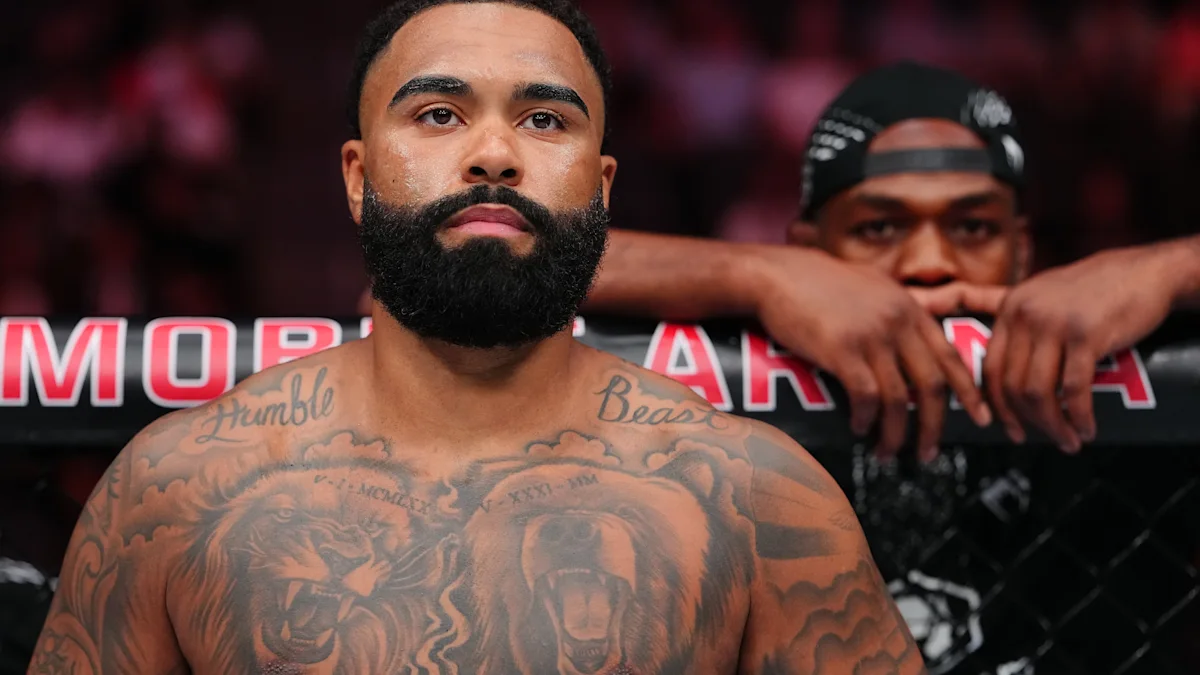
Gable Steveson’s second outing in the UFC turned out to be a total disaster, and UFC’s upcoming heavyweight contender Josh Hokit thinks he understands the reasons behind it. Just two weeks ago at UFC 331, Sean Sharaf stunned everyone by knocking out Steveson in a mere 12 seconds, creating the largest betting upset in UFC history. The Olympic gold medalist entered the UFC with high expectations as the future of the heavyweight division but now holds a 1-1 record early in his MMA career.
Hokit, who trains alongside Steveson in Albuquerque, shared his perspective on Monday during “The Ariel Helwani Show.” He suggested that Steveson underestimated the difficulty of the sport. “He probably watched my fights and thought it would be easy, but this isn’t wrestling; it’s a completely different game,” Hokit explained. “I’ve heard he’s not training properly, likely influenced by Jon Jones. Apparently, he’s even skipping sparring sessions. This is a fresh start; you have to build your skills from the ground up.”
Hokit highlighted how challenging it is for someone like Steveson, with a successful wrestling background, to reset and relearn the basics of MMA. He added, “He had to learn the hard way, and now the real test is how he bounces back from adversity. This is the moment to prove if he’s truly committed and wants to be successful in this sport.”
At 28, Hokit has quickly risen to the top of the heavyweight ranks with four victories in less than a year since joining the UFC via Contender Series in 2025. Known for his blunt and fiery promos, he has made many rivals and will now headline UFC 334 on November 14 against reigning champion Ciryl Gane at Madison Square Garden in New York, where he will have the chance to claim the heavyweight title.
For Steveson, the problems went beyond the loss. He also faced backlash for hastily leaving the cage before the official result was announced. Hokit regarded this post-fight behavior, combined with the challenging week leading up to UFC 331—where Sharaf brought up Steveson’s unresolved sexual assault allegations from 2019—as additional warning signs. Hokit criticized Steveson for trying too hard to imitate his coach Jon Jones, rather than developing his own identity.
“Steveson was smiling and chatting after the fight, which just doesn’t fit the fighter mentality,” Hokit said. “If I lose, I’m angry and don’t sugarcoat it. Jones has natural charisma from his upbringing, but Gable doesn’t, so trying to copy that is misleading.” He further pointed to Steveson’s unpreparedness in addressing his college-era allegations, suggesting someone should have coached him on handling difficult questions ahead of time.
Jon Jones remains a looming figure in the heavyweight division with ongoing hints that he might return to fighting. Currently retired, Hokit expects Jones to stay out of competition for now but expressed readiness to face any challenger after his title fight with Gane. “Jones isn’t training with us, and I’m open to fighting anyone. Once I have the belt, anyone who calls me out will have to face me.”
Fan Take: This candid breakdown from a rising contender like Hokit sheds light on the harsh realities new UFC fighters face when transitioning from other disciplines. How Steveson rebounds from this setback could shape not only his career but also influence how elite wrestlers adapt to MMA, possibly impacting training approaches across the sport.
Source: sports.yahoo.com