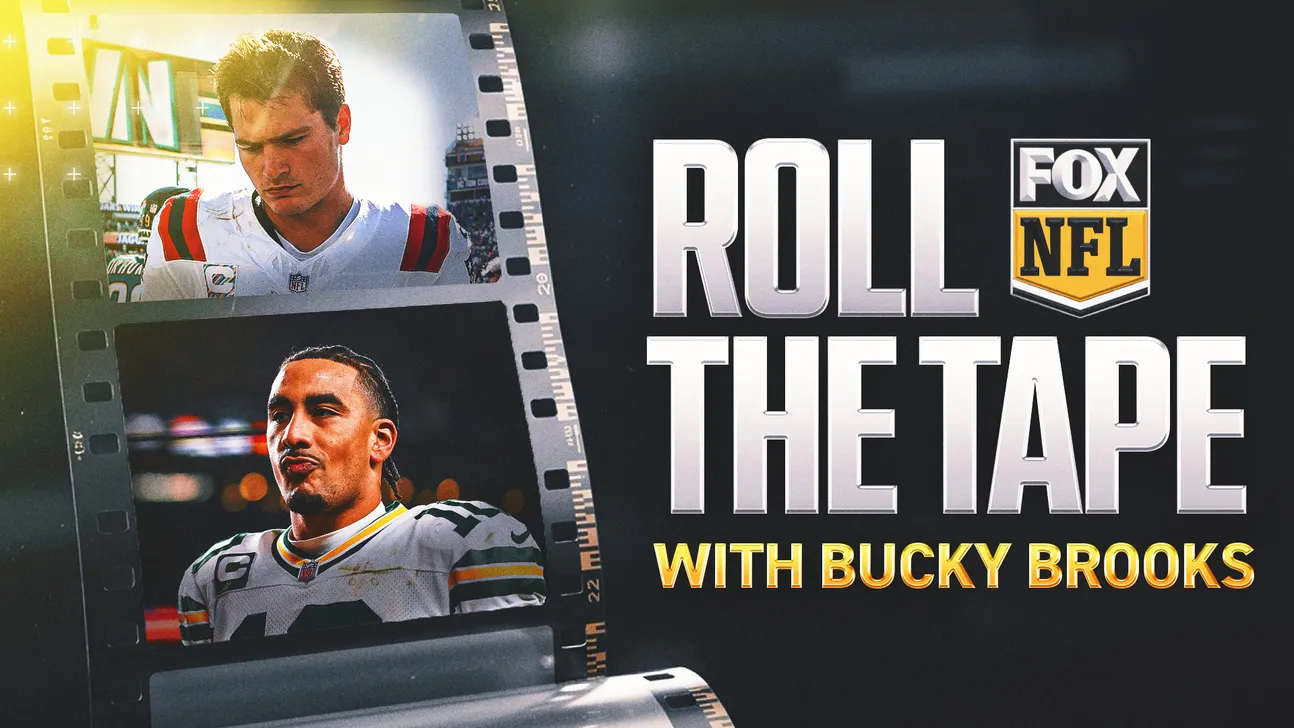
Six teams that made the playoffs last season are already below .500, and the Las Vegas Raiders have grabbed headlines by becoming only the fourth team in the Common Draft Era to open 3-0 after holding the No. 1 overall pick.
Each week I study the All-22 coaches’ tape and pull out a few wider trends to watch. Here are four storylines that could have lasting significance this season — from the Raiders’ hot start to several supposed 2025 contenders slipping early.
1. Green Bay Packers
Under Matt LaFleur the Packers have been regular contenders because of a high-powered offense, but they’ve stumbled to a 1-2 start and their offense looks lost. Green Bay sits last in rushing yards and just 22nd in scoring (about 18.7 points per game), and while their passing yardage ranks near the top (roughly 266.7 per game), Jordan Love has been erratic from the pocket. The line has been overmatched at the point of attack — injuries to right tackle Zach Bako-Bewele (season-ending) and intermittent absences from left guard Aaron Banks have left backups Donovan Jennings and Jager Burton struggling, with right guard Jacob Monk also underperforming. The team has added veterans Laken Tomlinson and Mekhi Becton to help stabilize an OL that’s hampering both the run and pass game.
Without three-time Pro Bowler Josh Jacobs the running game has no true bell-cow, and Green Bay is averaging under 50 rushing yards per game — their fewest through three games (146) since 2019. With defenses selling out against the run, Love’s completion rate has dipped into the low 50s (about 52.3%), the lowest for a QB with 100+ attempts since Sam Bradford in 2011, and his passer rating is down in the 80s. The fix isn’t only schematic; the backups and role players must block and finish better, running backs need to be more decisive through creases, and receivers must create sharper separation. If LaFleur keeps his messaging and the line and supporting cast improve, the offense can still return to form — Week 4 against a shorthanded Buccaneers team will be an early test.
2. New England Patriots (Drake Maye)
It’s jarring to see last year’s MVP runner-up fall so far so fast — Drake Maye looks markedly less sure of himself than the player who posted a 113.5 passer rating in 2025. Through three games he’s posted a roughly 58.6 passer rating with seven turnovers and just one touchdown on 80 attempts, a dramatic drop from the 31 TDs he threw a year ago. Film shows a quarterback who has lost some pocket poise: he’s often abandoning progressions, trying to make plays on the move, and committing costly throws while scrambling (notably interceptions against Seattle and Travis Hunter with Jacksonville).
Part of the problem is the Patriots’ protection issues and the absence of A.J. Brown — without a true perimeter WR1, defenses can bracket or load the box more easily. Maye needs to prioritize ball security — tuck and run or throw the ball away when plays break down — and the coaching staff should simplify the playbook so he can operate on rhythm. A heavier reliance on the run game and steadier play from Rhamondre Stevenson, TreVeyon Henderson and the O-line could let Maye settle into a more managerial role while he rebuilds confidence.
3. Los Angeles Rams
After adding Myles Garrett and coaxing Aaron Donald back, expectations were sky-high for a Rams defense that would dominate and pair with Matthew Stafford’s offense. Instead, through three weeks the front isn’t producing consistent pressure or sacks — part of that is Garrett’s injury, and part is that Donald is shaking off rust, so the interior isn’t eating up blockers and demanding double teams to free up younger rushers like Kobie Turner and Byron Young. Without a consistent push up front, opponents comfortably target short and intermediate areas against linebackers who haven’t been able to disrupt passing lanes.
Los Angeles invested in elite man corners (Trent McDuffie and Jaylen Watson), but defensive coordinator Chris Shula’s preference for zone has limited those corners’ ability to lock receivers down in man coverage. A shift toward more aggressive bump-and-run or man principles could take away easy perimeter plays and lengthen drives for opponents, which in turn would give the pass rush more time to get home. If the staff tweaks the scheme to better showcase McDuffie and Watson and Garrett returns midseason, the Rams should be able to right the ship and reclaim the preseason expectations.
4. Las Vegas Raiders
The Raiders’ offense has been jump-started by the return of Brock Bowers, whose Week 3 performance (10 catches on 13 targets for 116 yards and a touchdown) showed why he’s a game-changer. Bowers is being used more like a wide receiver — lining up from the slot to the boundary and creating mismatches against linebackers and safeties — and Klint Kubiak has rotated him through a variety of personnel groups to maximize those matchups. In his first two seasons Bowers lined up detached on over half his snaps and compiled the bulk of his yards from those alignments, and Kubiak’s continued creative deployment is letting him operate as a quasi-WR1.
That versatility makes life difficult for defensive coordinators and has helped Las Vegas start 3-0; their upcoming stretch (beginning with a game against Kansas City) will be a tougher challenge, but Bowers’ presence provides a clear growth vector for an already-hot offense.
Fan take:
These storylines matter because they show how injuries, scheme fit and personnel usage can swing a team’s identity quickly — from a stalled offense in Green Bay to a rising, creatively designed attack in Las Vegas. For fans, watching how teams adjust (or fail to) reveals which coaches and front offices can adapt, and it can reshape positional trends — especially how elite tight ends and modern cornerbacks are deployed — across the league.
Source: www.foxsports.com