

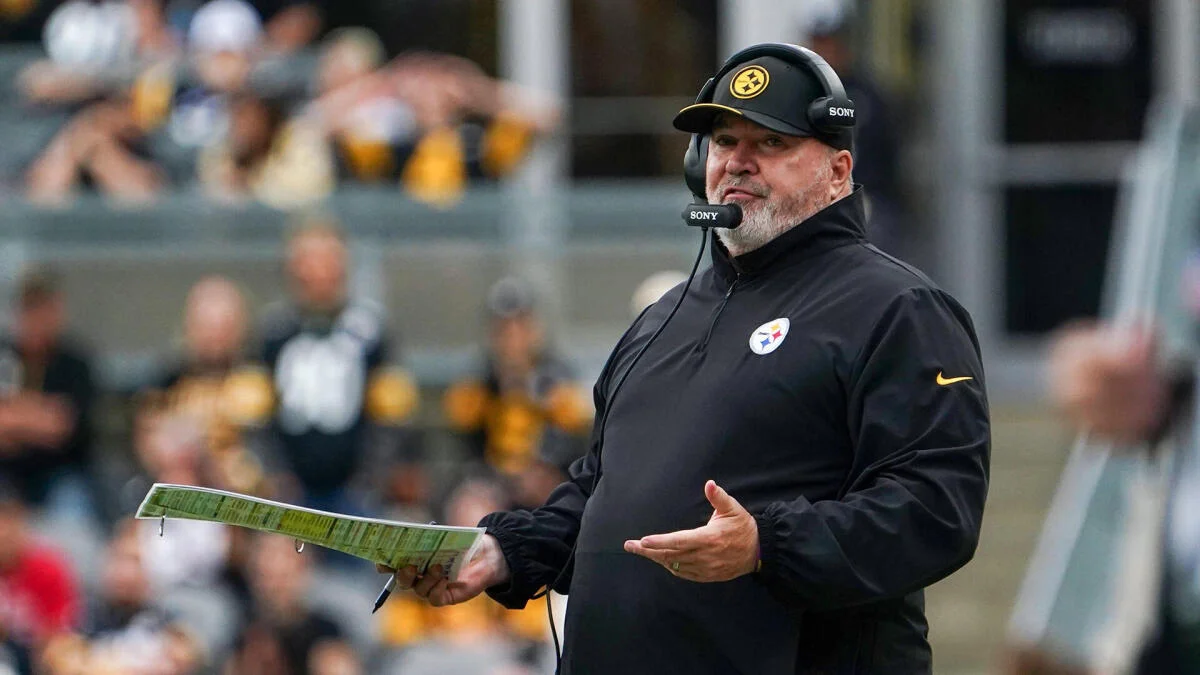
For years the Steelers’ lack of losing seasons was a tired talking point: Pittsburgh hadn’t finished under .500 since 2003, and Mike Tomlin went nearly two decades without a losing year. In a league that rewards turnover and rebuilds, that kind of steady mediocrity eventually felt less like a badge of excellence and more like stagnation.
Fans accustomed to championship expectations grew frustrated with seasons that were merely “not bad” rather than truly competitive. Critically, the team hasn’t won a playoff game since 2016, so another eight- or nine-win campaign doesn’t prove the Steelers are close to contending — it suggests they’re trapped in the middle. A promising Week 3 win over Cincinnati offered a brief lift, but a flat, predictable loss in Cleveland quickly exposed the team’s limits.
Accepting that reality doesn’t mean anyone should deliberately lose games. Players and coaches aren’t built for that, and losing alone doesn’t guarantee a fix. But if Pittsburgh isn’t genuinely able to compete, is squeezing out another slightly-better-than-average season really better than recognizing the need for a real reset?
Look at the 2025 playoff field: every other team that made the playoffs had endured a losing season within the previous seven years. The Steelers stand out — their last losing record dates back to 2003. For a long time, avoiding that low point helped them win divisions and chase Super Bowls with Ben Roethlisberger, whom they drafted after a 6-10 2003. Now, however, the streak increasingly looks like proof they’ve gotten very good at being merely respectable.
History shows that falling isn’t the end. I reviewed seasons since 2002 and found 47 instances where a team had a losing year and later reached a conference championship game before dropping another losing season. Most of those teams rebounded quickly: 38% made it to a conference title in one year, 70% within two years, and 89% within three. Recent turnarounds include Cincinnati (4-11-1 in 2020 to the Super Bowl the next season), Washington (4-13 in 2023 to the NFC title game in 2024), Detroit (3-13-1 in 2021 to Super Bowl contention two years later), Philadelphia and San Francisco among others. A single bad year often precedes a rapid re-emergence — it’s not an automatic multi-year rebuild.
There’s also a hidden cost to perpetual middling results: draft position. From 2007–25 Pittsburgh’s average first-round slot hovered around 22, and they frequently picked late in the round. That makes landing a franchise quarterback far less likely; since Roethlisberger, the only first-round QB the Steelers have used was Kenny Pickett at No. 20 in 2022. Not being bad enough to secure top picks has left them without access to the draft’s most transformative options.
Timing matters now. The 2026 roster is among the NFL’s oldest, the AFC’s oldest in fact, and it features a 42-year-old starting quarterback on a one-year deal. Several key contracts expire after the season and veterans like Cam Heyward are nearer the end of their careers. At the same time, Pittsburgh isn’t bereft of youth: players such as Nick Herbig, Keeanu Benton, Troy Fautanu, Zach Frazier and Mason McCormick offer a nucleus to build around in 2027 instead of continuing to paper over roster gaps with short-term moves.
There’s a distinction between tanking and honestly resetting. If the rest of the season confirms the lackluster start, spending draft capital or signing veterans simply to avoid a losing record could do more harm than good. The Steelers’ own history underscores that point: their last losing season in 2003 produced the 11th pick in 2004, which became Ben Roethlisberger — and a rapid return to contention and a Super Bowl in short order. That outcome isn’t guaranteed, but it illustrates that a down year can be the start of rebuilding toward something better.
Maybe the real risk isn’t suffering a losing season; maybe it’s clinging to two decades of “not bad” baseball that prevents Pittsburgh from ever getting back to being truly great.
Fan Take: This matters because how the Steelers respond will influence roster-building philosophies across the league — whether franchises prioritize short-term respectability or are willing to endure a down year to chase a true reset. For NFL fans, a Pittsburgh rebuild could shift competitive balance and remind teams that temporary pain can be the fastest route back to genuine title contention.
Source: www.cbssports.com