Continuing the “What If” Wolves series, where I take on the role of Timberwolves overlord and travel back in time to fix some of the franchise’s biggest mistakes—there are plenty to address, so this series might never end.
“What If” Wolves Volume Three: We landed our big man, but who will get him the ball?
For those who didn’t witness the magic of 90s basketball, it was an era where dominant big men ruled the paint, point guards controlled the tempo, and Michael Jordan was untouchable (no need to dive into the LeBron-Kobe debate). Teams aimed to emulate pairs like Stockton and Malone—arguably the prototypical point guard-power forward duo to win championships (despite neither winning a title or being perfect off the court). The Minnesota Timberwolves followed this blueprint.
Having just drafted franchise legend Kevin Garnett, aka “KG,” “The Kid,” “The Big Ticket,” and “The Franchise,” the Wolves had a solid power forward. But they seriously lacked a reliable point guard. Early franchise guards like Pooh Richardson, Sidney Lowe, and others were hardly inspiring, making the point guard position a glaring weakness. The 1996 NBA Draft presented a golden opportunity.
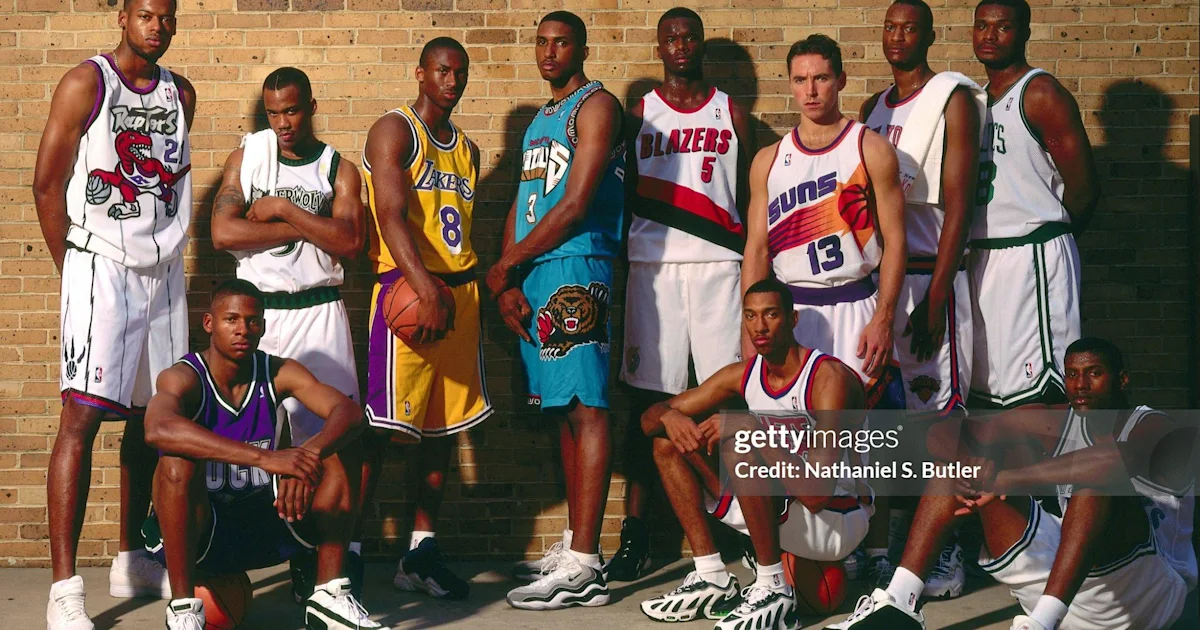
After finishing 26-56 in the 1995-96 season, the Wolves held the fifth lottery pick but did not move up. They selected Ray Allen, a future Hall of Famer with incredible shooting and athleticism, but still had JR Rider already on the roster, making Allen somewhat redundant. Meanwhile, the Milwaukee Bucks snagged Stephon Marbury at fourth and quickly used him to entice the Wolves into trading Ray Allen and a future pick for Marbury. At the time, fans, including myself, celebrated this move—but with hindsight, many cringe.
If I were the “What If” Wolves overlord, my first step would be to fire Kevin McHale immediately (a personal anecdote aside, his tenure was frustrating). Then, instead of trading Allen, I’d move back in the draft, swapping the fifth pick to Cleveland for picks 12 and 20, letting Cleveland select Allen. This not only empowers the Cavs but also ensures the Wolves avoid future Marbury drama. Plus, adding a second first-round pick at 20 was a savvy move and a jab at Milwaukee.
At 12, the Wolves take a bold chance on Canadian point guard Steve Nash from Santa Clara—a smaller school star compared often to Stockton for his vision and clutch performances. Though a bit of a reach, Nash’s leadership and steady improvement made him the perfect floor general to complement KG’s dominance. At 20, the Wolves select Lithuanian center Zydrunas Ilgauskas, a 7’3” big man who earned two All-Star nods. Ilgauskas’ presence would eliminate the need to sign less impactful centers like Stojko Vrankovic, while Nash’s leadership and KG’s intensity would create a unique but promising team culture.
No Marbury complaints, no flashy high school duo like a young Kobe plus Garnett, but two future MVPs—Nash and Garnett—on one roster with solid supporting cast pieces? That’s a roster to be excited about. Hopefully, Nash’s poise could also calm KG’s fiery temperament post-game and on the court. This reimagined Wolves squad could have shaken the late 90s and early 2000s NBA landscape.
Fan Take: This alternate path for the Timberwolves shows how crucial drafting and front-office decisions are in shaping a franchise’s destiny. For basketball fans, imagining a team with both Garnett and Nash flourishing together highlights the “what could have been” moments that add intrigue and passion to our love of the sport.
Source: sports.yahoo.com