

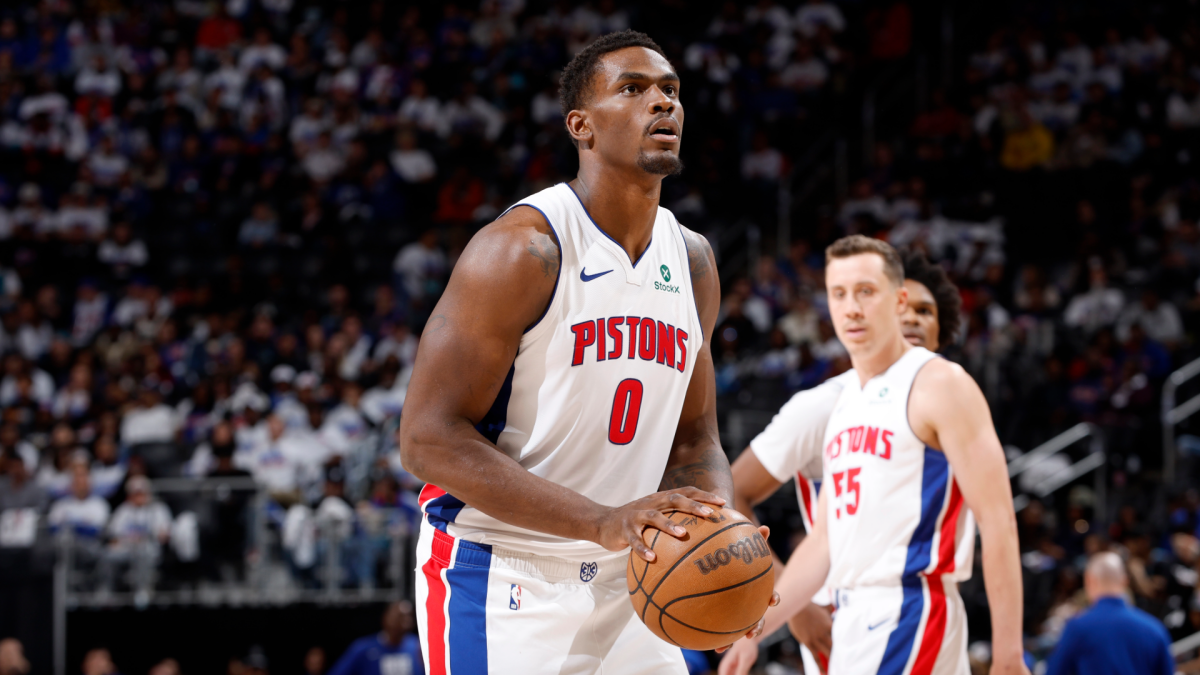
During the prolonged restricted free agency negotiations between Jalen Duren and the Detroit Pistons, many wondered if Duren truly wanted to stay with the only NBA team he’s played for. Reports revealed that Duren felt deeply disrespected by the Pistons’ initial offers. ESPN highlighted that tensions grew between player and team throughout the process, with Duren even skipping media day and part of training camp in hopes of a sign-and-trade deal. Ultimately, he accepted Detroit’s final increased offer: a $200 million, five-year contract.
On Sunday, Duren spoke publicly for the first time since free agency began, addressing ongoing questions post-signing. While he becomes trade-eligible on January 15 and teams like the Sacramento Kings are rumored to be interested in offering him a full max contract that Detroit wouldn’t match, Duren made it clear that if a trade occurs, it won’t be his decision. “The clearest message I can give today: I am a Detroit Piston and I want to be a Piston for life,” he asserted. He also denied that he initiated any of the trade rumors, calling them pure speculation.
The NBA landscape is a business first and foremost, and the offers Detroit made to Duren were unusual compared to typical contracts for young stars. Analyst Nate Duncan pointed out that among the last 35 players who made an All-Star team on their rookie contracts, 34 secured max deals on their second contracts—with Duren as the exception. If he had qualified as an All-NBA player, he could have earned up to $287 million under the Derrick Rose Rule. It’s rare for young, elite players to be denied max contracts, so Duren’s feelings of disrespect regarding lower offers made sense, especially with the prospect of max deals next summer as an unrestricted free agent.
Detroit, however, has had to navigate a tougher salary cap environment brought on by the 2023 collective bargaining agreement, which imposes stricter financial penalties for mistakes. Even though Duren might have received a max deal had he maintained his performance through the entire season, his underwhelming postseason raised doubts about his role as a foundational player for the Pistons moving forward.
Reflecting on the past season, Duren admitted, “The way the season ended was humbling. I need to get better… I’m man enough to acknowledge my flaws and get my ass in the gym and get better.” The responsibility lies with him to address those postseason struggles. Additionally, Detroit must consider roster dynamics; two of their top three players, Duren and Ausar Thompson, are both poor three-point shooters, which could pose challenges in modern NBA offenses that rely heavily on spacing. Both signed lengthy five-year deals this offseason, making adjustment more complicated.
Had the Pistons been convinced of compatibility issues, they likely would have pursued sign-and-trade options more aggressively. Instead, the team wants to commit to this roster for now and see how it develops through the next couple of playoff runs. If changes become necessary after further evaluation, Detroit remains open to making them. For the time being, securing a young All-NBA talent like Duren was their main focus. Though negotiations were tough, it appears all sides are now ready to move forward and overcome last spring’s shortcomings.
Fan Take: This saga highlights the delicate balance between player value, team finances, and loyalty in today’s NBA. For basketball fans, watching how Duren and the Pistons navigate these challenges offers a glimpse into the evolving business side of the sport—and how it might affect team building and player careers in the near future.
Source: www.cbssports.com