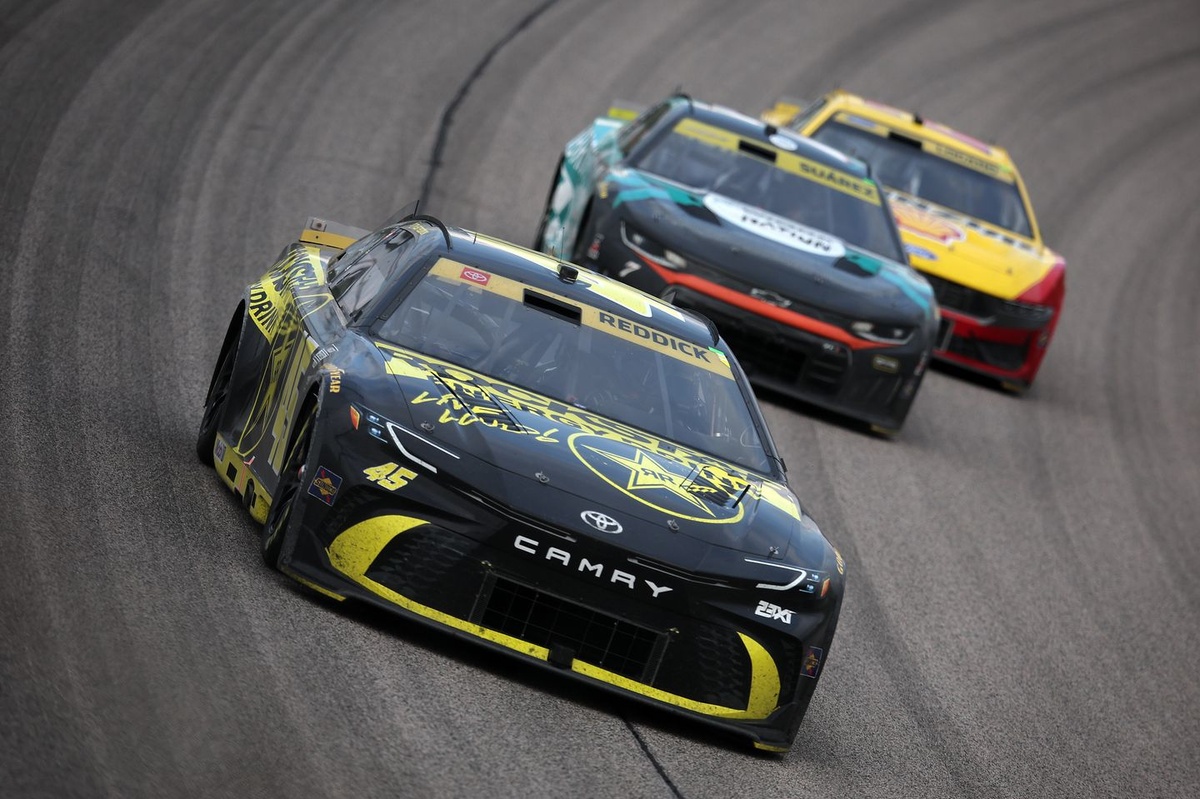
Three years ago, Tyler Reddick observed that the current-generation NASCAR Cup Series cars seemed to be slowly reverting to a style of racing resembling the 550 Package, particularly following a race at Las Vegas Motor Speedway. Reflecting on the situation approaching another race in Las Vegas, Reddick noted on Saturday that while the cars have become faster over time—with drivers extracting every bit of performance and employing more throttle—warmer track temperatures might increase the time drivers spend off the throttle, which could help race dynamics. He also emphasized that as teams and drivers grow more familiar with the cars, their performance tightens and mistakes decrease, leading to a more finely tuned competition even though the package has remained fairly consistent for several years.
This discussion is especially relevant given the recent race at Kansas Speedway, where the focus on track position seemed more pronounced than ever for an intermediate track with this car package. Christopher Bell reflected on how the NASCAR platform has evolved dramatically since the start of the NextGen era in 2022, shifting from a feel reminiscent of O’Reilly Trucks to a style more akin to Truck Series racing due to the significant increase in downforce generated under the cars. This progress is largely attributed to teams becoming better at optimizing their vehicles, rather than major rule changes by NASCAR, aside from minor additions like the “Shark Fins” on the roof rails, which have had minimal impact.
Over the past five years, teams have refined their setups, bringing lap times closer together. With the competition so tight and teams maximizing the current package, track position has become increasingly critical. Denny Hamlin echoed this sentiment, noting that the field’s closeness is partly due to the lack of major aerodynamic or horsepower changes and the extended familiarity with the package, leading to tighter lap times and more emphasis on maintaining track position. However, drivers with enough speed can still carve through the field with a sufficient gap.
William Byron agreed with Bell’s assessment but highlighted a key difference: in Truck Series racing, the inside car often struggles to maintain grip, while in Cup racing, the inside line presently offers an advantage, allowing the driver to apply pressure and force others to the outside. This dynamic is essentially the reverse of what is typically seen in the Truck Series.
Meanwhile, Joey Logano commented that while the product on track has remained fairly consistent over the last five years, he still supports changes because they inject excitement through uncertainty and generate fresh storylines. He praised the initial years of NextGen intermediate racing in 2022 and 2023 as some of the best mile-and-a-half racing ever, noting that the teams were still figuring things out. Despite the current solid state of racing, Logano welcomed the idea of substantial changes periodically to shake things up.
When asked about the type of change he would like, Byron suggested adding more power while potentially maintaining or increasing downforce to recreate the aggressive, high-speed racing seen in 2014. This approach, he believes, would bring back the “wow factor” while encouraging intense restarts and fierce competition over longer runs. Bell and Ryan Blaney also supported the concept of increasing horsepower, with Blaney adding that simplifying the underbody airflow might help balance aerodynamics and performance, though he humbly admitted his suggestion was more a fan’s perspective than an engineering solution.
Overall, the consensus among drivers is that while the current package provides competitive and entertaining racing, introducing more horsepower and adjusting downforce could elevate the spectacle and refresh competition in the coming years.
Fan Take: This ongoing conversation about NASCAR’s current car package is crucial for fans because it shows the sport’s commitment to evolving and keeping racing fresh and exciting. Changes such as adding power and tweaking aerodynamics could revitalize on-track battles and bring back the aggressive, edge-of-the-seat racing that longtime NASCAR enthusiasts crave.
Source: www.motorsport.com