
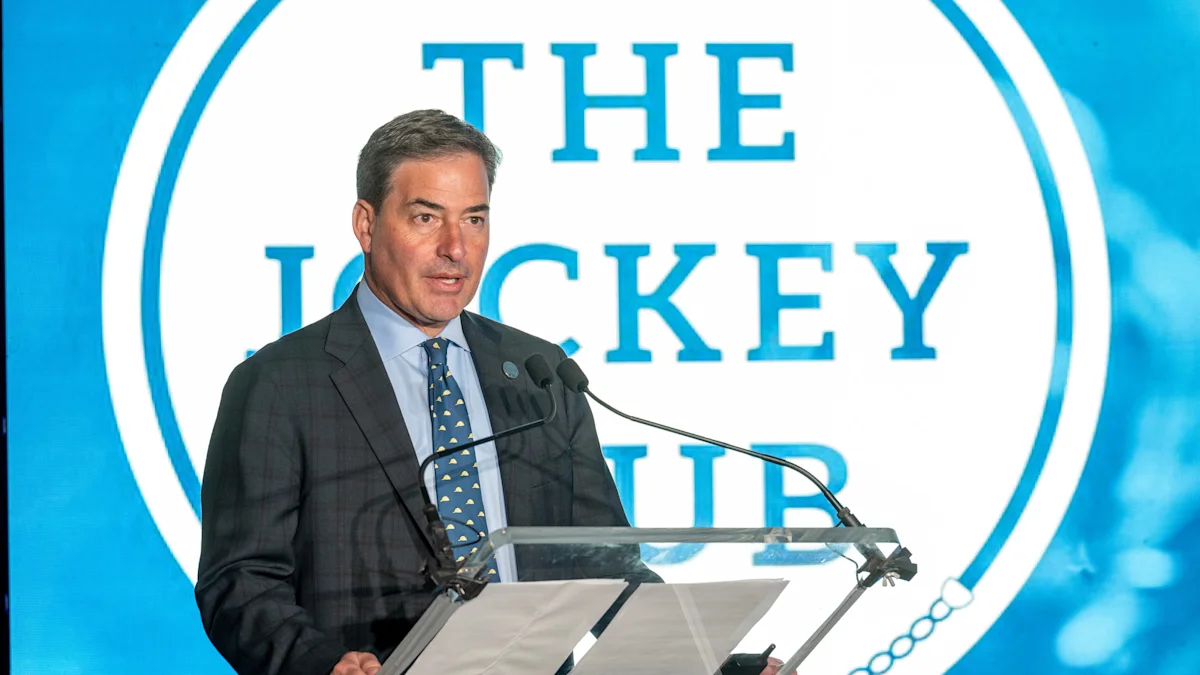
It is common for a new chairman to appoint their preferred candidate as chief executive, so The Jockey Club’s recent announcement that James L. Gagliano is stepping down as president and COO after 17 years was not unexpected. Before becoming president, Gagliano had already spent five years with The Jockey Club as an executive vice president and chief administrative officer.
In July 2025, Everett Dobson was elected chairman, ending the 42-year leadership legacy of Ogden Mills Phipps (1983–2015) and his cousin Stuart S. Janney III (2015–2025). An Oklahoma native, Dobson grew his family’s rural landline telephone business into a national wireless giant, expanding services as far as Alaska before selling it to AT&T for $2.8 billion.
Dobson’s chairmanship marks a shift, as he is the first Jockey Club chairman from outside the traditional East Coast “old money” circles that included previous leaders like Nicholas Brady, Ogden Phipps, George Widener Jr., and August Belmont. However, Dobson is no newcomer to the racing industry; since 2019, he has been on the Keeneland board overseeing auctions and racing operations, served in leadership roles at the Thoroughbred Owners and Breeders Association, chaired its graded stakes committee, and acted as a Jockey Club steward. His extensive experience has positioned him to address some of the sport’s toughest challenges.
Jim Gagliano, throughout his presidency, has been deeply aware of these challenges, dating back to the 2011 Jockey Club Round Table in Saratoga Springs, New York. At that meeting, Dan Singer from McKinsey & Company, hired by Gagliano, presented stark data on the damaging effects the 2008 financial crisis had on the industry—most notably, a 30 percent drop in the U.S. foal crop between 2008 and 2011.
Even before the recession, racing faced declines: handle dropped 37 percent over the previous decade, on-track attendance fell 30 percent, and both starts per horse and race days decreased by 14 percent. Singer warned that if trends continued, the fan base would shrink by 36 percent by 2020.
Five main factors were identified contributing to racing’s troubles:
- Competition from casinos (before sports betting and iGaming expanded)
- Poor public perception (only 22 percent had a favorable view of Thoroughbred racing)
- Dilution of the racing product (due to overlapping schedules and lack of coordination)
- Subpar fan experience (including poor customer service and outdated facilities)
- Fragmented distribution, with limited television coverage beyond TVG/FanDuel
Without changes, McKinsey projected wagering could drop by 25 percent within a decade, with corresponding declines in foal crops and racetrack viability.
Under Gagliano, The Jockey Club tackled what it could. While it couldn’t control Native American casino influence or racetrack operations, it launched initiatives to bolster racing’s image, such as the Thoroughbred Incentive Program promoting retraining of retired racehorses, and became a key supporter of the Thoroughbred Aftercare Alliance. A significant move was funding 5Stones, a private company whose investigation into doping led to federal indictments. The club also prioritized equine and jockey safety, using data from its Equine Injury Database to reduce fatalities and supported national oversight through the Horseracing Integrity and Safety Act passed in 2020.
The Jockey Club encouraged tracks to coordinate schedules and post times, though with limited success because race scheduling remains under the control of individual tracks. In 2014, The Jockey Club partnered with FOX Sports to create new TV programming, increasing racing’s visibility—an important move especially as FanDuel plans to close its horse racing channel by the end of 2027.
Has this work paid off? While McKinsey predicted wagering would decline 25 percent by 2022, it instead rose 11 percent from 2012 to 2022, even as the number of races dropped 26 percent. However, wagering has declined in recent years and looks set to fall again. The foal crop has shrunk by about 20 percent over ten years, and several historic racetracks have closed for varied reasons including rising land values and financial pressures. Though some blame The Jockey Club exclusively for these difficulties, the reality is far more complex and can’t be fixed by simple criticism.
Having known Jim Gagliano for many years, I respect his dedication, problem-solving approach, and ethics. The Jockey Club has been a stabilizing force during an incredibly challenging time for racing and breeding. While I don’t agree with all their policies—particularly on Equibase data monetization that may hinder fan engagement—the organization has provided necessary continuity in a fragmented industry. Whoever succeeds Gagliano will face significant challenges and big shoes to fill.
That’s my perspective from the eighth pole.
Fan Take: This leadership transition matters greatly to horse racing enthusiasts because it signals a potential shift in how the industry tackles longstanding challenges like declining fan engagement and race scheduling. With Everett Dobson’s fresh perspective and business background, fans might see renewed efforts to modernize the sport and expand its reach, which could be crucial for racing’s survival and growth in the years ahead.
Source: sports.yahoo.com