

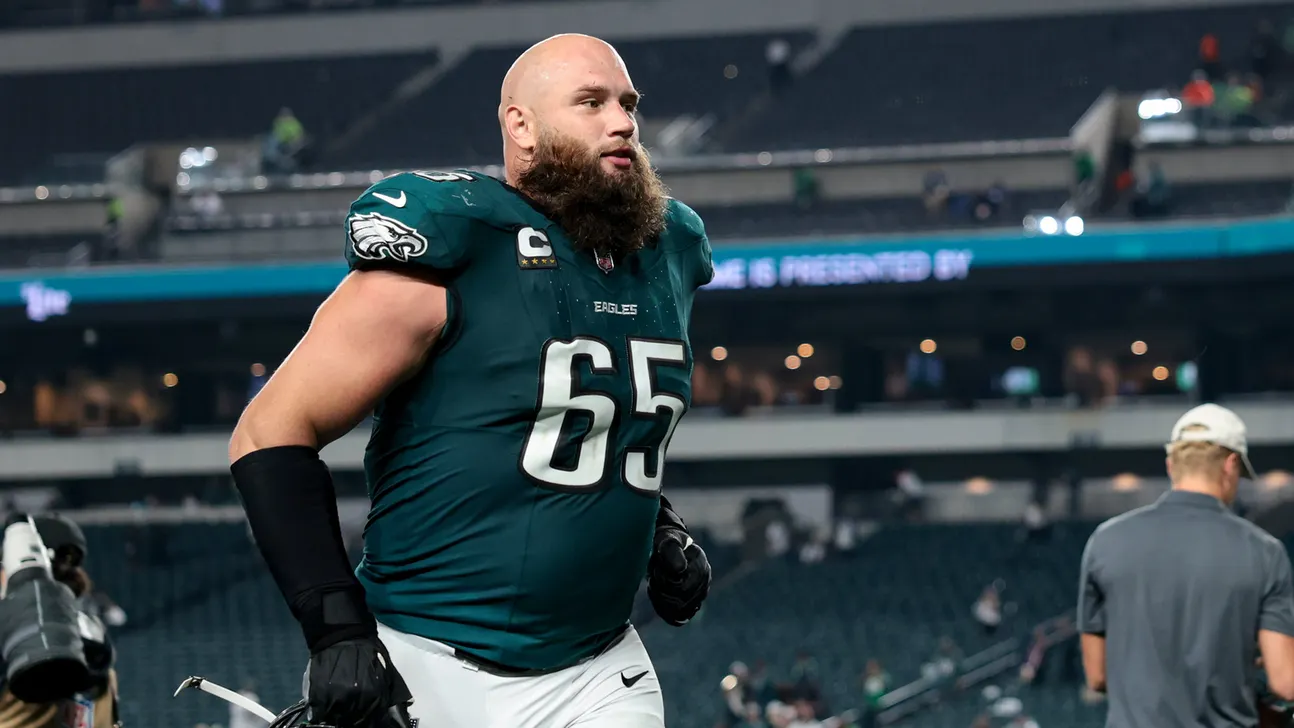
Philadelphia Eagles right tackle Lane Johnson announced Tuesday that he is retiring, ending a 14-year NFL career spent entirely in Philadelphia. In a message on X, the 36-year-old said his family priorities have shifted and that he must concentrate on his mental health.
Johnson wrote that, although he had hoped to play one more season alongside his teammates, reflection led him to conclude his personal and family needs come first. He said he wants to be fully committed—mentally and emotionally—if he is going to keep playing, and that his heart is telling him it’s time to step away.
The move followed a surprise inactive designation for personal reasons in Sunday’s 24-20 loss to the Los Angeles Rams. Johnson had indicated in August that 2026 would likely be his final year but began the season as the Eagles’ starter in each of the first three games; Pro Football Focus credited him with just two pressures and no sacks allowed in those outings.
A 2013 first-round pick out of Oklahoma (No. 4 overall), Johnson grew into one of the premier offensive tackles of his era. He helped Philadelphia to two Super Bowl titles (LII and LIX) and earned six Pro Bowl selections and five AP All-Pro honors. He emphasized that Philadelphia will always be home to him.
Despite missing seven games last season with a foot sprain, PFF noted he didn’t allow a sack and surrendered only seven pressures; the year before, he allowed a single sack across 19 games during the Eagles’ Super Bowl run. Johnson’s retirement leaves a significant hole to fill as a 2-2 Philadelphia squad copes with multiple injuries and uneven play — Jalen Hurts was held under 100 passing yards against the Rams, DeVonta Smith missed that game with a hamstring issue, and Saquon Barkley left with a hamstring injury and is reportedly week-to-week.
Fan take: Johnson’s departure matters because the Eagles lose a veteran anchor on the offensive line whose protection helped power their recent success, and replacing his experience won’t be easy. His decision also highlights the growing willingness of high-profile players to prioritize mental health, a shift that could change how teams and the league approach player well-being.
Source: www.foxsports.com