

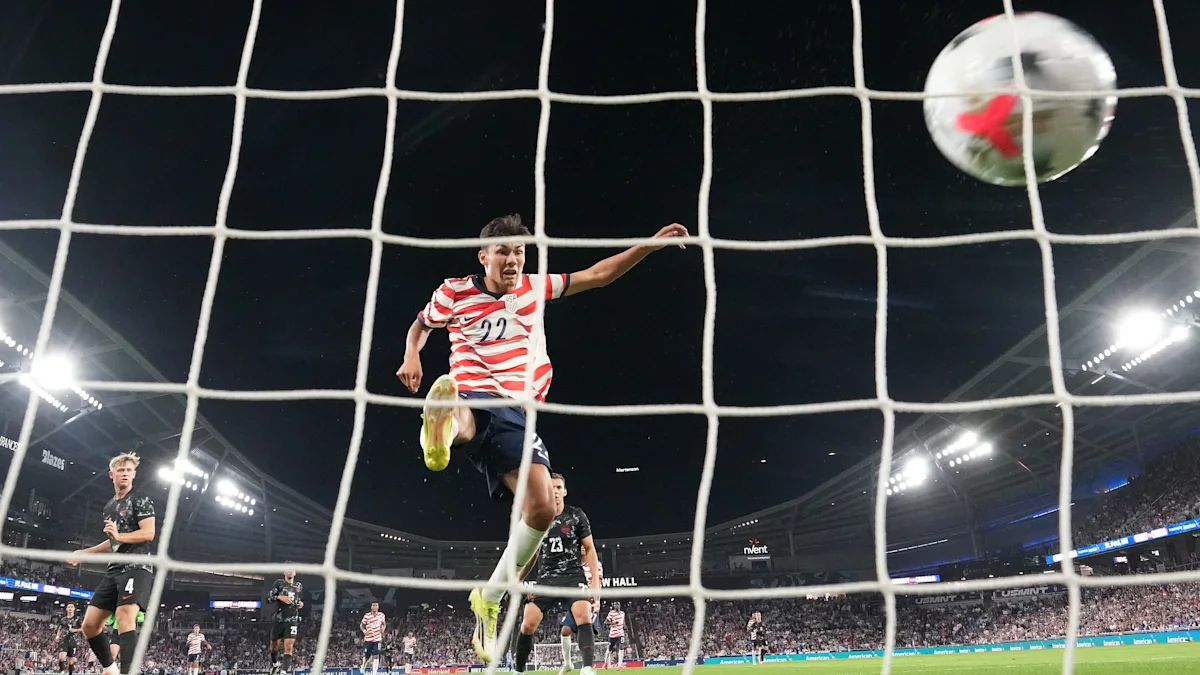
ST. PAUL, Minn. — Mauricio Pochettino’s main goal for his inaugural U.S. camp after the World Cup wasn’t solely to secure victories in all four matches. The emphasis was on incorporating over a dozen new talents and getting them aligned with his coaching philosophy, focusing on building teamwork both on and off the pitch.
If his players quickly developed chemistry and clinched a few wins during the nine friendlies scheduled across three time zones in just 11 days, it would be a pleasant bonus.
Advertisement
Late Tuesday, players hurriedly packed their bags at Allianz Field to catch flights back to their clubs, sporting smiles and a sense of accomplishment, although forward Justin Ellis had already departed to undergo an MRI after injuring his lower right leg.
The hard-fought 1-0 win over Canada wrapped up an international window that far exceeded expectations. This marked the most successful phase for the Americans against various opponents in a decade, with the team achieving four wins, scoring 12 goals while conceding only three, and going 221 minutes without allowing a goal.
All 28 players saw action on the field, with 13 newcomers—including eight teenagers—making their debuts. Despite varying experience levels, the U.S. often demonstrated a level of play that suggested they had been competing together for much longer.
“As we said going into this camp, there isn’t any pressure for these kids to perform immediately, but many of them stepped up,” remarked captain Tyler Adams. “They’ve set a standard, and now it’s essential to maintain that standard.”
Advertisement
While friendlies are generally regarded as low-stakes, for Pochettino and his enthusiastic squad, the efforts displayed in these matches—alongside the hard work at their training base in Georgia and in various cities—held immense significance.
“We discussed this in a meeting with the players” post-match, Pochettino stated. “They certainly deserve recognition, not just for the results but also for how they competed and how we’ve taken this journey together. It’s been remarkable and serves as a launch point for the future.”
Here are additional insights from the camp:

USMNT’s Justin Ellis scored twice in the window, including the winner against Canada.
(AP Photo/Abbie Parr)
The youth are thriving
Pochettino’s choice to include a significant number of young players in the senior camp raised eyebrows initially, but it yielded impressive results. These players not only gained valuable experience but also excelled on the field.
Advertisement
Julian Hall, aged 18, netted three goals. Ellis, at 19, scored twice, including the decisive goal against Canada shortly after sustaining his injury. Mathis Albert, 17, made history as the youngest goal scorer for the U.S.—until just days later when the dynamic Cavan Sullivan, also 17, surpassed his record.
Many other newcomers made a solid impression, showcasing that while they may not yet be ready for a World Cup, they possess the potential to add depth and challenge seasoned players for spots on the roster.
Pochettino doesn’t expect the U.S. to quickly ascend to the ranks of global soccer elites. It’s a gradual journey, and with four years until the next World Cup, he hopes that by identifying and integrating young talent now, he can build a robust and deep squad by 2030.
“The biggest challenge is how we support these young players,” Pochettino noted. “It’s one thing to debut, but how we develop, protect, and guide them while instilling a sense of responsibility is crucial.”
Advertisement
In the coming weeks, Pochettino faces tough choices about his young talents. The U.S. will enter official competition with the CONCACAF Nations League quarterfinals, featuring a two-leg series against Haiti.
Simultaneously, plans are underway for an under-23 camp for Olympic-eligible players. With the 2028 Olympics set to occur in Los Angeles, this tournament is a major priority for the U.S. Soccer Federation. Pochettino is collaborating closely with U-23 coach Steve Cherundolo to develop a team capable of securing a medal—something the U.S. men have not accomplished in the modern Olympic era.
All the young players who participated in the senior camp could potentially make the Olympic squad, necessitating early preparation.
Initially, Pochettino likely expected that most would attend the U-23 camp next month. However, after observing their performance over these two weeks, he might decide to include a few for the Nations League matches.
Advertisement
“There are numerous fresh faces, and they all exhibited great energy, working hard during their time here,” midfield player Gio Reyna stated. “Now, everyone returns to their respective clubs, leaving decisions about who will come back up to Mauricio.”
Pressure on veterans
With an expanding player pool, should established players be concerned about their positions on the team?
Christian Pulisic, Folarin Balogun, and Weston McKennie—among others—were absent from this camp due to recovery from injuries.
Presumably, they will all return for the Nations League. However, nothing is guaranteed. Pochettino has made it clear that he only wants players fully committed to the program, regardless of their skills.
Advertisement
Even if a player commits to Pochettino’s vision, competition for roster spots remains intense. Will Tim Weah, Brenden Aaronson, and other World Cup participants retain their positions?

All four goalkeepers started a match. Diego Kochen and Brian Schwake (28) each kept a clean sheet in a full 90 minutes.
(IMAGN IMAGES via Reuters Connect / REUTERS)
Goalkeeper competition heats up
Pochettino provided playing time for all four goalkeepers during camp, indicating no one is safe regarding the starting position.
All four started one match. After each played a half in the initial two games, newcomers Diego Kochen, 20, and Brian Schwake, 25, appeared confident, achieving clean sheets in the final two matches.
World Cup starter Matt Freese participated in just the first 45 minutes against Peru and didn’t play again, with him not being in uniform for Tuesday’s match. Chris Brady, the third-string World Cup goalkeeper, struggled during his single appearance against Chile and didn’t see further action.
Advertisement
Matt Turner, who was the starting keeper in the 2022 World Cup and expected to be second choice in 2026, did not attend this camp.
Once a position of great strength in U.S. soccer, the goalkeeping situation necessitates careful observation from the U.S. coaching staff, especially as they evaluate candidates in league play and make plans for the Nations League and beyond.
Gio Reyna is maturing
Reyna was the only player to start all four matches and has emerged as a leader, showcasing his growth and maturity. He performed admirably, pairing well with Malik Tillman and exhibiting his versatility in both attacking and deeper roles.
Advertisement
Remember, he’s only 23 years old.
Despite Reyna’s limited playing time in Germany last season, Pochettino maintained his faith in him, even including him on the World Cup roster. Now, Reyna is flourishing at French club Strasbourg.
“Gio is showing remarkable maturity,” expressed Pochettino. “He’s still young, yet he has become one of the group’s leaders, consistently helping out while remaining positive. What we see in him is extremely encouraging, which is why we trust him on the field.”
Regional dominance
The U.S. claimed regional bragging rights this window after defeating Mexico 3-0 in Greater Phoenix and overcoming Canada here in Minnesota.
Advertisement
Having lost their previous two encounters with both countries, they aim to dethrone Mexico as champions of the Gold Cup and Nations League.
While the U.S. finished this window with a 4-0-0 record, Mexico stumbled to a 0-2-2 finish and Canada recorded 2 wins and 1 loss.
In the world of soccer, the rise of young talent under Pochettino’s guidance is pivotal for fans. This rejuvenated team, along with its impressive performances, signals a bright future that fans can get excited about heading into major competitions like the 2028 Olympics and the 2026 World Cup.
Source: sports.yahoo.com
