

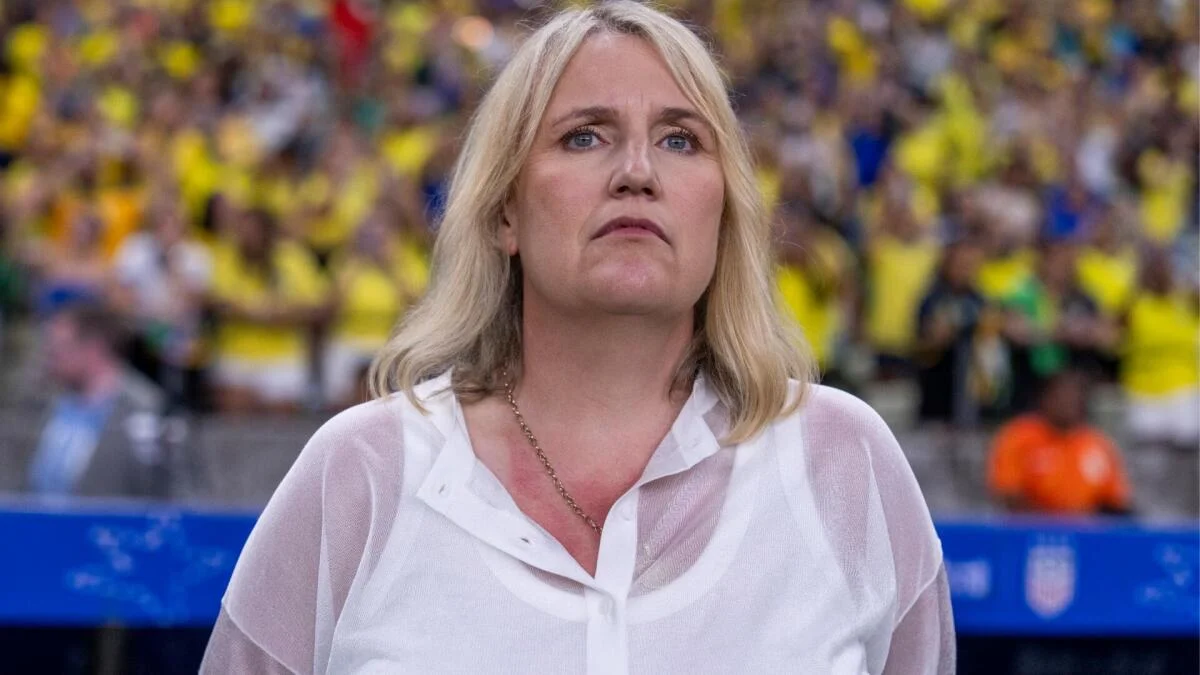
ATLANTA — Emma Hayes stepped into the role of head coach for the U.S. women’s national soccer team in 2024 with a clear vision, especially considering the approaching 2024 Summer Olympics. Just 80 days into her tenure, she guided the USWNT to a historic gold medal win, making it their first Olympic triumph since 2012.
Following this victory, Hayes has not only focused on upcoming tournaments like the 2027 FIFA Women’s World Cup and the 2028 Olympics, but she has also fostered an environment aimed at nurturing and empowering women and girls in soccer. Her ambition to elevate the game has led to the launch of “The WNT Way” in 2025, which places women at the forefront of all initiatives within U.S. Soccer.
As the USWNT prepared for training camps leading up to friendlies against Spain, Hayes co-hosted the herLENS conference in 2026—a two-day event showcasing ongoing efforts to drive the women’s game forward through research and data. Throughout the conference, she emphasized the importance of integrating women’s experiences into standard practices within soccer culture.
“The legacy of the WNT and its impact extends beyond just winning gold medals,” Hayes remarked at the conference. “True winning involves collectively creating a better world for everyone in the sport by 2031.”
U.S. Soccer’s commitment to a long-term vision beyond 2028 has been a recurring theme at the conference. Hayes and her team are adopting a “Female 360” approach, prioritizing personalized care for players through surveys and health check-ins, addressing issues from nutrition to menstrual cycle tracking to enhance athletic performance.
Hayes’ passion for a women-centered focus began during her time with Chelsea. She cited a pivotal 2016 FA Cup final loss as a catalyst for her shift toward more individualized preparation for female athletes, highlighting the importance of understanding player health.
Her candid discussions about her own struggles with stage five endometriosis aim to normalize this conversation and inspire others. “Collectively, we can use our experiences as a competitive edge,” she reflected, stressing the broader impact that the sport can have on society.
In addition to focusing on immediate competitions, Hayes is laying the groundwork for sustainable success by developing youth programs and advocating for U20 tournaments. She envisions reshaping existing protocols tailored specifically for women and girls, as resources for the women’s game have historically lagged behind the men’s.
Eighteen months after launching “The WNT Way,” Hayes continues to deepen support for players with the “Female 360” initiative—a strategy bolstered by partnerships aimed at answering critical questions regarding women’s soccer participation and performance.
As the team gears up for upcoming matches, the focus remains not only on the immediate Olympics and World Cup but also on fostering an enduring culture around women’s soccer. U.S. Soccer plans to host the 2031 World Cup alongside partners like Mexico and Costa Rica, emphasizing a long-term commitment to women in sports.
“This was part of our vision from the start,” U.S. Soccer president Cindy Parlow Cone stated, reaffirming the need to plan not just for upcoming cycles but for the future landscape of women’s soccer.
As Hayes adjusts her strategies based on her experiences, including innovative approaches to nutrition and athlete feedback, the U.S. women’s national team further prepares for its critical two-game series against Spain, which kicks off on October 10. The matches, highly anticipated as a showdown between the world’s top two teams, are set to unfold in Atlanta before moving to Philadelphia and Washington, D.C.
Fan Take: This news is pivotal for soccer fans because it symbolizes a progressive shift towards a more inclusive and supportive environment for women in sports. As the USWNT continues to lead the charge in promoting equity and innovation, it sets a powerful example that could reshape the future of women’s soccer globally.
Source: www.cbssports.com