

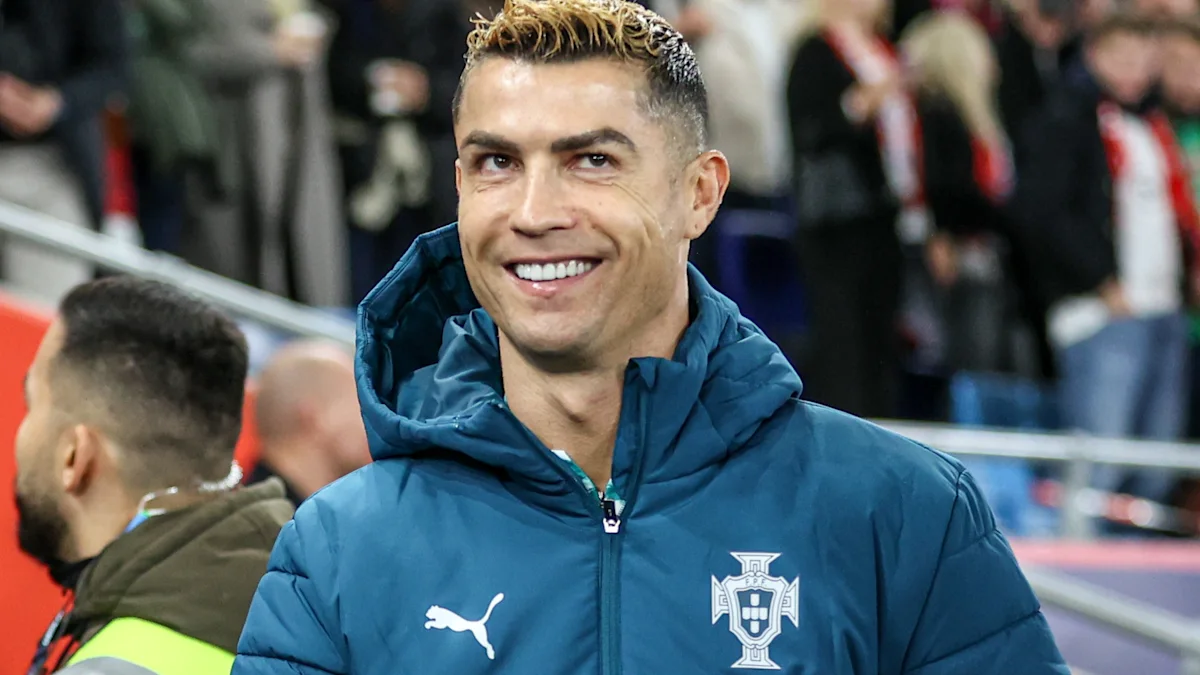
Cristiano Ronaldo has announced his retirement from international soccer, signaling the end of his illustrious career with the Portuguese national team. At 41 years old, Ronaldo’s decision follows a 30-day suspension originating from a conflict with the new head coach, Jorge Jesus.
In a heartfelt five-minute video, he expressed, “The moment has come for me to relinquish the No. 7 jersey of our national team. It has never felt like it was solely mine, but over the past 23 years, I have had the honor and responsibility of wearing it while representing Portugal across the globe.”
During his remarkable international journey, Ronaldo scored 146 goals in 234 appearances, joining Lionel Messi as one of only two male players to participate in six World Cups, most recently in the 2026 tournament in the United States.
His last match for Portugal was on September 24 in a Nations League encounter. Meanwhile, he continues to play at the club level with Al Nassr in the Saudi Pro League, having made headlines with his lucrative move to Saudi Arabia after a controversial departure from Manchester United.
Conflict with the New Manager
After Portugal’s exit from the 2026 World Cup, Jorge Jesus took over as coach and began to plan for a future that might not heavily feature Ronaldo. Following his benching in a Nations League game against Norway, Ronaldo voiced his grievances on social media, stating that Jesus had failed to keep various promises regarding his role, even releasing a five-page letter outlining his concerns.
This public clash resulted in Ronaldo receiving a 30-day suspension, although Jesus reassured that the door remains open for his return to the national squad.
Portugal’s Late-Career Concerns
The tensions with Jesus brought to light ongoing challenges within the Portuguese team. As team captain, Ronaldo occasionally struggled on the field, and there were moments when Portugal’s offensive play appeared more fluid without him. He did score twice in a 5-0 triumph against Uzbekistan and contributed a penalty against Croatia during the World Cup. Yet, Portugal’s victory against Croatia in the Round of 32 surged forward only after Ronaldo left the pitch, with Gonçalo Ramos netting the decisive goal shortly after.
Despite Ronaldo scoring in all five games under former coach Roberto Martinez, he had a quieter tournament overall, registering no goals in three other matches while taking 18 shots. Portugal, expected to perform well in Group K, ended up drawing against Colombia and the DR Congo, which meant that the anticipated showdown between Messi and Ronaldo never materialized.
Had they both topped their groups, they could have faced each other in the quarterfinals, but Portugal finished second and was eliminated by eventual champions Spain in the Round of 16.
Ronaldo Leaves as the All-Time Goals Leader
With Messi retiring from international soccer earlier this year, both legends conclude their careers as the top two goal-scorers in international competitions. Ronaldo’s tally of 146 goals tops Messi’s by 20, although it was achieved in 26 more matches. Ronaldo wraps up his time with Portugal sporting a goal rate of 0.62 goals per game compared to Messi’s 0.61.
This continues the fierce debate over their legacies, though Messi’s resurgence in recent years has bolstered his standing, especially after Argentina’s triumph in the 2022 World Cup and their runner-up finish this summer. While Portugal fell short of a World Cup victory during Ronaldo’s time, they did secure the Euro 2016 title and added Nations League titles in 2016 and 2025, with the Euro win coming two years after a dismal group stage exit in the 2014 World Cup.
During Euro 2016, Portugal clinched their first major international trophy, despite Ronaldo being forced to leave the final against France due to injury. He ended the tournament with three goals and three assists, earning the Silver Boot.
As Ronaldo steps down from international play, fans are faced with the end of an era that defined a generation of soccer. His departure not only leaves a void in the Portuguese national team but also poses questions about the future dynamics of the sport, highlighting the transition from legendary players to newer talents.
Source: sports.yahoo.com
