

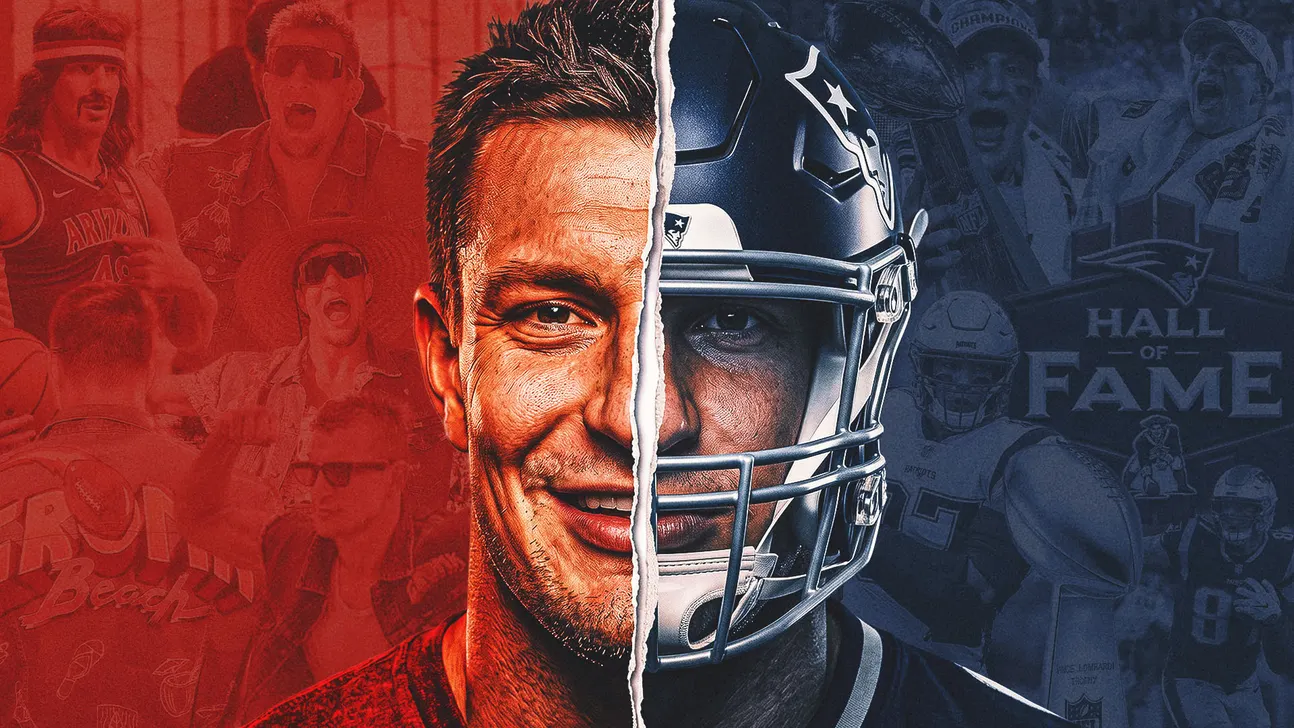
You might not expect a constantly grinning, party-loving giant to fit the Patriots’ mold — but Rob Gronkowski made it work.
When New England picked Gronk in the second round of the 2010 draft, the coaches weren’t sure what to do with him. He arrived with the look of a hulking brawler and the demeanor of a kid who’d rather chat about his college hot tub than X’s and O’s. That first combine interview left scouts cringing as Gronk gushed for minutes about campus life; afterward, director of college scouting Jon Robinson remembers Bill Belichick asking, incredulous, “That’s the guy you want?” Still, Robinson kept pushing. He eventually showed Belichick film of Gronk’s big game against Patrick Chung’s Oregon squad — and that tape changed everything. Belichick watched in silence and then told his staff to bring Gronk back for another visit.
The second meeting hardly went like a polished audition. Gronk had been on a punishing travel schedule and admitted to being hungover; he even lay down on a table in an expensive suit between interviews. He wasn’t keen on drawing plays and mixed up football jargon in a way that prompted a laugh from the coaches — when asked about a “sight-adjust,” Gronk jokingly said “sizzle.” It wasn’t confidence-inspiring. Yet Belichick had already done his homework, called Arizona’s coach, and kept believing in the talent he’d seen on tape. With concerns about Gronk’s medical history and a back injury weighing on other teams, New England traded up and took him at No. 42.
Gronk’s rookie minicamp reinforced both the doubts and the reasons for optimism. He looked lost at first, but he’d studied the Patriots’ depth chart and came in eager. Offensive coaches like Bill O’Brien put him to the test — asking him to learn all the empty formations — and the rookie surprised everyone by getting them right the next morning. What he lacked in formal training he made up for with extraordinary physical gifts, an appetite for work, and an unusual coachability: he absorbed instruction, then made it his own.
Much of Gronk’s early growth came through relentless one-on-one work. Tom Brady drove him to stay after practice for high-repetition drills against linebackers like Gary Guyton, often until coaches had to blow a whistle to stop them. Belichick’s signature pop quizzes pressured him to study coverages and opponent tendencies; at first Gronk fumbled a scoutbook question, but he learned fast. He was raw coming from Arizona’s Air Raid system, where route concepts and coverage reads hadn’t been taught in detail — but New England’s staff excelled at teaching those fundamentals.
Off the field, Gronk was rambunctious as a rookie — the team laughed about his party ways — but he also knew how to bounce back, famously using saunas and cold plunges to reset after nights out. Coaches tolerated more from him than from most players because his play was that valuable; teammates recall Belichick offering measured criticism but also clearly favoring Gronk’s rare combination of size, skill and personality.
By 2011, Gronk had evolved into an elite, game-changing tight end. He posted 90 catches for 1,327 yards and 17 touchdowns that season — numbers that vaulted him into the conversation as the best tight end in football. Over his career he finished among the top tight ends all-time: 92 receiving TDs (third among tight ends), 9,286 receiving yards (sixth), and 621 receptions (11th). Coaches and teammates credit a mix of natural ability, tireless practice, and an eagerness to learn for that transformation; Belichick lauded how Gronk converted his physical gifts into a complete package through effort and discipline.
Gronk didn’t just become a dominant player — he changed the team around him, softened the hard edges of a famously stern coach, and left a legacy that made him a near-lock for the Hall of Fame. In his own words, hearing Belichick call him the best, most complete tight end was humbling and a sign that the hard work had been worth it.
Fan take: For NFL fans, Gronkowski’s story is a reminder that elite talent plus relentless preparation can rewrite expectations — a player who seemed unlikely to fit the “Patriot Way” became its poster child. His career helps show that teams that invest in teaching and development can turn high-upside, imperfect prospects into generational stars, which matters for how franchises evaluate and build rosters.
Source: www.foxsports.com
