

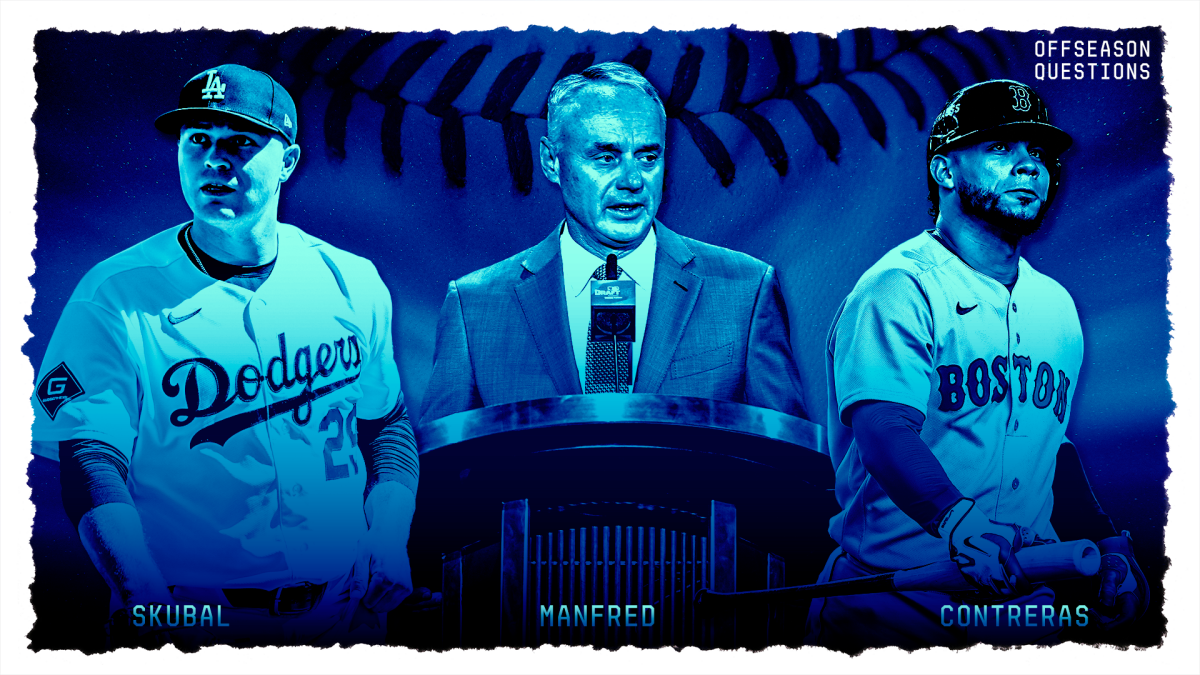
Not long ago, the Milwaukee Brewers celebrated their World Series victory, marking the start of the 2026-27 MLB offseason immediately after the final out. As we move forward, this upcoming winter is fraught with uncertainty primarily due to looming labor disputes that may disrupt or even shorten the 2027 season. Despite these challenges, traditional offseason activities like free agency and trade discussions will continue to engage fans.
Looking ahead to the 2027 campaign, several key questions will shape what is likely to be one of the most unusual and memorable offseasons in recent history. Let’s dive into the five main issues at hand:
1. How long will the lockout last?
The current collective bargaining agreement (CBA), which sets the rules between owners and players, expires on December 1, 2026. At that moment, MLB owners are expected to initiate a lockout—a labor halt that stops all offseason activity—to prevent a players’ strike. The lockout will persist until a new CBA is negotiated, a process complicated by owners pushing for a payroll cap system which the players’ union (MLBPA) has historically opposed. The duration of this lockout could greatly influence the 2027 schedule; if it extends past mid-March, regular-season games might be lost or the season shortened, as seen during the 99-day 2021-22 lockout. Historically, labor stoppages like the 1981 and 1994-95 strikes caused major disruptions, with the latter canceling the World Series and severely affecting fan support. For 2027, losing 60 games is a feared scenario that could delay lucrative media contracts if the lockout drags into late May.
2. What will the new CBA entail?
The main contention in negotiations is whether MLB will implement a salary cap and floor similar to other major leagues, a proposal strongly favored by owners but unlikely to be accepted by the players in the near term. Another focal point is restructuring the revenue-sharing model to more evenly distribute local broadcast income, an adjustment seen as a potential compromise that addresses financial disparities among teams without triggering a prolonged labor conflict. Other potential changes include expanding the postseason, adding teams to the league, shortening the regular season, introducing an international draft, modifying the luxury tax system, and revising the draft, free agency, and arbitration rules. Alongside these are perennial topics like increasing minimum salaries and adjusting roster sizes, signaling a possible major shift in MLB’s economic and operational landscape beginning in 2027.
3. Where and when will top free agents like Tarik Skubal sign?
This offseason features one of the weaker free agent classes in recent memory, though elite talent exists at the top—most notably Tarik Skubal, a back-to-back AL Cy Young Award winner expected to command a record-breaking pitching contract, potentially surpassing $400 million. Teams such as the Los Angeles , New York Mets, and Chicago Cubs are leading suitors, with other notable free agents including Freddy Peralta, Michael King, and Jazz Chisholm Jr. The lockout complicates timing; players and teams might rush to finalize deals before December 1 or hold off, unsure how the new CBA will affect future contracts. Historically, teams spent heavily ahead of the 2021-22 lockout, but the more sweeping changes anticipated this time around could either accelerate or dampen spending in the short term.
4. Will there be significant trades?
With a less exciting free agent market, blockbuster trades could become a major feature of the offseason. Although the lockout and salary uncertainties will influence deals involving big contracts, notable players rumored to be trade candidates include Francisco Lindor, Mason Miller, Spencer Strider, Jacob deGrom, and others. Unlike the last lockout, the expectation is for some significant trades, but these may only materialize after the new CBA is finalized and the lockout ends.
5. Which team will secure the No. 1 draft pick?
The 2027 MLB Draft lottery, set for December 8, will determine the top six selections among 16 eligible non-playoff teams from the 2026 season. Some clubs like the Giants and Pirates are excluded due to recent lottery picks and revenue-sharing rules. Among early contenders for the top prospect are University of Florida shortstop Brendan Lawson and Mississippi State pitcher Tomas Valinicius, though it’s still early in the amateur season.
Fan Take:
This offseason’s developments are crucial because the labor negotiations and potential structural changes could redefine the future of baseball’s competitive and financial landscape. For fans, while the uncertainty is frustrating, the promise of new policies and fresh talent entering the league heralds an exciting evolution for the sport.
Source: www.cbssports.com
