

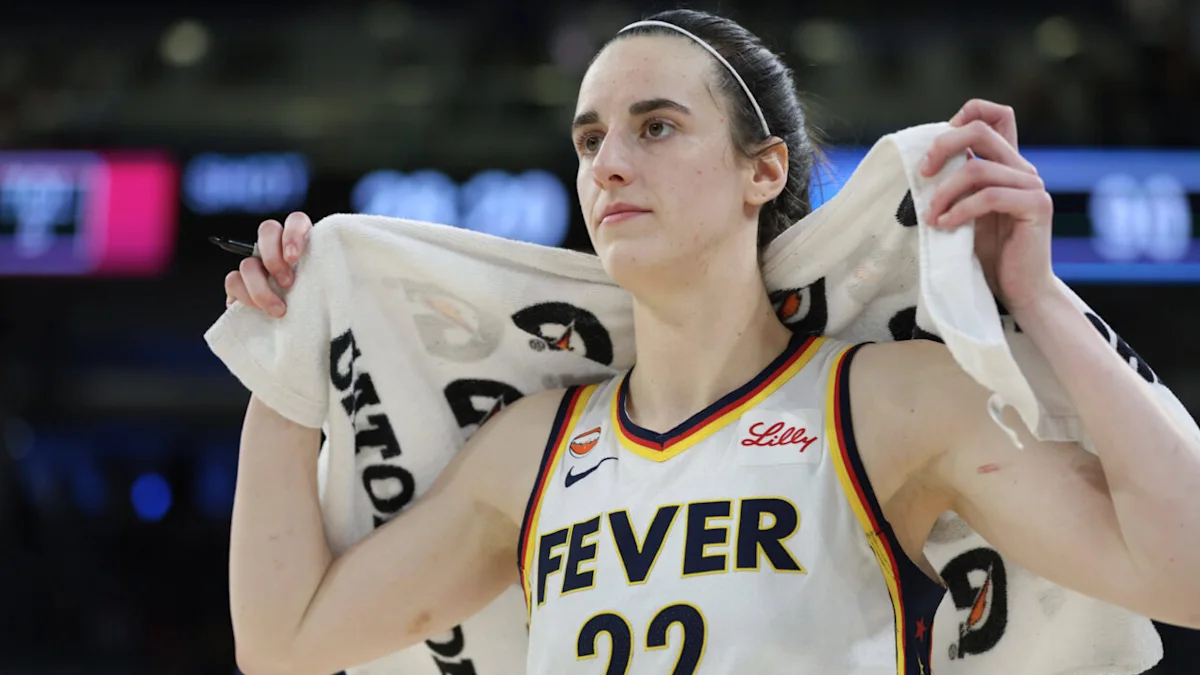
Former WNBA star Angel McCoughtry recently sparked controversy with her remarks about the perceived beauty bias in marketing between Indiana Fever players Caitlin Clark and Kelsey Mitchell. On the Get To The Point podcast, McCoughtry claimed that Clark received more promotion and recognition than Mitchell, despite Mitchell being the team’s top player, because Clark was “pretty.” This comment drew sharp criticism from former Old Dominion player and WNBA analyst Rachel DeMita, who called McCoughtry’s statements both hurtful and disrespectful to the Fever athletes.
DeMita expressed her disappointment on the Courtside Club podcast, highlighting that McCoughtry’s focus on Clark’s appearance was unnecessarily mean-spirited and damaging. McCoughtry supported her claim by recalling an event where, despite widespread admiration for the Fever team, few recognized Mitchell, which surprised the five-time All-Star since she viewed Mitchell as the best player on the team. DeMita countered, stating that implying Mitchell’s lower marketing presence was due to her looks was inaccurate and unfair.
WNBA analyst Robin Lundberg pushed back against McCoughtry’s remarks, suggesting that Clark’s rise in visibility naturally increased public awareness of Mitchell over time. When prompted to comment on Clark’s attractiveness, McCoughtry deflected with a laugh, but DeMita emphasized that the league promotes players based on talent, citing national commercial deals featuring top stars like Clark, Breanna Stewart, and A’ja Wilson.
Both Stewart and Wilson have numerous high-profile endorsements with major brands such as Puma, Nike, and Lego, underscoring the WNBA’s commitment to honoring its leading players. McCoughtry also used Sophie Cunningham as an example, noting that Cunningham’s visibility and marketability partly stem from her looks and on-court persona, despite averaging under 8 points per game. Cunningham, the second-most followed WNBA player, has multiple brand partnerships and a presence in UFC events.
DeMita clarified that off-court endorsements are more dependent on players’ personal efforts and representation than solely on league promotion. While Caitlin Clark is undeniably the WNBA’s most recognizable player, with off-court earnings surpassing $10 million, DeMita stressed that reducing players to their appearance is both mean and disrespectful.
Fan Take: This controversy highlights ongoing challenges in how female athletes are perceived and marketed, reminding fans that recognition should be grounded in talent and hard work, not superficial standards. For the WNBA, ensuring respect and equitable promotion of all players is crucial for the league’s growth and fostering a more inclusive sports culture.
Source: sports.yahoo.com
