

Rewritten Content:
LONDON — Despite some debate about how to interpret the offenses during the match, it was emblematic of Arsenal’s struggles that what could have been their best scoring opportunity in the first half of their 1-0 win against Hull City was nullified due to an offside call. Arsenal’s attack has been so out of sorts that even their own players are causing promising chances to collapse without much input from their opponents.
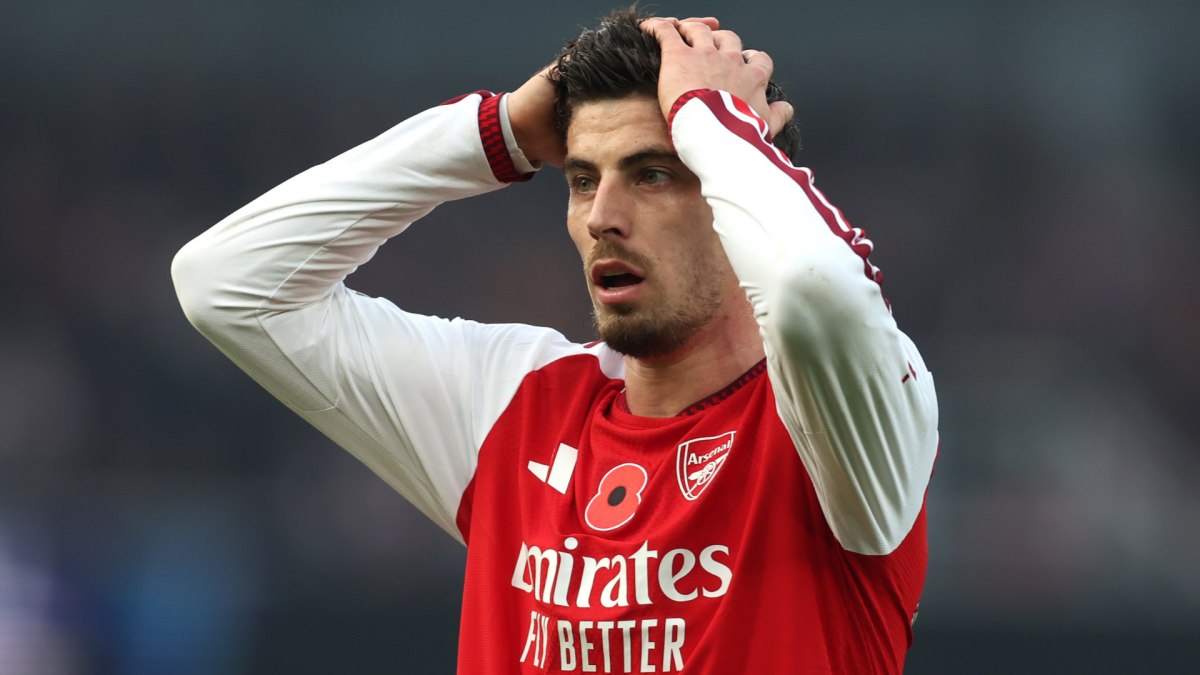
At times, even the opposing team appears willing to assist them. The International Football Association Board could clarify whether Arsenal should have been awarded a penalty after Hull City’s Nobel Mendy tugged on Kai Havertz’s jersey while Bruno Guimaraes attempted a long shot. Although Havertz was obstructed, he was in an offside position. If he was indeed trying to engage with the ball when Mendy pulled at his shirt, then a penalty kick should have been the call. Instead, Arsenal was forced to wait until the 72nd minute for their victory, with Martin Odegaard benefiting from a rebound following Noni Madueke’s shot.
This allowed Mikel Arteta to whimsically claim he hadn’t really noticed the potential penalty. While there are debates surrounding that incident, the overarching statistics related to Arsenal’s offside situation are startling, suggesting something significant is amiss.
Over the past seven Premier League seasons, no team has had an average of more than three offside calls per game. Only Burnley in 2021-22 and Liverpool in the following season exceeded an average of 2.5, both surpassing 100 for the entire campaign. In their tenth match of this season, Arsenal committed their 32nd, 33rd, 34th, and 35th offside offenses. By the end of the match, they had 11 more than any other team in the league—a trend that doesn’t seem to be improving. Even a team made up of Pippo Inzaghis would struggle to achieve these numbers.
This situation raises questions. Historically, Arsenal has not been plagued by frequent offside calls; in the previous six seasons, they ranked similarly to the average Premier League team in terms of offside infractions when accounting for possession. Such a drastic shift in relatively low-volume statistics likely points to an element of variance. It may also relate to a ten-game sample that includes a match against Aston Villa, but that’s still over a quarter of the current season. Recently, Arsenal has faced a series of games marked by a high frequency of offsides.
This is clearly a concern, and even Arteta has noted it. “There are many areas we need to enhance. Timing and the positioning of opponents are just some factors that contribute to this,” he remarked.
Regarding the Villa match, “Yes, eight of your 35 came from that game,” Mikel pointed out. Leeds contributed seven, Coventry five, and Hull four—each significantly above the league average. Havertz stands out as the main offender, with 15 offsides to his name—seven more than any other player currently in the league—and more than any Arsenal player had during their entire title-winning campaign last season.
This seems unprecedented. Over the last six seasons prior to this one, Havertz was ranked 48th among forwards in terms of offside frequency. The players usually flagged for offside include those like Ashley Barnes and Cristiano Ronaldo, but Havertz is edging closer to being caught once every half.
Is his speed diminishing? According to Gradient Sports’ physical data, he hasn’t lost any pace this season. It’s also possible that Arsenal’s current attack, featuring quicker players, favors a more expansive style. Compared to Havertz, who often gets caught offside, Madueke’s technical ability allows him to time his runs better—though he was flagged for one today.
Have defenses figured out Havertz’s movement? It’s not entirely clear, especially since Hull failed to maintain their defensive line on multiple occasions, allowing Havertz a one-on-one opportunity that he squandered by hitting the ball against Mendy’s leg.
Arteta succinctly stated the issue: “It’s about timing. There’s a signal on the ball, and the timing must be precise. If you’re even a second or half a second late, that’s all it takes.”
Certainly, Arsenal could afford to release the ball more quickly. If Odegaard has any weaknesses, it’s his tendency to take one extra touch when he could have passed. This was evident in the match against Aston Villa, where he could have effortlessly set up Havertz to score but instead took too many touches, missing the moment.
Bruno Guimaraes shares a similar trait with four offside passes, suggesting that Arsenal as a whole may have a tendency toward this behavior. Does the legacy of players like Alex Hleb and Samir Nasri still linger in this team? Arteta seems to hint at this idea, noting that Arsenal often seeks to play a perfect goal against tightly packed defenses.
“We need to find ways to be more efficient and at times even pragmatic,” he said. “There’s a tendency sometimes to aim for perfection with low block defenses, and we need to abandon that in favor of a more chaotic approach.”
This is particularly evident with the numerous offside calls from their right flank where Arsenal tend to create chances. Their failed attempts at reverse passes and quick combinations have led to frequent violations. One example was offside No. 36, stemming from an overlapping run by Jurrien Timber, where Madueke’s late pass resulted in a stoppage rather than giving Hull a free kick.
In contrast, Madueke demonstrated the benefits of a different approach throughout the match by consistently challenging his defender, creating openings without obsessing over timing or setups. As more teams focus on disrupting play rather than being defensively aggressive, some unpredictability from Arsenal’s players can indeed be beneficial.
Regarding the offsides, it’s clear this is an issue, with numerous opportunities squandered due to players being out of sync with each other. While this season has certainly been challenging, it doesn’t necessarily have to remain this way. Injuries have limited Havertz and Odegaard’s time on the pitch together, suggesting that if they, alongside Saka, can play consistently, their established rhythm could return, making this just an intriguing anomaly.
Fan Take:
This situation sheds light on a critical issue for Arsenal that could impact their momentum this season. If they can resolve the offside dilemma and improve their attacking efficiency, they may reclaim a higher position in the league standings, which is something all supporters will be eager to see as the season progresses.
Source: www.cbssports.com
