
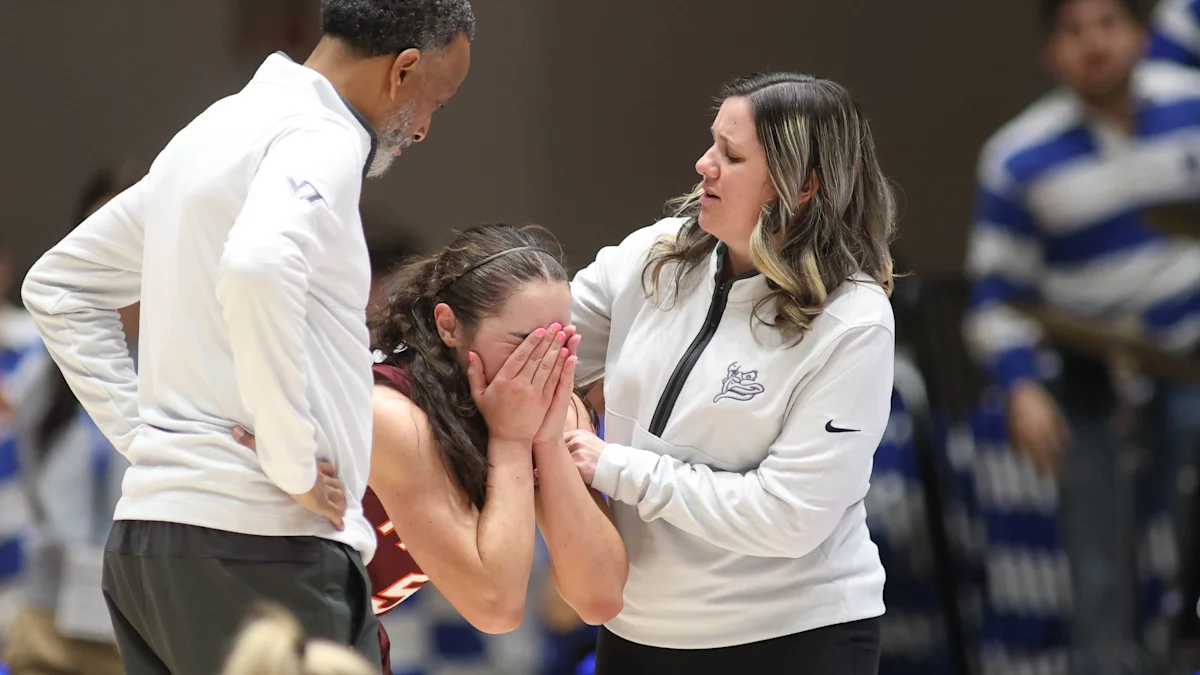
WNBA standout Georgia Amoore’s rookie year was abruptly cut short before it even began. Just three days into Washington Mystics’ training camp in April 2025, the promising guard suffered a torn ACL in her right knee, mere days before her inaugural game with the team. What followed was a grueling year not only for her physical recovery but also for her mental health—a side of injury rarely discussed. Now back on the court, Amoore is opening up about the emotional challenges she faced.
“There’s a lot of anxiety that comes after an injury,” Amoore shared on Instagram via WNBL. “It could be about performance, wondering if I’ll ever feel like myself again, or the fear of getting hurt once more. These thoughts can quietly take over your mind, and it’s completely normal. People don’t talk enough about how messed up it can be mentally to come back from injury…” she said.
Drafted sixth overall after an impressive five-year run at Virginia Tech and Kentucky—where she missed only one game and averaged 19.6 points and 6.9 assists in her final season—Amoore’s injury came unexpectedly during a routine practice. The Mystics initially gave no timeline for her return, and she ultimately missed the entire 2025 season. At one point, she feared her career might be over before it truly started. Encouraged by her team’s support, she committed wholeheartedly to rehab, spending months training in mostly empty gyms with the team’s performance staff in Washington. This dedication earned her medical clearance and the starting point guard spot.
However, her rookie season began with struggles: a shooting percentage of 26.7% in May, turnovers, and knee soreness that sidelined her during a June game. By August, with only modest scoring in recent games, doubts arose about whether she should keep starting. Then, something shifted. Approximately 16 months post-injury and 35 games into her rookie year, Amoore’s performance surged—as evidenced by a career-high 25 points and a significant boost in her 3-point shooting accuracy, rising from 28.3% to 41.1% after the All-Star break. The Mystics finished with a league-best 11-4 record post-break and secured their first playoff berth since 2023, though they were swept in the first round by Atlanta.
Amoore’s openness about the mental side of injury echoes sentiments expressed by fellow WNBA stars Caitlin Clark and Paige Bueckers, who have also faced long injury battles. Clark highlighted the “mental hump” she continues to struggle with, emphasizing the need for self-compassion. Bueckers discussed feeling isolated and losing her sense of identity after an ACL tear, noting that the trauma influences how she now plays, including avoiding contested finishes at the rim.
These stories expose a broader issue within the WNBA, where injuries are frequent—over 200 reported in the last year alone—and teams must often rely on emergency signings. Former veteran Layshia Clarendon notes that while the physical trauma of injuries is evident, the mental impact is often invisible to fans. Studies show women are at greater risk for ACL injuries, but prevention programs and longer, more cautious rehab protocols are improving recovery outcomes. The league itself is responding; the new Collective Bargaining Agreement mandates expanded rosters and medical staffs, and some teams are investing in upgraded training facilities.
For Amoore, the key takeaway is simple, yet profound: “Trust the process.” Her journey, along with Clark’s and Bueckers’, reveals that the toughest battles often come after the physical healing, highlighting the importance of mental health in recovery.
Fan Take: This story is a crucial reminder for WNBA fans that behind the highlights and stats, players face immense mental challenges during injury recoveries. Understanding these struggles not only builds empathy but also underscores why supporting player wellness is essential for the growth and longevity of women’s basketball.
Source: sports.yahoo.com