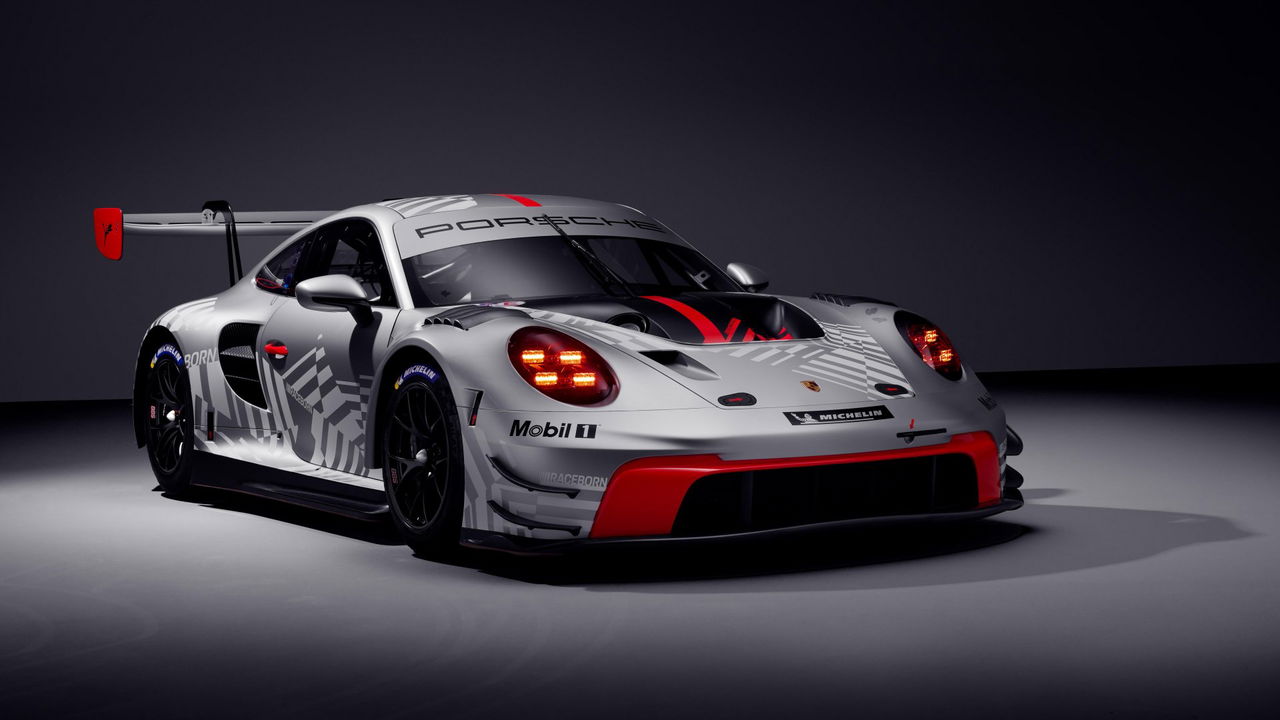
Porsche has unveiled the EVO version of its 911 GT3 R, set to make its competitive debut in 2026. This advanced iteration of the Type-992 911 GT3 R, which has been in use since 2024, introduces several upgrades aimed at enhancing its performance across various conditions.
A key new feature is the addition of ventilation, or the Louvre, on top of the front wheel arch to improve aerodynamics. The double wishbone front suspension has been redesigned to lessen forward tilt during braking, while the rear wing now includes a 4mm gurney flap to increase downforce, allowing for further aerodynamic adjustments. The rear axle’s kinematics have also been refined, and the car is fitted with a 5th generation Bosch ABS racing system.
Based on customer input, Porsche has made several other enhancements, such as improved cooling for the hydraulic system, new ceramic wheel bearings for greater durability, and an enhanced rear brake cooling system that provides finer control. Inside the cockpit, the driver’s air vent system has been redesigned to ensure steady airflow. The 4.2-liter flat-six engine remains unchanged, delivering up to 557bhp depending on performance balance.
Owners of the current 911 GT3 R can upgrade to the EVO specifications via an update kit starting at 41,500 euros plus VAT, while the full EVO model is priced at 573,000 euros before taxes and optional extras. Porsche also offers additional packages, including sensors, endurance features, pit lane links, and cameras.
Development of the EVO began in August 2024, with testing carried out at Porsche’s Weissach facility and various racetracks across Europe and Asia, including Sebring, Paul Ricard, Spa-Francorchamps, and Nürburgring Nordschleife. Herberth Motorsport tested the car at the 12-hour Spa race in April, finishing second overall with drivers Laurin Heinrich, Ralf Bohn, and Alfred Renauer.
The fully developed 2026 Porsche 911 GT3 R EVO will be delivered to customers two years after the original model’s release.
Fan Take: This EVO version represents a significant step forward in race car technology, delivering refined aerodynamics and enhanced handling that racing fans crave. Its debut could shake up endurance racing by pushing other manufacturers to innovate, raising the competitive stakes in the sport.