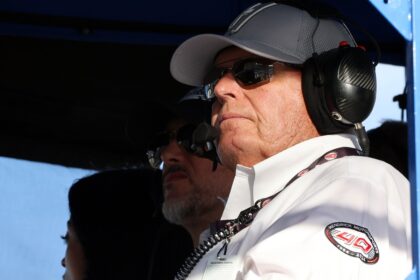

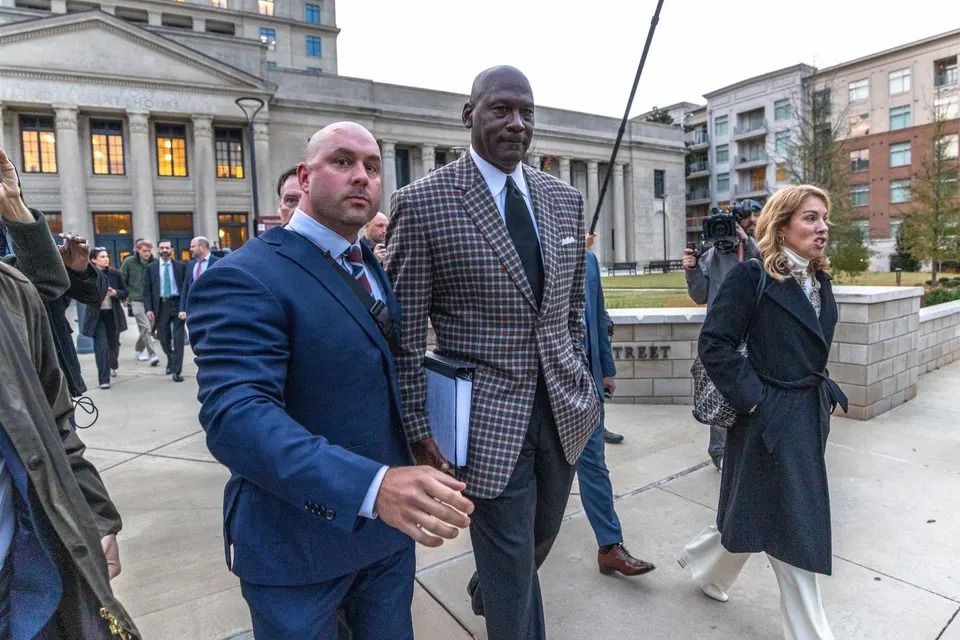
The antitrust trial involving 23XI Racing, Front Row Motorsports, and NASCAR began Monday, featuring jury selection, opening statements, and partial testimony from co-owner Denny Hamlin. Plaintiffs’ lead lawyer Jeffrey Kessler outlined claims that NASCAR CEO Jim France crafted an anti-competitive strategy, supported by internal emails and texts from executives Steve Phelps, Steve O’Donnell, and Scott Prime, which suggested unfair treatment of the teams during charter contract negotiations. Kessler argued that despite NASCAR’s eventual approval of the deal, it was a poor offer described as “take-it-or-leave-it,” forcing teams to accept less favorable terms, such as reduced financial payouts and loss of veto power over rule changes.
Kessler likened the quest for permanent charters to owning versus renting a home, emphasizing the teams’ desire for lasting ownership rather than temporary rights that limit their business value. He explained the concept of monopsony, comparing it to a situation where a nurse has no employer choice, illustrating NASCAR’s control over tracks, team participation, and car parts to stifle competition. Kessler claimed NASCAR leveraged its monopoly to limit teams’ revenue share, highlighting NASCAR’s valuation at $5 billion and profits of $400 million over three years.
NASCAR’s lead attorney, John E. Stevenson, countered by stating that the teams have followed the charter system as agreed since 2016 and only raised complaints after failing to secure better financial terms in September 2024. He argued that 23XI and Front Row sought litigation as their primary negotiation strategy, aiming for more favorable terms rather than addressing genuine antitrust concerns. Stevenson defended NASCAR’s non-compete clauses as standard in business deals and framed NASCAR’s merger with the International Speedway Corporation as a move for operational efficiency, not anti-competitive behavior.
Denny Hamlin testified with emotional moments recounting sponsorship challenges, the high costs of competing, and the competitive pressures from NASCAR itself. Hamlin emphasized that NASCAR’s rules and sales of charters have a direct impact on team profitability and survival. During his testimony, Hamlin highlighted the struggle for sponsorships and competitiveness under the current system, underscoring how teams must constantly fight NASCAR and other teams for resources.
Jury selection took over two hours, resulting in a panel of six men and three women. Prospective jurors with conflicts of interest, familiarity with NASCAR figures, or strong opinions about Michael Jordan were dismissed. Judge Kenneth D. Bell reprimanded attorneys for aggressive behavior before the trial and restricted the use of certain evidence during opening statements to keep proceedings fair.
Fan Take: This trial is crucial for NASCAR fans because it shines a light on the internal business dynamics that directly impact team competitiveness and financial health, potentially leading to bigger changes in how NASCAR operates. The outcome could redefine team ownership rights and influence how the sport balances control and competition, ultimately shaping the future landscape of NASCAR racing.