

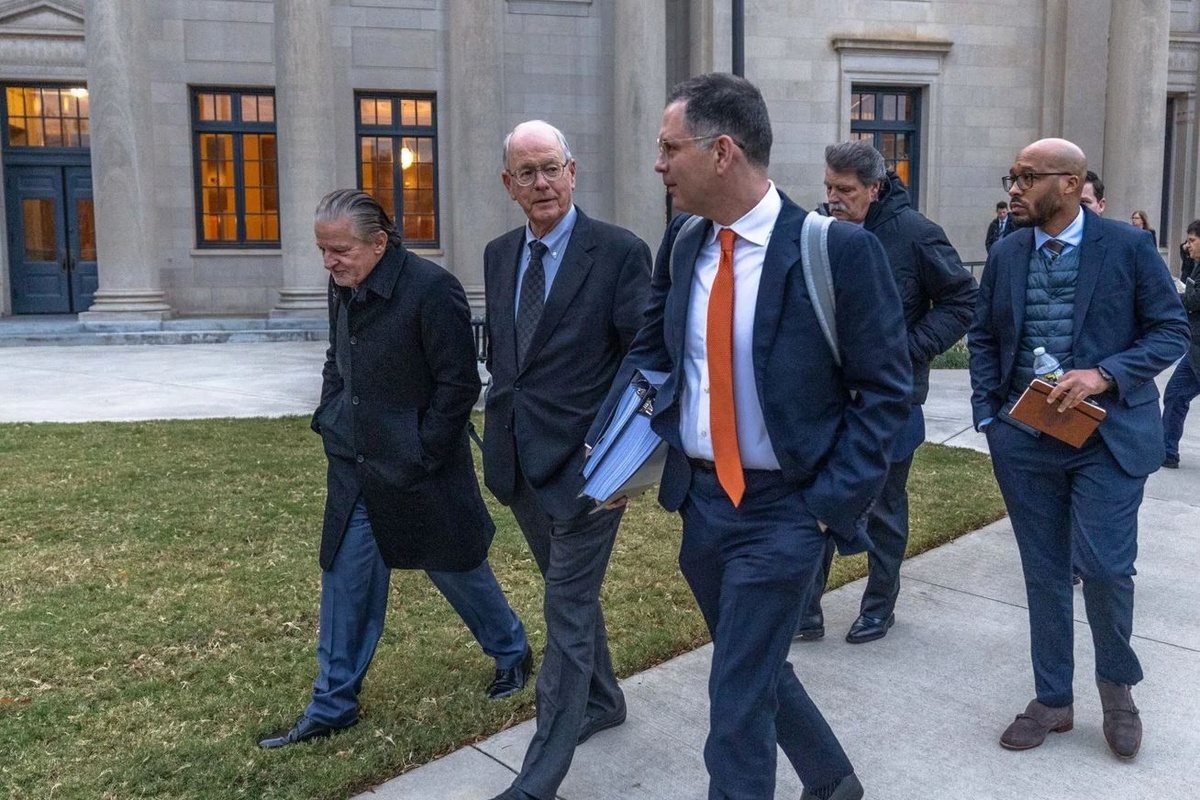
On the second day of the antitrust trial involving 23XI Racing, Front Row Motorsports, and NASCAR, the sanctioning body’s executive vice president and chief strategy officer, Scott Prime, testified. It was a challenging session for Prime as he was questioned about internal conflicts within NASCAR’s leadership regarding the charter terms that CEO Jim France was pushing on the teams.
During the discovery phase, many private emails and texts were revealed, showing that Prime, former COO Steve O’Donnell, then-president Steve Phelps, and others thought the Cup Series teams deserved more than what NASCAR management was offering. In one email, Prime acknowledged that team owners had valid points, noting that Formula 1 teams receive 50% of total revenue, compared to only 20-25% for NASCAR Cup teams.
Prime admitted in another email that NASCAR held all the bargaining power and expected the teams to accept nearly any deal presented, a statement highlighted by team attorney Jeffrey Kessler during cross-examination. Prime was also questioned about text conversations with NASCAR leadership from May 21, 2024, revealing frustration with the negotiation stance and the tough approach being taken by NASCAR executives.
Kessler probed whether Prime regretted not expressing these frustrations to NASCAR leadership directly; Prime said he felt remorse after a difficult meeting with the team owner. He also insisted that the NASCAR Board of Governors had considered the teams’ feedback and included some additional but limited demands, which 23XI and Front Row described as a minor victory.
When asked about what the additional demands would mean for the teams, Prime called it “significant protection,” yet legal counsel for the teams argued this fell short of offering charter permanence, more money, or real influence on decisions, pointing out NASCAR’s overwhelming control.
Kessler also questioned Prime about NASCAR’s strategy to prevent competitors from emerging, referencing a 2020 email where Prime warned against a split like the damaging CART/IRL breakaway in open-wheel racing. Emails revealed NASCAR’s efforts to secure exclusive agreements with Speedway Motorsports venues to block rival series such as the SRX, which NASCAR also actively tried to undermine.
Prime downplayed his knowledge of exclusivity deals, claiming his role was largely informational, although he earned between $200,000 and $400,000 for assembling data and presentations. NASCAR eventually signed a multi-year exclusive contract with tracks to prevent outside series from racing there, protecting the value of the tracks and the sport.
Kessler also criticized Prime over “Project Gold Code,” described as a contingency plan if multiple teams boycotted events or rejected charter agreements, and Prime suggested pre-emptive deals with entities like the Saudi Private Investment Fund to avoid outside influences contacting NASCAR teams or rivals.
Toward the end of the day, it emerged that 23XI and Front Row intended to call Richard Childress as a witness; Childress had previously insulted NASCAR president Steve Phelps in inflammatory texts revealed during discovery. The judge rejected a request to close the courtroom for sensitive financial testimony, encouraging general discussions to protect confidential information.
The trial will continue with Prime’s cross-examination by NASCAR’s legal team the following morning.
Fan Take: This trial exposes deep tensions between NASCAR’s leadership and team owners, highlighting struggles over power and money that could reshape the sport’s future. For fans, it signals potential changes in how teams are valued and treated, possibly leading to a more balanced and competitive NASCAR environment.