

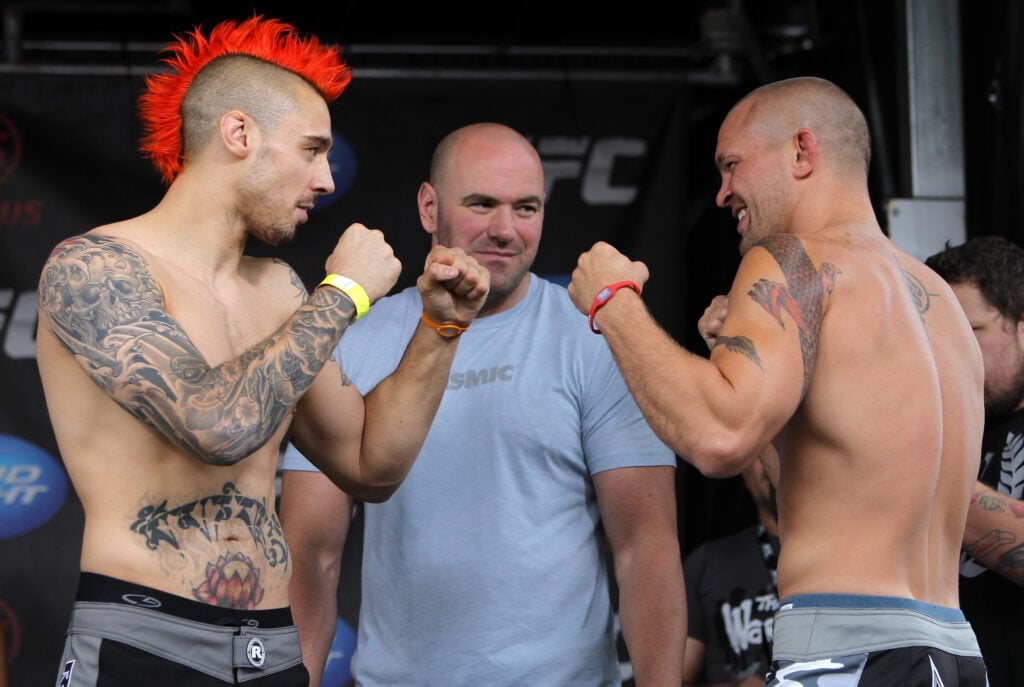
In the early stages of the UFC’s growing popularity, not everyone welcomed its arrival in their local communities. Initially, the sport was often criticized due to negative associations and misunderstandings about what MMA involved. Dana White and his team faced a tough battle to get MMA legalized and properly regulated in many states, a challenge that seemed almost insurmountable at times. However, with support from notable figures like Donald Trump, the UFC managed to expand across the U.S., making its first appearance in Wisconsin in 2011.
When the UFC held its inaugural event in the Badger State at Milwaukee’s Bradley Center, headlined by Dan Hardy and Chris Lytle, it faced significant opposition. The sport’s early marketing strategy leaned heavily on the violence and shock factor, which didn’t sit well with everyone. Just days before the event, protesters demonstrated against the UFC’s presence in Milwaukee. Dana White and his team chose to engage the protesters calmly and directly. White asked the demonstrators why they opposed the sport, to which one replied they simply didn’t like seeing people hit each other. White defended MMA by comparing it to other mainstream sports like the NFL, emphasizing its legitimacy.
Despite the initial resistance, the UFC has since returned to Milwaukee twice. In 2013, the promotion hosted a PPV event featuring a lightweight title fight between Benson Henderson and Milwaukee’s own Anthony “Showtime” Pettis. Most recently, in 2018, the UFC came back for a fight night headlined by Kevin Lee versus Al Iaquinta.
Fan Take: This story highlights how MMA’s acceptance was hard-won and underscores the sport’s evolution from a controversial spectacle to a respected athletic competition. For fight fans, it’s a reminder that enduring skepticism doesn’t define the sport’s future — perseverance and advocacy can lead to broader recognition and growth.