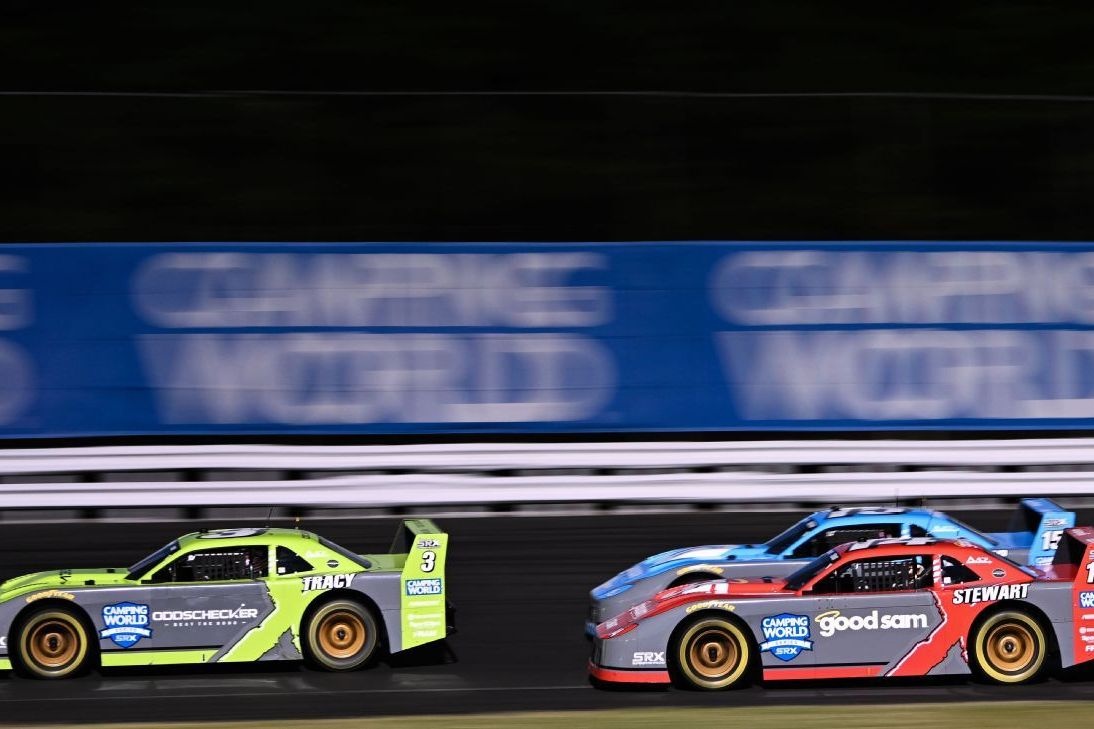
During the four-day antitrust trial between 23XI Racing and Front Row Motorsports (FRM) against NASCAR, the now-defunct Superstar Racing Experience (SRX) series emerged as a significant factor in the jury’s deliberations. Through questioning NASCAR executives Steve O’Donnell and Scott Prime, attorneys highlighted how NASCAR’s leadership grew increasingly aware of potential rival series like SRX and took concrete steps to counteract them, reflecting concerns over NASCAR’s monopoly in premier stock car racing.
NASCAR’s unease with SRX began in mid-2022 during charter extension talks, fearing teams might defect, as SRX’s profile grew with Cup Series drivers participating and SRX races airing on major networks. O’Donnell and Prime detailed how NASCAR viewed SRX as encroaching on its brand identity and acting as a market disruptor, creating fears that teams or drivers might join or form competing series.
Internal conversations revealed NASCAR’s strategy to protect its business, including adding traditional tracks like Wilkesboro and Bowman-Gray to its schedule and blocking Speedway Motorsports from hosting SRX events. Text exchanges between NASCAR executives showed disdain for SRX and plans to legally challenge its existence, emphasizing NASCAR’s interest in consolidating revenue and controlling competition.
O’Donnell described ongoing concerns about breakaway series and intellectual property infringement, reinforcing NASCAR’s efforts to retain control and protect its teams financially. Charter agreements were tightened to include non-compete clauses, highlighting NASCAR’s defensive measures against competition and potential team alliances with SRX or other entities. The influence of external rivals like LIV Golf was also mentioned as adding tension behind the scenes.
Testimony shed light on financial pressures within the sport, with Front Row Motorsports owner Bob Jenkins revealing discrepancies in costs and losses. The trial scrutinized NASCAR’s “take-it-or-leave-it” charter offers and team merger negotiations, revealing strategic maneuvering and conflicting interests among teams, sponsors, and NASCAR leadership.
Judge Kenneth D. Bell criticized the slow pace of the trial, urging witnesses for more straightforward and timely testimony to avoid further juror frustration. The trial, originally set for two weeks, is now extended to a third, with ongoing discussions about witness scheduling and trial proceedings.
Fan Take: This case sheds light on NASCAR’s internal struggles to maintain control amid evolving competition, illustrating the tension between innovation and tradition in the sport. For fans, the outcome could redefine how NASCAR handles competition and team dynamics, potentially reshaping the future landscape of stock car racing.