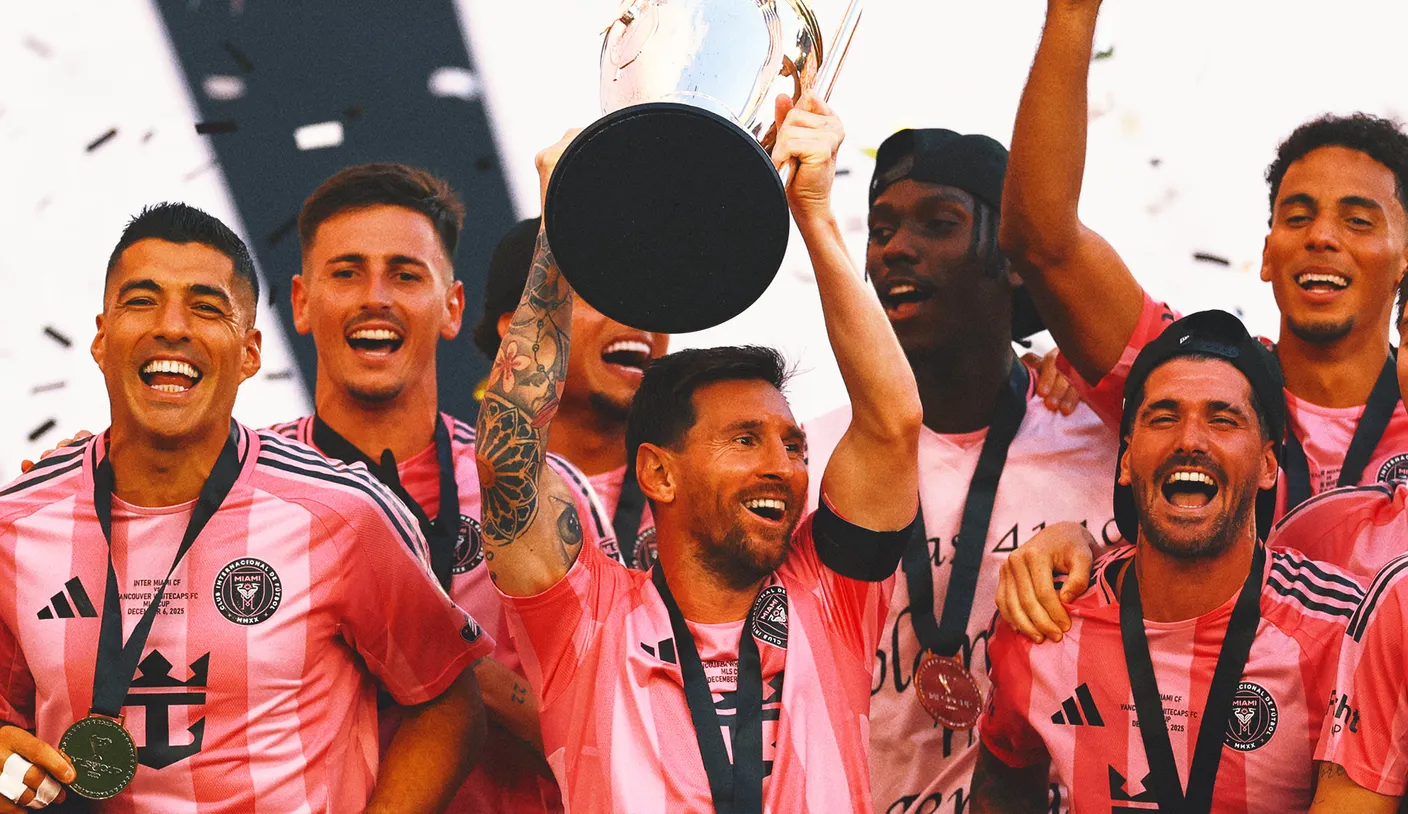
Lionel Messi has accomplished nearly everything in soccer and is now on the verge of adding the MLS Cup to his impressive collection of trophies, having recently led Inter Miami to a 3-1 victory over the Vancouver Whitecaps.
With this victory, Messi has become the first player in history to hold both the World Cup and MLS Cup titles, alongside his fellow teammates, Argentine midfielder Rodrigo de Paul and Spanish midfielder Sergio Busquets.
1. Messi Achieves His Goal
Since arriving in South Florida during the summer of 2023—just six months after securing the 2022 World Cup with Argentina—Messi’s primary goal has been to lift the Philip F. Anschutz Trophy as the MLS champion for Inter Miami. Initially, the team was struggling at the bottom of the Eastern Conference, but Messi managed to secure the League Cup for Miami before taking part in a regular season match. Unfortunately, an injury sidelined him, making it difficult for the team to qualify for the MLS Cup Playoffs.
Last season, despite earning the Supporters’ Shield with a record number of points, Messi and his team faced defeat to Atlanta United in their first playoff match. Further setbacks in the Concacaf Champions Cup in 2024 and early 2025, as well as a disappointing round-of-16 exit at the FIFA Club World Cup and a loss in the League’s Cup final, increased the urgency to claim the MLS Cup this fall, especially with pending retirements of former Barcelona stars.
However, Messi was determined to succeed this postseason, refusing to experience another rejection like the one in Qatar in 2022. He was instrumental during the playoff match, turning the tide after Vancouver managed to equalize early in the second half.
2. Miami’s Strategy is Paying Off
While some MLS owners hesitate to invest in team rosters, suggesting that money does not guarantee success in the league, Miami’s recent triumph contradicts that notion. By leading in spending, Miami showcased the effectiveness of their strategy; Rodrigo de Paul, a recent standout addition, scored the winning goal.
This victory serves as a test case for a league often critiqued for its competitive balance, signaling that financial commitment can indeed yield results.
3. Messi’s Future and World Cup Plans
Speculation surrounds Messi’s future, particularly regarding his participation in the upcoming World Cup next summer, which will be co-hosted by the United States, Canada, and Mexico. Messi has indicated positive discussions with Argentine national coach Lionel Scaloni about his return.
Turning 39 next summer, Messi has made appearances in five World Cups and holds the record for the most appearances, with 26, surpassing Germany’s Lothar Matthaus.
4. Credit to Vancouver, Even in Loss
Despite facing defeat, Vancouver deserves recognition for an impressive 2025 season. After winning the Concacaf title earlier this year, the team fought bravely against the financially stronger Miami, demonstrating a commendable spirit.
Vancouver made notable acquisitions, including signing German star Thomas Muller, and successfully contended with Miami’s stronger roster, proving their worth in the league. The talents of midfielder Sebastian Berhalter and defender Tristan Blackmon have been elevated through this success, possibly impacting their chances for the U.S. national team in the 2026 World Cup.
MLS Commissioner Don Garber expressed concerns over Vancouver’s future, but if it leads to long-term stability, the team can view this season, despite the MLS Cup loss, as a significant achievement.
What’s Next
With the 2026 season starting in February, both Miami and the league will face crucial transitions. Miami plans to unveil their new stadium in late spring, just as the MLS pauses for the World Cup, marking the last full season under the current spring-to-fall schedule before a shift to fall-to-spring in the 2027-2028 season.
Fan Take: This news is monumental for soccer fans as it highlights Messi’s ongoing legacy and impact in MLS while showcasing the growing competitiveness of the league. The triumph of Inter Miami could signal a shift in how talent acquisition shapes the league’s success moving forward, adding excitement and anticipation for the future of soccer in North America.