
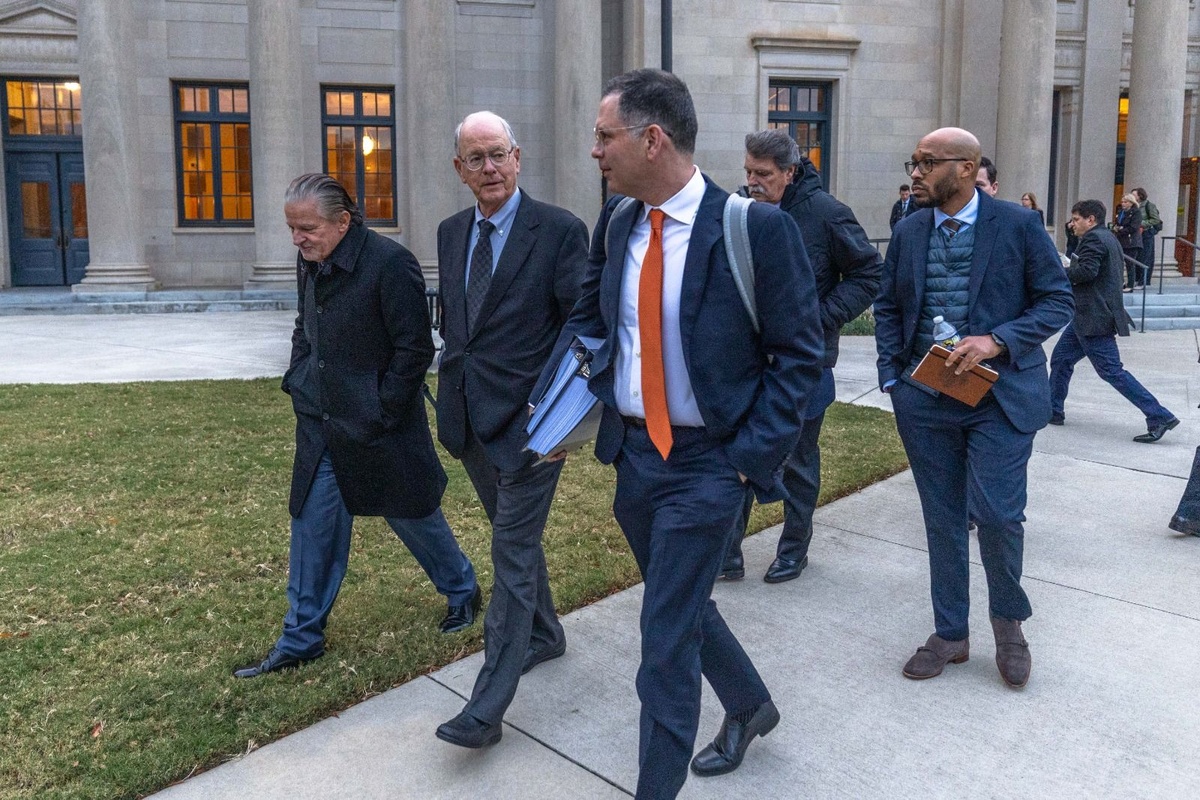
There has been ongoing discussion lately about the testimonies of NASCAR executives during cross-examination led by Jeffrey Kessler, the attorney representing 23XI Racing and Front Row Motorsports. The officials were asked detailed questions related to their responsibilities but often responded with “I don’t know” or “I wasn’t there,” likely to avoid legal harm. Some also cited the demanding nature of their roles as reasons for memory lapses. Kessler challenged this by questioning their high salaries, arguing it’s improbable that executives making over $1 million annually would be so uninformed. This pattern was seen with President Steve O’Donnell, and more recently with Commissioner Steve Phelps and CEO Jim France.
Kessler is building a case suggesting that many NASCAR officials believe the race team was entitled to better terms during charter extension talks but was obstructed by France. Despite emails apparently from Phelps, he claimed not to recall key details. Kessler reassured the executives that their memories might return when they face cross-examination themselves. Phelps recalled the timeline of the coronavirus shutdown and NASCAR’s return but admitted forgetting various specifics about key negotiations and disagreements with France.
Although frustrations were expressed in private messages, Phelps testified that ultimately, France’s directives were followed. Kessler pressed the issue of NASCAR’s exclusivity deals and their impact on competitors, but Phelps largely claimed ignorance or frustration without clear answers. The questioning aimed to demonstrate that exclusivity arrangements were used to disadvantage teams by limiting competition. Phelps rejected the idea that France was politically motivated to block permanent charter status for certain teams.
CEO Jim France, during his testimony, denied granting permanent charters to key team owners despite their repeated requests, and he exhibited similar memory issues when queried about financial specifics and internal meetings. France often answered with uncertainty or lack of recollection, including about his salary. He also downplayed emotional reactions to letters from team representatives and showed inconsistencies compared to other NASCAR executives’ accounts. His refusal to acknowledge permanent charter proposals aligns with the contested decisions under scrutiny in the trial.
Richard Childress, another witness, declined to answer questions about team ownership and potential deals, invoking confidentiality agreements. He expressed frustration about private financial details being disclosed in court, which he argued were irrelevant to the case. Childress also revealed that other business ventures outside NASCAR financially support his racing team, indicating the economic challenges of sustaining a NASCAR operation.
Fan Take: This courtroom drama shines a light on the inner workings and power struggles within NASCAR’s leadership, showing how pivotal decisions may affect team viability and competition fairness. For fans, the outcome could reshape the sport’s structure and level the playing field, impacting the future of racing and team dynamics.