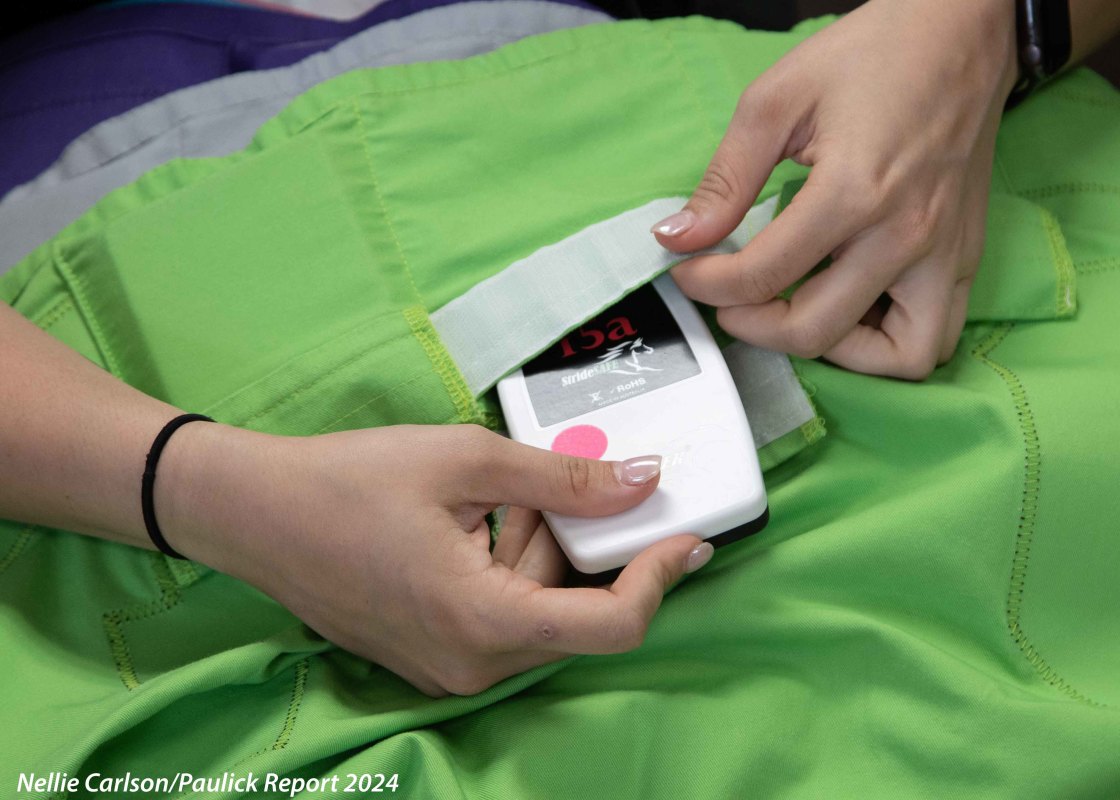
A significant research initiative focused on wearable biosensors for Thoroughbred racehorses is nearing completion, according to Dr. Sarah Langsam, Chair of the American Association of Equine Practitioners’ (AAEP) Horse Racing Committee. These biosensors are intended to act as early warning tools to detect racehorses at risk of musculoskeletal injuries by monitoring their movement patterns during high-speed workouts.
The AAEP-coordinated project involves six companies—Garmin, StrideSafe, Arioneo, Alogo, Equimetrics, and Stable Analytics—each fitting at least 100 two-year-old Thoroughbreds with biometric sensors during every workout leading up to the 2025 racing season. Data collection will conclude on December 31, 2025. So far, 2,500 workouts from 542 horses have been recorded; initially, participant numbers were high to account for expected horse transfers from farms to racetracks.
This technology shows practical promise since companies plan to deliver results within 48 hours of a workout, aligning closely with the typical return time for horses to gallop again. Of the workouts recorded, 1,700 showed a “green” status, 625 “yellow,” and 140 “red.” Horses missing two consecutive weekly workouts must provide veterinary reports explaining the absence, which can be submitted until the end of 2025.
To maintain data integrity, detailed analysis on each sensor’s accuracy has yet to start. Once all data is collected, analysts will assess which sensor provides the most reliable injury risk predictions. The intent is for these sensors to become screening tools to assist veterinarians in deciding if a horse needs further examination or advanced diagnostics, not to replace veterinary judgment.
Dr. Ransom noted plans to release the study’s findings publicly in the weeks before the 2026 Kentucky Derby, after which racing regulators will decide on using the results. The study was prompted by the spike in on-track fatalities at Churchill Downs and Saratoga in 2023 and was supported by the AAEP, which organized the first Thoroughbred Safety and Injury Prevention Forum in Lexington that same year. The AAEP, acting as an independent coordinator, secured funding from multiple Thoroughbred industry organizations.
Ransom emphasized that while rule changes have already reduced mortality rates, technology offers a new frontier for further minimizing unseen risks. The hope is this research accelerates the adoption of clinically valuable tools in the industry.
Financial support for the project came from ten groups, including Breeders’ Cup Limited, Fasig-Tipton, Keeneland, Kentucky Thoroughbred Association, New York Horse Racing Association, and others.
Fan Take: This breakthrough in wearable biosensor technology could revolutionize how racehorse health is monitored, potentially reducing injuries and fatalities on the track. For passionate horse racing fans, it means a safer sport where their favorite athletes can perform at their best with better preventative care.