

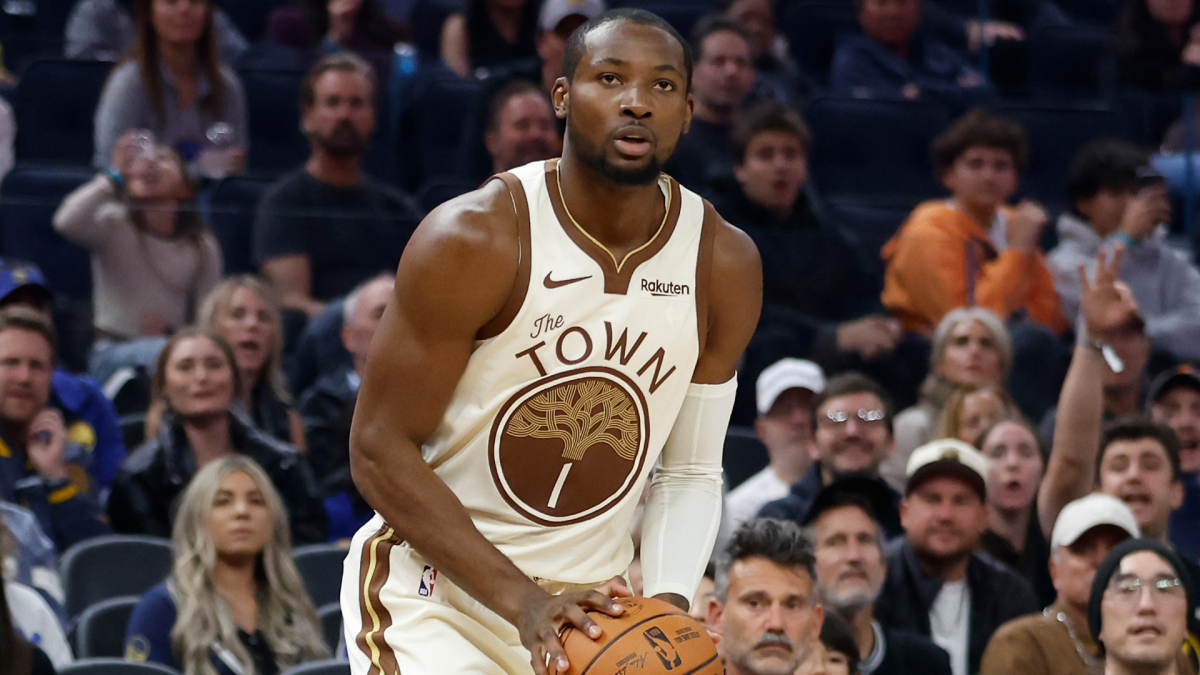
A few years back, I had a conversation with Steve Kerr about what it means to be an NBA head coach. Kerr mentioned he felt the title “head coach” was somewhat misleading, suggesting “manager” might be more fitting, similar to soccer. His role is less about designing plays and more about managing various personalities on the team. This idea often comes to mind, especially when Draymond Green gets technical fouls and Kerr, alongside Stephen Curry, has to calm him down. It’s been particularly relevant recently with Jonathan Kuminga.
Now in his fifth season, Kuminga’s role and minutes with the Warriors have been inconsistent. Last season, he was benched for parts of the playoffs but returned to action when Curry was injured, showing variable performance. This up-and-down pattern continued into this season. Despite a promising start where Kuminga shot 53.7% over 30 minutes per game, his playing time quickly dwindled. He saw 21 minutes against the Cavaliers but didn’t play in the next few games, including a win over Chicago and losses to the Timberwolves and Portland.
When asked about removing Kuminga from the rotation, Kerr cited the recent return of Jimmy Butler from injury and the need to allocate minutes to Pat Spencer, Guy Santos, and De’Anthony Melton. Kuminga was notably absent from Kerr’s mentioned list. Kerr acknowledged, “I can imagine it’s not easy for him.”
Kuminga has publicly stayed professional, speaking calmly and positively even after limited playing time. Yet, there’s awareness that he might be on his way out. Despite signing a new contract this offseason, he’s eligible for trade after January 15th. The contract is structured to make trading easier, with a two-year deal totaling $22.5 million this season and a $24.3 million team option next year. It’s clear the Warriors might trade him for a player more fitting to their needs.
Kerr expressed hope for Kuminga to succeed wherever he ends up, while also acknowledging few players spend their entire careers with one team—a sentiment Carr, who played for six teams, understands well. The NBA is a business where players must accept the possibility of being traded or released.
Since Kuminga joined the league, the Warriors have been uncertain about his role. Initially, they hoped to balance winning with developing him but eventually prioritized the championship timeline centered around Curry. Last season, there was even an attempt to replace Draymond Green with Kuminga in the starting lineup, with Green backing him as the next star. However, that plan didn’t last, and the team struggled to find the right combo on the floor, leading to reduced playing time for Kuminga after the Butler acquisition.
The Warriors currently have a 13-14 record, narrowly behind playoff contention, with a net rating that favors the team when Kuminga is off the court. This data supports the decision to limit his role. Despite this, Kuminga remains with the Warriors, in a state of uncertainty marked by difficult contract talks and ongoing limbo about his future.
Kerr summed up the strange reality of NBA life: players must stay fully committed to their teams even while knowing they might be traded or cut, a tough situation to reconcile—especially from the sidelines, waiting for the inevitable.
Fan Take: This situation spotlights the harsh realities behind the glitz of the NBA, where young talents like Kuminga face intense pressure and uncertainty despite their potential. For fans, it underscores how roster decisions are as much about fit and timing as talent, shaping the future landscape of teams and the league itself.