
Renowned authors Edward L. Bowen and Ray Kerrison, along with trailblazing photographer Charles Christian “CC” Cook, have been inducted into the National Museum of Horse Racing and Hall of Fame’s Joe Hirsch Media Roll of Honor.
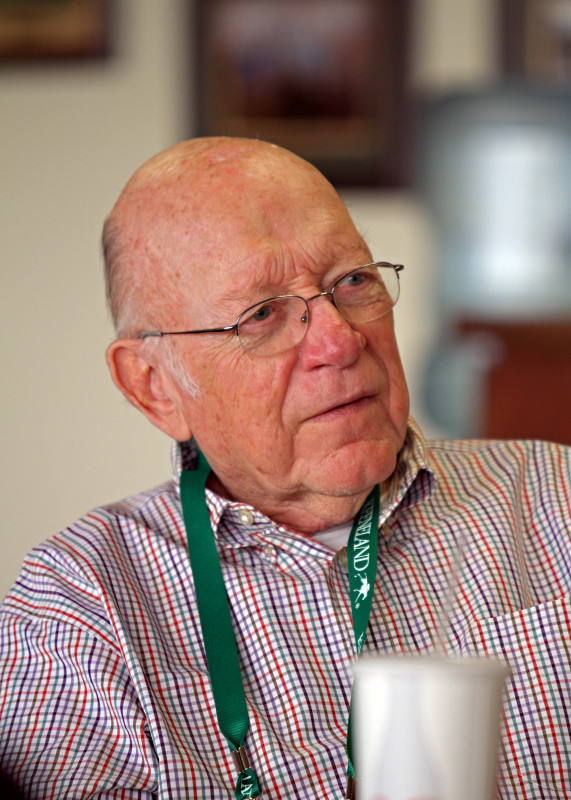
Edward L. Bowen (1942-2025), honored as a Pillar of the Turf in the Hall of Fame this year, enjoyed a distinguished career in horse racing journalism and history spanning over six decades. As editor-in-chief of The BloodHorse magazine and author of 22 books on horse racing, Bowen also led the Grayson Jockey Club Research Foundation as president for 24 years, supporting vital veterinary research to improve horse health and welfare. His 38-year tenure on various Hall of Fame committees began in 1987, including chairing the modern nominating committee.
Bowen, originally from West Virginia and raised in Fort Lauderdale, Florida, developed a passion for horse racing early on, inspired by Walter Farley’s The Black Stallion and local races at Hialeah Park and Gulfstream Park. After working in various industry roles during summers, he began his writing career at BloodHorse in Lexington in 1963, transferring from the University of Florida to the University of Kentucky. Bowen edited Canadian Horse Monthly from 1968 to 1970 before returning to BloodHorse as editor-in-chief in 1987, holding the role until 1992 and retiring in 1993. The following year, he became chairman of Grayson Jockey Club Research Foundation, helping to raise $22 million for research through 2018, contributing to a total funding of $32.1 million across 412 projects at 45 universities since 1983.
Throughout and after his publishing career, Bowen authored numerous books and contributed to others, earning prestigious awards including the Eclipse Award, National Turf Writers Association’s Walter Haight Award, and the Kentucky Thoroughbred Horse Owners and Breeders Charles Engelhard Award. A Kentucky Colonel and past president of the Thoroughbred Club of America, Bowen also served six years in the U.S. Army Reserve and was honored with the inaugural Cornelius Vanderbilt Whitney Award for distinguished service to the National Horse Racing Hall of Fame.
Bringing high praise, Brien Bouie, Communications Director at the National Museum of Horse Racing, noted Bowen’s enduring impact on racing through his integrated and engaging storytelling rooted in his love of the sport.
Charles Christian “CC” Cook (1873-1954) was a pioneer in American horse racing photography. Originating from Carmi, Illinois, Cook was a photojournalist for a Chicago newspaper before going freelance around 1900, earning acclaim for his images of animals at the Lincoln Park Zoo and Barnum & Bailey Circus. His horse racing photography career began in the late 1890s at Washington Park in Chicago. Cook was among the first American photographers specializing in horse racing, capturing portraits and landscapes of racetracks before relocating to New York when racing was banned in Illinois.
From 1906 onward, Cook worked for the New York Globe and the Morning Telegraph, serving the U.S. Army as an aerial photographer during World War I. His prolific photography portfolio documents key figures and iconic horses like Man O’ War, Gallant Fox, and Citation, spanning various racing circuits across the U.S. His extensive archive of over 18,000 glass plates and negatives was acquired in the 1950s and donated to the Keeneland Library in Lexington, Kentucky.
Rhoda Ferraro, Director of the Keeneland Library, praised Cook as a trendsetter in race photography whose work continues to influence modern media and marketing related to the sport.
Ray Kerrison (1930-2022) was respected as an investigative horse racing journalist with a career at the New York Post from 1977 to 2013, covering 32 Kentucky Derbies and many major events. Kerrison started in Australian journalism before moving to the U.S., editing Rupert Murdoch’s National Star and exposing notable racing scandals, including a 1977 Belmont Park scandal and a major race-fixing scam in New York. His investigative work earned a Pulitzer Prize nomination.
Beyond horse racing, Kerrison also covered significant historical events such as the assassination of Martin Luther King Jr., the 1969 moon landing, and the 1972 Munich Olympics tragedy. Remembered as smart, principled, and respectful, Kerrison was highly regarded by colleagues for his honesty and storytelling skill.
The Joe Hirsch Media Honor Award was established in 2010 by the National Museum of Horse Racing to honor those who have made significant contributions to Thoroughbred racing through exceptional media efforts. Named after Joe Hirsch, a distinguished racing writer and Hall of Famer, the award has recognized many influential jockeys, writers, and photographers over the years.
For more information on the National Horse Racing Hall of Fame and Museum and its events, visit racingmuseum.org or call (518) 584-0400.
Fan Take: This recognition celebrates the vital role that dedicated journalists and photographers play in preserving and promoting the rich history of horse racing. Honoring legends like Bowen, Kerrison, and Cook not only pays homage to their contributions but also inspires continued excellence and passion within the sport, helping to engage new generations of fans.