What’s the Situation with Tyler Adams?
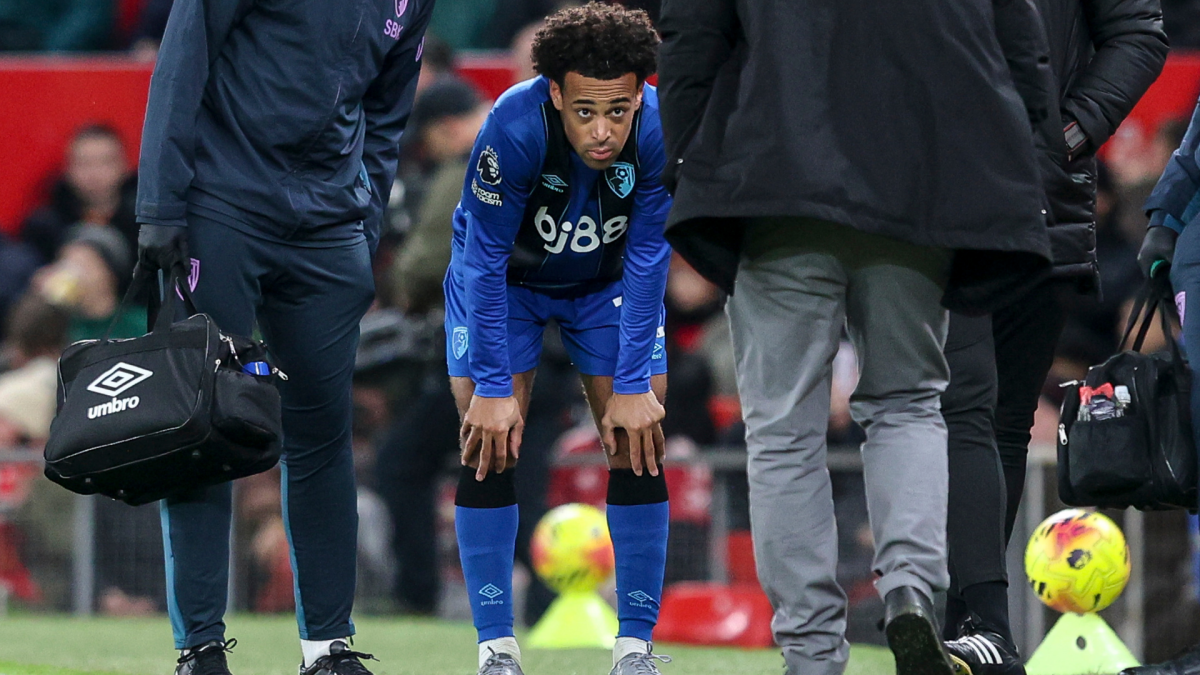
In a recent match between Bournemouth and Manchester United, Tyler Adams was sent off early, and subsequent assessments revealed he has a torn ACL. This injury could keep him sidelined for two to three months, affecting not only Bournemouth’s performance but also potentially impacting his participation in crucial upcoming friendlies for the U.S. men’s national team against Belgium and Portugal in March, raising concerns about his availability for the World Cup.
During a pre-match press conference, Bournemouth manager Andoni Iraola expressed the negative implications of losing Adams, emphasizing his integral role in the team. He shared his past experiences with similar injuries and estimated a recovery time of two to three months, noting how difficult it will be to replace Adams’ unique skill set.
Iraola highlighted Adams’ value to the squad, admitting the challenges of substituting him. While options are available, such as Alex Scott and Lewis Cook, neither offers the same defensive prowess as Adams, who has played 15 league matches this season, scoring two goals.
On a positive note, Adams’ injury does not outright eliminate his chances for the 2026 World Cup. However, it raises concerns for U.S. national team coach Mauricio Pochettino, as Adams is the team captain and his presence would be crucial for success on home soil.
Pochettino has guided the U.S. men’s team through 22 matches since taking the helm in September 2024, but Adams has only been available for ten due to various injuries. Without his defensive midfield capabilities, Pochettino has been forced to adapt tactics, including a formation change to cover the midfield.
Having a healthy Adams would enhance Pochettino’s strategic options, allowing him to confidently employ a 4-2-3-1 formation. Nonetheless, Adams’ fitness has been a constant concern. His leadership was particularly evident during the 2022 match against England, and with the World Cup being hosted in the U.S., fans hope for a deep playoff run this time around.
However, for that ambition to be realized, Adams must be on the field, and it is uncertain if he can return to 100% health after being away for a significant period since joining the Premier League. Any level of his presence would still be advantageous, making his recovery crucial ahead of the World Cup.
Depth in U.S. Midfield
If Adams is not fully fit by the World Cup, alternative options in defensive midfield must be explored.
Weston McKennie: Frequently switched among different roles within the squad, McKennie remains the go-to central midfielder for the U.S. team. He possesses remarkable passing ability and can score from set pieces, but consistency has been an ongoing issue. As he gets more playing time with Juventus, he is expected to play a crucial role in the national team as they prepare for the World Cup.
Tanner Tessman: Currently developing at Lyon, Tessman is emerging as a top option for defensive midfield. His versatility allows him to play center back as well, which could provide additional depth as the U.S. aims for success in the upcoming World Cup.
Aidan Morris: Once viewed as a potential candidate to fill in for Adams, Morris’ season has been hampered by injuries, and recent managerial changes at Middlesbrough have made his situation less stable. Although his importance has waned at the national team level, he could still be crucial if he regains fitness.
Other Considerations: Cristian Roldan of the Seattle Sounders is likely to feature prominently as a starter in the upcoming World Cup. Other names like Johnny Cardoso, who needs to improve his health and gain a spot on Atletico Madrid’s first team, and Sebastian Berhalter, noted for his set-piece provision, will add further competition, along with Yunus Moussa, who is working to increase his minutes.
Fan Take:
This news is critical for soccer fans as it highlights the vulnerability of key players like Tyler Adams, whose presence could determine the U.S. team’s success at the World Cup. His injury underscores the importance of depth in the squad and raises questions about how the team will adapt, impacting not just the upcoming matches, but the potential for a historic performance on home soil in 2026.