

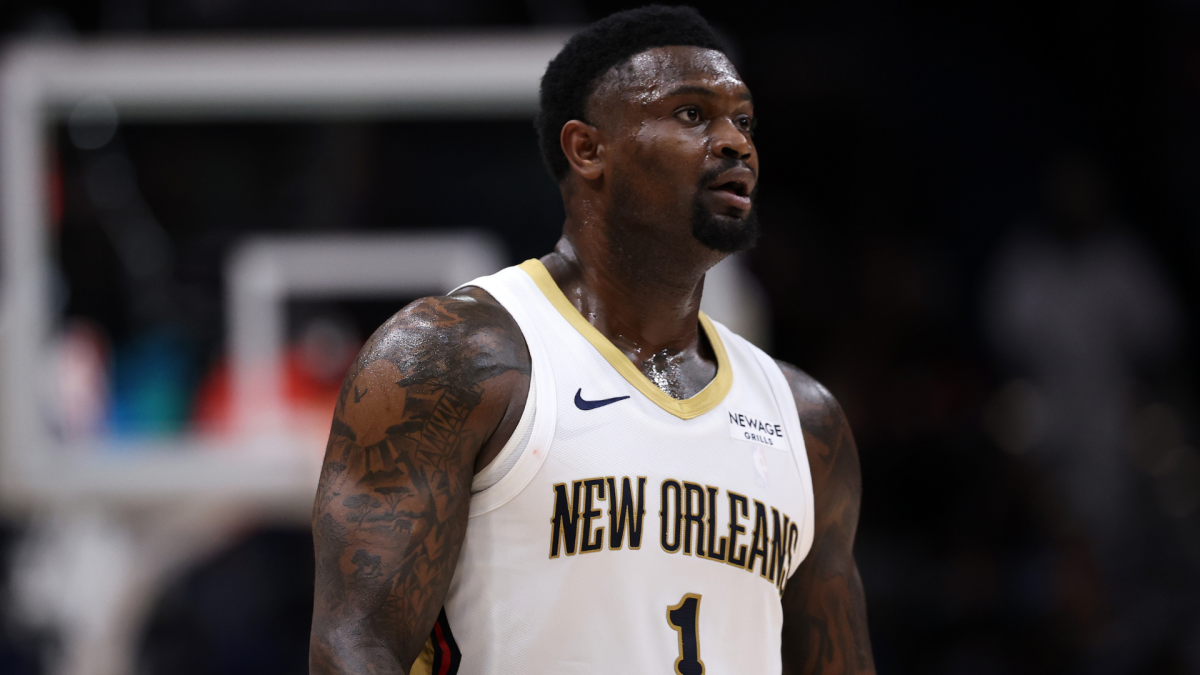
Zion Williamson’s tenure with the New Orleans Pelicans is approaching its conclusion, likely through a trade facilitated by his non-guaranteed contract, which the Pelicans can opt out of by limiting his playtime. Staying in New Orleans no longer aligns with either party’s interests, especially given his $40 million salary and limited availability, alongside the emergence of draft pick Derrick Queen as a key component of the team’s future. Players in Williamson’s position often prefer joining teams offering less money but better chances to win and superior medical care.
The current season, leading up to the trade deadline, is proving somewhat awkward. Williamson, known for his high-maintenance style and need for the ball to thrive, contrasts with the Pelicans’ preference to develop younger players. The team’s struggle to build around his needs has led to challenges, but recent developments suggest a mutually beneficial arrangement. For the first time, Williamson came off the bench in a December 14 game against the Bulls, scoring 18 points in about 27 minutes in a win. He also came off the bench again in a win over the Rockets, with Williamson’s performance being less effective but still contributing to victories. Notably, the Pelicans won both games where he was a reserve but lost nine out of 10 games he started.
The decision to deploy Williamson off the bench, following his return from a hip injury, aims to better manage his minutes and impact. Coach James Borrego highlighted that this role helps ease the fourth-quarter rotation without rushing Williamson on and off the court, though he anticipates a future return to a more typical rotation. This setup is currently benefiting all parties; the Pelicans have no incentive to lose games as they lack control over their first-round pick, and Williamson’s reduced overlap in playing time with Queen allows clearer role definitions. Williamson’s adaptability in this new role could enhance his appeal to potential next teams.
Borrego emphasized the importance of player sacrifices for team success, a theme that resonates with the likely direction of Williamson’s career. Teams won’t build solely around him, especially with his medical concerns, so willingness to accept a smaller but defined role is crucial. Transitioning from being the No. 1 overall pick and presumed franchise centerpiece to a role player or bench contributor on a contender requires significant adjustment.
For Williamson, embracing a “prove it” role on a new team could jumpstart his career anew. History shows many star players, such as Bill Walton, Blake Griffin, and Shaun Livingston, found success in reduced roles when injuries limited their capacity to endure starter-level minutes. Contemporary examples like TJ McConnell, Steven Adams, and Jose Alvarado highlight how bench players with a standout skill can significantly influence games even with limited minutes.
This smaller, impactful role may be Williamson’s best path forward. Playing around 20 minutes per game on a winning team and capitalizing on opportunities to dominate weaker bench lineups could enable him to become a vital supporting player with potential to increase his role over time. This role adjustment aligns with what his next contract will likely reflect. Early signs indicate Williamson is adapting well to this new status, and ideally, he will have the option to choose his next destination.
The ongoing experiment in New Orleans might continue for a while. While Williamson may push to regain a starting spot as he heals, the strong performance of Queen and Saddiq Bey complicates lineup decisions. Further injuries could undo recent progress, but currently, the situation benefits both the Pelicans and Williamson. The franchise is gradually moving beyond the Williamson era, while he prepares for the next chapter in his career.
—
Fan Take: This shift marks a pivotal moment not just for Zion Williamson but for how NBA teams balance managing high-potential talent with durability concerns. Basketball fans should watch closely, as Williamson’s journey could redefine how star players adapt their roles to prolong their careers while still impacting winning teams.