

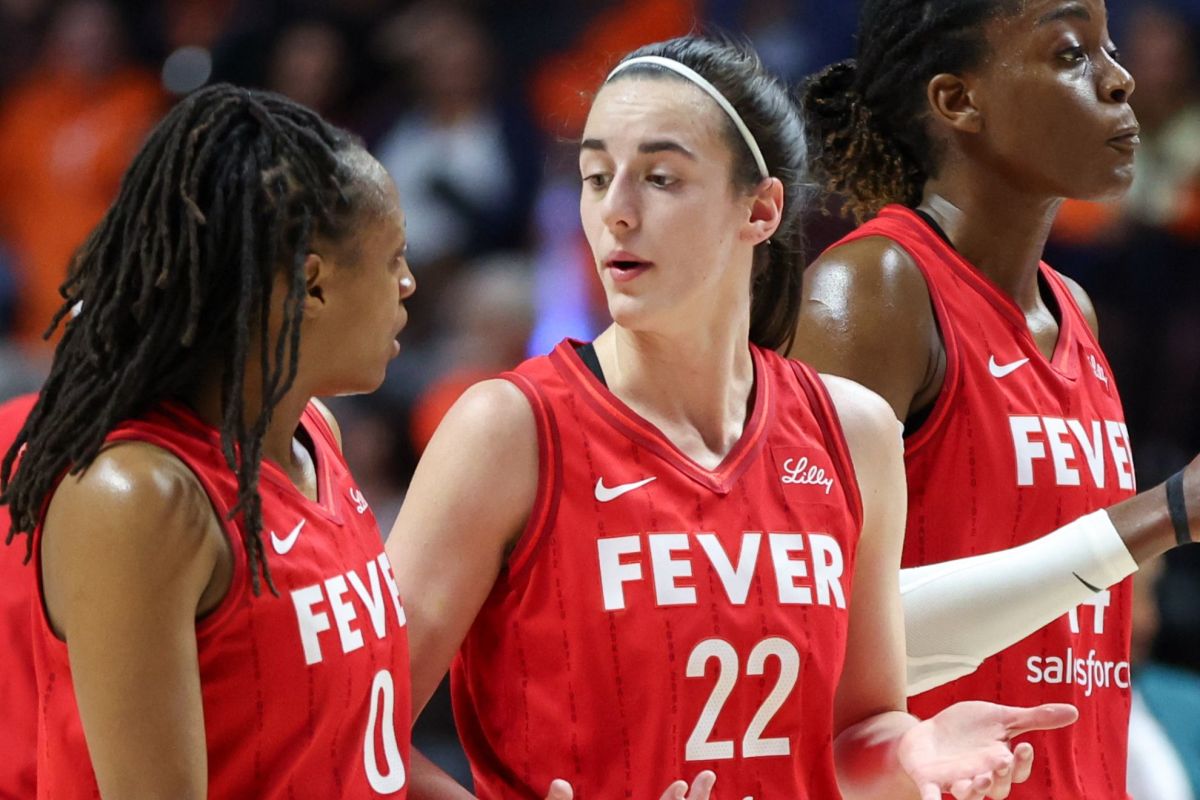
Kelsey Mitchell was honored as the 2025 Indiana Fever Player of the Year. With Caitlin Clark sidelined for most of the season due to a groin injury, the veteran 30-year-old guard took charge as the team’s primary offensive threat. The three-time All-Star posted averages of 20.2 points, 1.8 rebounds, and 3.4 assists while shooting 45.6% from the field and 39.4% from beyond the arc, earning a fifth-place finish in MVP voting and solidifying her status as a top contender.
Thanks to Mitchell’s leadership, the Fever finished the season with a 24-20 record, securing sixth place in the league standings. The team surprised many by reaching the playoffs semifinals, where they pushed the eventual WNBA champions, the Las Vegas Aces, to a decisive fifth game but ultimately fell short. Notably, in Game 5, Mitchell had to exit in the third quarter due to severe muscle spasms and was hospitalized.
Mitchell later revealed she suffered from rhabdomyolysis, a condition where muscle function is impaired and blood flow is restricted. She described a frightening moment when her legs went numb and felt paralyzed for several seconds, with her muscles locking and fatigue setting in. Nearly three months after this health scare, Mitchell has bounced back and is preparing to compete in the second season of the Unrivaled 3-on-3 league, co-founded by WNBA stars Napheesa Collier and Brianna Stewart.
At the Unrivaled media day, Mitchell shared that she feels great now and hopes never to experience such a condition again, reflecting on the experience as a rare, almost purposeful test. The upcoming season of Unrivaled kicks off on January 5th, with Mitchell playing for Hibs BC, a new team coached by Chicago Sky assistant Lena Wakama. Several of her Fever teammates, including Aliyah Boston, Aari McDonald, Lexi Hull, and Makayla Timpson, will also be participating.
Fan Take: Kelsey Mitchell’s remarkable comeback story highlights the resilience and high level of competition in the WNBA, inspiring fans and players alike. Her return to competitive play not only boosts the Fever’s prospects but also brings greater visibility and excitement to the growing 3-on-3 format, signaling promising developments for the future of women’s basketball.