
Would the 2025 Chicago Cubs find success? The answer largely depends on who you ask.
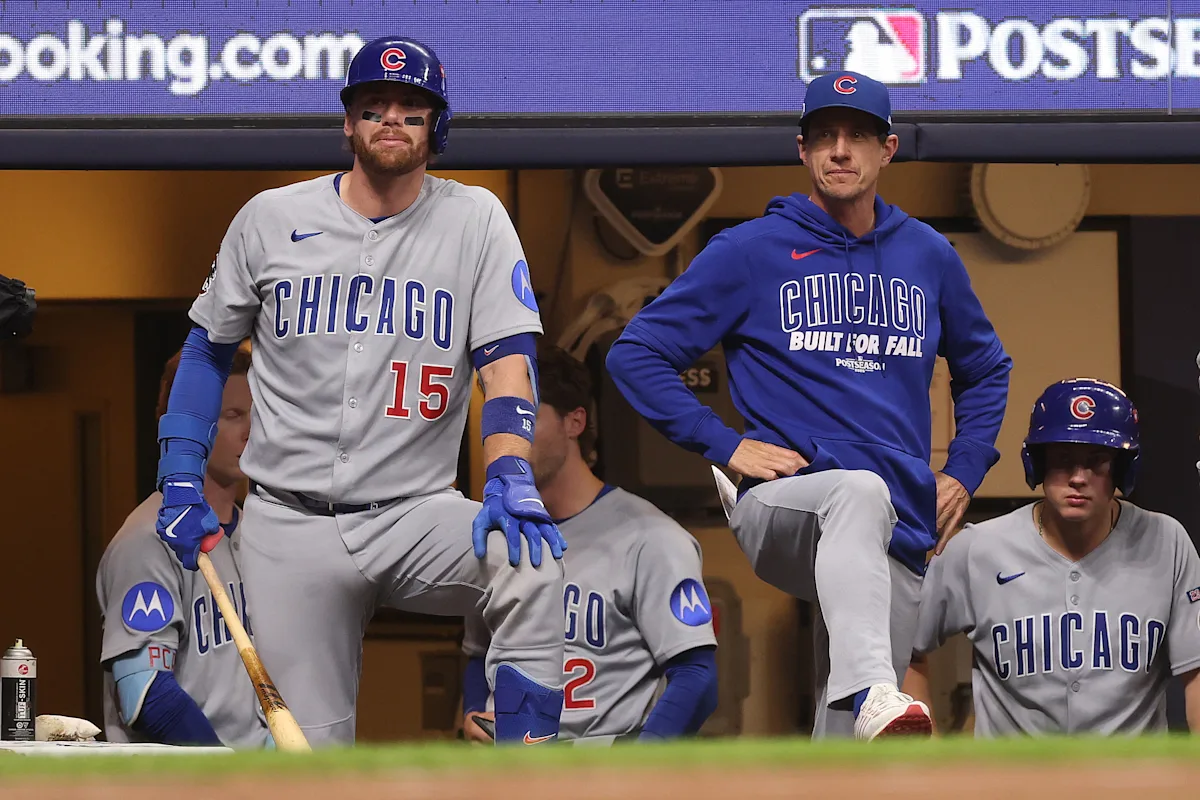
For some teams, achieving 92 wins, winning a Wild Card Series, and then falling in a five-game NLDS would be a fantastic season. Chicago boasted a strong offense during the regular season, featuring six players with at least 4.0 bWAR: Nico Horner, Dansby Swanson, Ian Happ, Pete Crow Armstrong, Michael Busch, and Kyle Tucker. Wrigley Field was lively and full for much of the summer, and the Cubs made it to October for the first time since 2020, securing their first playoff win since 2018. There were many positives to appreciate.
However, in the second half of the season, the Cubs never really looked like serious World Series contenders. The gap between them and champions Los Angeles was significant. Milwaukee dominated their division, and Kyle Tucker, acquired last winter, was injured and below his best during the playoffs. The pitching staff was another weak spot. Fans had plenty to be unhappy about.
Six months into the offseason, Cubs president of baseball operations Jed Hoyer hasn’t done much to calm fans’ concerns. Despite signing more free agents than any other team this winter—six in total—none are true game-changers. Five are one-year deals, four are relief pitchers, and one was to retain Shota Imanaga via a qualifying offer. Essentially, the Cubs look no stronger than when they exited the NLDS.
Here are three key questions that will shape the rest of the offseason:
1. Will the Cubs replace Kyle Tucker?
Surprisingly, the Cubs seem okay with losing Tucker, considered the top free agent. Given the investment made to acquire him last year, this is notable and reflects both Tucker’s mixed profile and the team’s financial caution. Replacing Tucker’s production won’t be easy—he posted an .841 OPS, 22 homers, and won a Silver Slugger. Currently, the Cubs appear to prefer internal options like promising young outfielders Owen Casey and top prospect Kevin Alcantara, with potential position shifts involving Seiya Suzuki and rookie Moisés Ballesteros to fill the gap.
2. How will the Cubs bolster their pitching rotation?
The 2025 pitching staff wasn’t terrible, with Matthew Boyd, Cade Horton, Shota Imanaga, Jameson Taillon, and Collin Ray forming an average unit. Horton stood out as a revelation until injury derailed his postseason. However, beyond Horton, questions abound. Boyd struggled in the playoffs, failing to pitch beyond five innings, and the rotation lacked depth and consistency. Imanaga has returned but will likely serve as a mid-rotation starter. The Cubs need another frontline pitcher, but available options like Framber Valdez and Zac Gallen come with big price tags, conflicting with Chicago’s recent frugality.
3. Are the Cubs going to remain so financially conservative?
If the 2026 season started now, the Cubs’ payroll would rank just 11th in MLB at roughly $200 million—a surprisingly low figure for such a storied and profitable franchise. Despite the lucrative Wrigley Field real estate and loyal fanbase, the team continues to act like a small-market operation. The Cubs have rarely exceeded the luxury tax since rebuilding their roster post-Bryant, Báez, and Rizzo. While they have some tax space for big signings, insiders suggest no major splurges are planned. This hesitation could hamper efforts to improve a flawed roster.
Fan Take: The Cubs’ cautious offseason approach signals a commitment to rebuilding through young talent and fiscal restraint, which may frustrate fans eager for immediate contention. Baseball enthusiasts should watch closely, as Chicago’s moves could shape the competitive balance of the NL Central and influence how big-market teams manage payroll in an evolving sport.